
You have a perfect design, but it requires materials that eat CNC tools for breakfast. Dealing with Titanium, Inconel, or hardened steel can destroy your deadlines and your budget. Ignoring the specific needs of these superalloys often leads to broken tools, scrapped parts, and endless frustration.
The key to machining difficult materials lies in controlling heat generation and rigidity. You must use specific tool geometries designed for heat resistance, slower cutting speeds with higher feed rates to prevent work hardening, and high-pressure coolant systems. Selecting the right carbide grades and coating technologies like AlTiN is essential for extending tool life in these tough alloys.
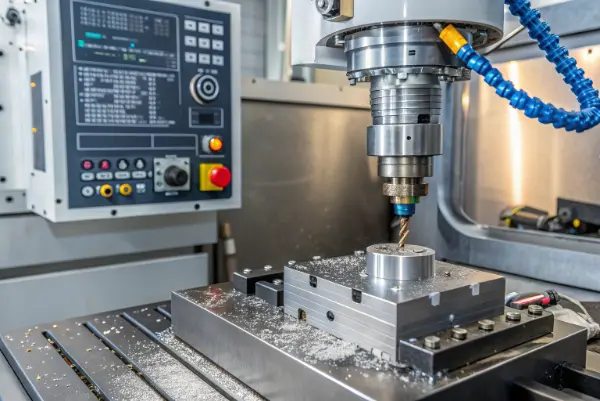
Many engineers I talk to, like Alex from Germany, often struggle with this. They design amazing robotic parts, but when they choose Inconel for heat resistance, they don’t always realize how much harder the manufacturing process becomes. I have seen projects delayed by weeks because a shop tried to cut Inconel like it was aluminum. It does not work that way. We need to look at the specific strategies for each material to make your next project successful.
Why is Titanium so difficult to machine effectively?
Titanium is strong and light, but it is a nightmare for heat management. The heat generated during cutting does not transfer into the chip; it stays in the tool. This heat buildup causes rapid tool failure and poor surface finishes, making precision machining a serious challenge for inexperienced shops.
To machine titanium effectively, you must focus on heat evacuation. Use sharp, positive rake tools to shear the material rather than pushing it. Keep cutting speeds low (40-60 m/min) but maintain a heavy feed rate to ensure the tool cuts beneath the work-hardened layer. High-volume, high-pressure coolant is mandatory to protect the cutting edge.
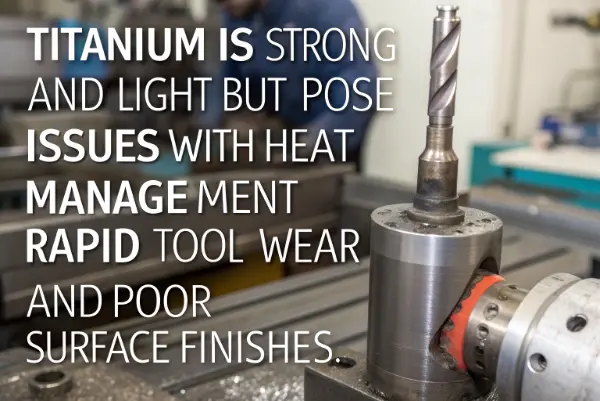
Let’s break this down further because Titanium behaves very differently than steel. I remember my first time handling a Grade 5 Titanium project. We burned through end mills every ten minutes until we adjusted our strategy. The problem is thermal conductivity. Titanium is a poor conductor of heat.
In normal steel machining, about 75% of the heat goes into the chip and leaves the cutting zone. With Titanium, only about 25% goes into the chip. The rest goes into your expensive cutting tool. This causes the tool edge to soften and fail.
Here is a breakdown of the specific tactics we use at QuickCNCs:
Tooling Strategy
- Material: Use Carbide tools with high cobalt content (10-12%) for toughness.
- Coatings: Use TiAlN (Titanium Aluminum Nitride) coatings. They handle heat well.
- Geometry: High helix angles (35° to 45°) help pull chips away quickly.
Parameter Adjustments
| Parameter | Action | Reason |
|---|---|---|
| Speed (RPM) | Lower significantly | Reduces friction heat generation. |
| Feed Rate | Increase | Prevents rubbing. Rubbing causes work hardening instantly. |
| Coolant | Maximum Pressure | Must reach the cutting edge to flush heat. |
Clamping and Rigidity
Titanium has a low modulus of elasticity. This means it is "springy." If your clamping is weak, the part will vibrate or chatter. This vibration destroys tool life. We always use hydraulic vices or custom fixtures for Titanium parts to ensure absolute rigidity. If the part moves even 0.01mm, the tool rubs instead of cuts, and the part is ruined.
How do you handle the extreme toughness of Inconel?
Inconel is designed to survive inside jet engines, so it naturally resists cutting forces. It has high strength at high temperatures and work-hardens instantly if the cutter dwells. This creates a hard "skin" on the material that destroys subsequent cutter passes.
Inconel requires extremely rigid setups and tools with positive cutting geometry to minimize cutting pressure. You must use ceramic or whisker-reinforced ceramic inserts for roughing operations to handle the heat. Avoid dwelling the tool at all costs; the cutter must always be engaged and moving to prevent instant work hardening of the surface.
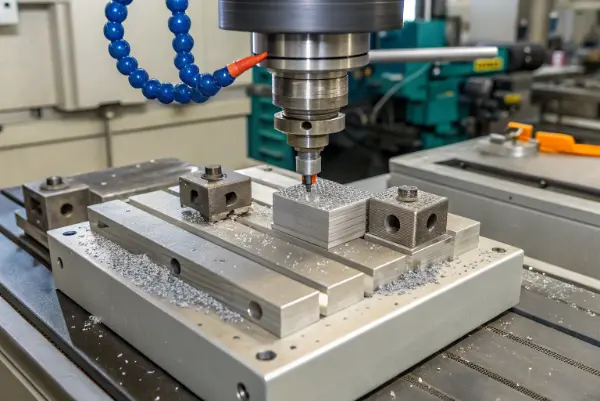
Inconel is in a league of its own. I once had a client who needed a manifold made from Inconel 625. He was shocked at the cost difference compared to stainless steel. The reason is the "gummy" nature of nickel-based alloys combined with their extreme strength.
When you cut Inconel, the material does not want to chip off. It drags and creates immense heat. If you stop the tool for even a second, the material hardens. The next time the blade comes around, it hits a wall that is twice as hard as the original material. This is called work hardening.
To solve this, we use a technique called Trochoidal Milling (or dynamic milling).
Trochoidal Milling Strategy
This is a modern CNC path strategy. Instead of taking a heavy, straight cut, the tool moves in small circular paths while moving forward.
- Low Radial Engagement: The tool only touches the metal for a small percentage of rotation.
- Cooling Time: The tool spins in the air for part of the rotation, allowing it to cool down.
- Full Depth: We can use the entire length of the cutter flutes, spreading the wear out.
Ceramic Inserts vs. Carbide
For roughing Inconel, standard carbide is often too slow. We switch to ceramic inserts.
- Speed: Ceramics can run at speeds 10x faster than carbide in Inconel.
- Heat: Ceramics actually need heat to work properly (they plasticize the metal).
- Fragility: They are brittle. Your machine must be perfectly stable.
If you are designing parts for high-heat environments like Alex does for robotic joints, consider if Inconel is truly necessary. Sometimes, a high-grade stainless steel like 17-4PH is a better balance of performance and manufacturability.
What is the best approach for machining Hardened Steels?
Machining steel that has already been hardened (above 50 HRC) challenges the tool’s ability to resist abrasion. Standard tools will chip or wear down rapidly. The goal is to achieve tight tolerances without inducing thermal cracks or affecting the surface integrity of the finished part.
For hardened steels, Hard Milling strategies using Polycrystalline Cubic Boron Nitride (PCBN) or advanced coated carbide tools are essential. You should employ light radial depths of cut with high cutting speeds. Dry machining (using air blast instead of liquid coolant) is often preferred to prevent thermal shock, which causes micro-cracks in the tool.
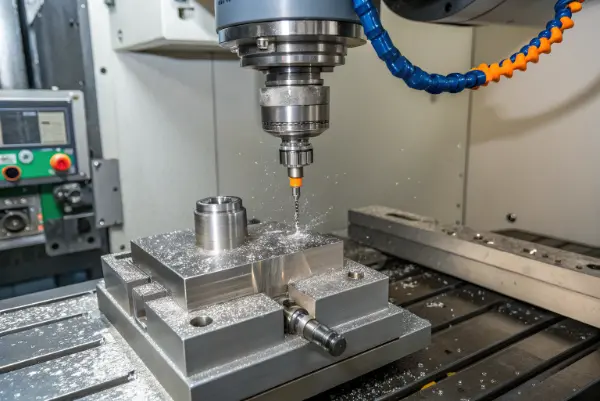
In the past, if a part was hardened, we had to grind it to finish size. Grinding is slow and expensive. Today, "Hard Milling" allows us to machine parts up to 60-65 HRC directly on the CNC machine. This saves a lot of time, but it is risky if you do not know the rules.
The biggest mistake I see engineers make is asking for coolant on hardened steel. It sounds counter-intuitive, right? You think "hot part needs water." But in hard milling, the cutting edge gets super hot, maybe 800°C. If you hit that hot edge with cold water, it shocks the carbide. It cracks like a hot glass put in cold water.
Air Blast vs. Coolant
We almost always use Air Blast only. The air removes the chips so you don’t re-cut them. Re-cutting hard chips will break the tool instantly.
Tool Path Strategies for Hard Steel
We have to treat the tool gently.
- Step-over: Keep the radial step-over very small. Usually, 5% to 10% of the tool diameter.
- Chip Thinning: Because the step-over is small, we can increase the feed rate significantly. This keeps productivity high.
- Corner Radius: Never use a sharp corner end mill. Always use a tool with a corner radius. Sharp corners are weak points that chip easily on hard steel.
Surface Finish Benefits
One huge advantage of hard milling is the surface finish. Because the material is hard, it doesn’t tear. It cuts cleanly. We can often achieve "mirror-like" finishes directly off the machine. This eliminates manual polishing.
| Feature | Hard Milling | Grinding |
|---|---|---|
| Speed | Fast (High material removal) | Slow |
| Geometry | Can make complex 3D shapes | Mostly limited to simple flats/rounds |
| Setup | Single setup usually | Multiple setups often required |
| Cost | Lower for complex shapes | Higher |
When Alex sends us designs for robotic gearboxes, we often suggest hard milling the bearing seats. It ensures the precision he needs (±0.01mm) without the extra cost of grinding operations.
Conclusion
Machining Titanium, Inconel, and hardened steel requires specialized tools, rigid setups, and strict heat management. Proper planning prevents waste and ensures precision for your critical components.