
CNC tolerance is feature-specific. Size, geometry, material, heat treatment, setup count, tool access and measurement method determine what is practical. A single ±0.005 mm or ±0.01 mm headline should never be applied to every dimension on every part.
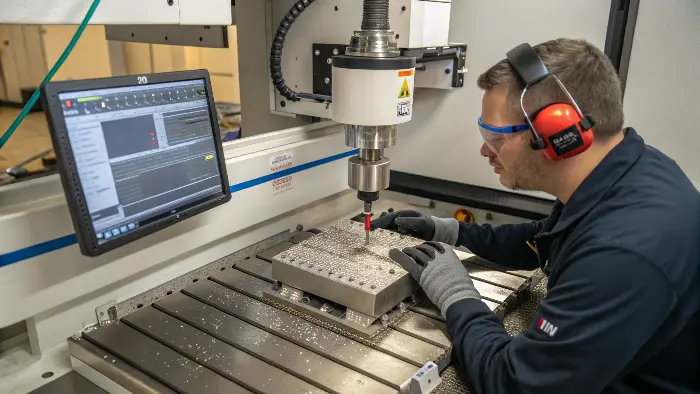
Where a drawing invokes ISO 2768 or another general-tolerance standard, state the exact edition and class. General tolerances cover unspecified features only; individually toleranced dimensions and GD&T controls take precedence. A 3D model alone rarely communicates the full acceptance plan.
Flatness controls one surface; parallelism relates surfaces; position controls feature location from datums; runout evaluates a rotating surface relative to an axis. Select controls that represent assembly or function, and define datum features that can be manufactured and measured reliably.
Micrometers, gauges and CMM measurements have different strengths. Thread acceptance needs the stated standard and gauge class. Surface roughness requires a parameter and measurement direction. Heat treatment, anodizing, plating, temperature and stress relief can move dimensions; drawings should define final-condition acceptance.
Related engineering guidance: use the worked method for thermal expansion in dimensional tolerances and distinguish machine specifications from micron-level part and measurement capability.
Provide controlled 3D and 2D data, material and condition, quantity, finish, critical characteristics, inspection documentation and target delivery. State any approved alternatives or supplier restrictions.
Tolerance is reviewed by feature against size, geometry, material, setup, process sequence and measurement. The quotation records assumptions; it does not extend one tight value to every dimension.
Selected dimensional reports, first-article records or material documents can be included when the required scope and format are stated before quotation.
Not necessarily. Machine ownership and partner-supported processes are distinguished during capability confirmation where they affect confidentiality, quality or delivery.
Upload the model, drawing and project requirements through the Request a Quote form. Complete RFQs are targeted for review within one business day, subject to complexity and clarification.
Content reviewed for manufacturing accuracy by the QuickCNCs engineering coordination team. Updated August 29, 2026.