
Automation parts connect motors, sensors, bearings, cylinders, frames and process hardware. Reliable supply depends on controlled interfaces, practical GD&T, revision management and repeatable spare-part manufacturing—not cosmetic claims.
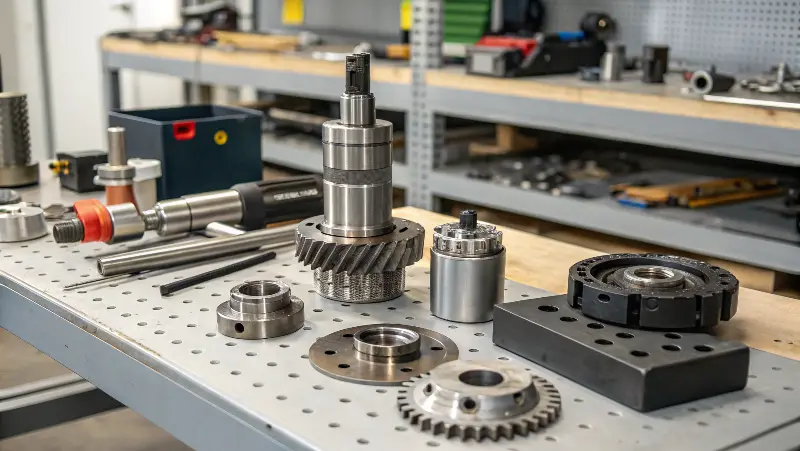
Bolt patterns, locating bores, bearing seats and perpendicular mounting faces should reference functional datums. Over-tolerancing a whole plate adds cost while missing the locating relationship creates assembly problems. Provide mating details when fit is not obvious from the component drawing.
Stable programs need revision control, fixture records, approved material and packaging. For critical spares, identify interchangeability requirements and whether the new part must match an existing machine build. Delivery schedules are confirmed from material and capacity, not assumed from a generic lead-time banner.
Provide controlled 3D and 2D data, material and condition, quantity, finish, critical characteristics, inspection documentation and target delivery. State any approved alternatives or supplier restrictions.
Tolerance is reviewed by feature against size, geometry, material, setup, process sequence and measurement. The quotation records assumptions; it does not extend one tight value to every dimension.
Selected dimensional reports, first-article records or material documents can be included when the required scope and format are stated before quotation.
Not necessarily. Machine ownership and partner-supported processes are distinguished during capability confirmation where they affect confidentiality, quality or delivery.
Upload the model, drawing and project requirements through the Request a Quote form. Complete RFQs are targeted for review within one business day, subject to complexity and clarification.
Content reviewed for manufacturing accuracy by the QuickCNCs engineering coordination team. Updated August 29, 2026.