
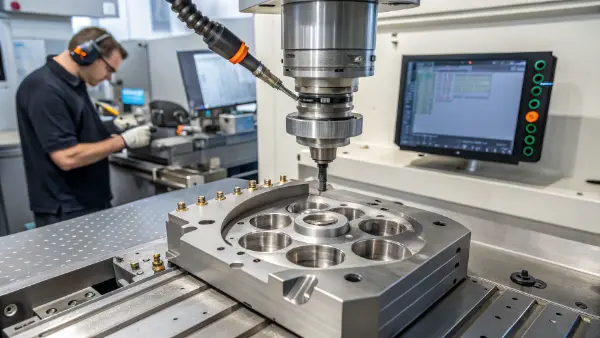
You need to make a complex part with tight tolerances. Standard machines force you to stop, move the part, and start again. This causes errors and delays. 5-axis CNC machining solves this problem. It moves the tool in five directions at once. This saves time and keeps parts perfect.
The main advantages of 5-axis CNC machining services include higher precision, faster production times, and the ability to create complex shapes. The machine cuts multiple sides of a part in one single setup. This reduces human errors. You get better surface finishes and consistent quality for your tough projects.
Understanding how these machines work can completely change the way you plan your next big project. Let us look closer at the specific benefits. These benefits will make your daily work much easier.
How do fewer setups speed up the 5-axis production process?
Moving parts by hand takes up too much time. Every time you unclamp a part, you lose money and risk making a mistake. A 5-axis machine fixes this problem. It cuts almost every side of your part without stopping.
Fewer setups speed up production because the machine holds the part once and cuts five sides without stopping. A worker does not need to move it. This method cuts down cycle times. It also shortens your lead times. You get your finished parts much faster than before.
I remember working on a custom housing for a robotics arm. We first tried making it on a normal machine. We had to stop the machine four times to flip the metal. It took forever. Then we moved the job to a 5-axis machine. The difference was huge.
Why single setups matter
When you use a basic machine, the tool only moves in straight lines. If your part has holes on the sides, someone has to open the door. They must unclamp the part. They must turn it. Then they must clamp it again. This manual work adds many hours to your project. It ruins your workflow.
A 5-axis machine is different. It spins the part or the tool. It can reach over and under. It can drill a hole on the top. Then it smoothly leans over to cut a groove on the side. You load the raw metal block one time. You press a button. You walk away. When you come back, the part is done.
Time comparison
Let us look at a simple table. This shows the difference.
| Machining Type | Number of Setups | Risk of Delay | Time Spent on Hand Work |
|---|---|---|---|
| Basic Machine | High (3 to 5 times) | High | Lots of wasted time |
| 5-Axis Machine | Low (Just 1 time) | Very Low | Almost zero |
Cutting down the steps makes the whole job run faster. You get your parts on time. You do not have to worry about missing your deadlines. Faster production times happen as multiple sides can be machined in a single setup.
Why does 5-axis CNC machining give you better precision and accuracy?
Bad tolerances can ruin an expensive robotic joint. When you move a part by hand, you easily lose your exact starting point. A 5-axis machine keeps the part in one place. Your tight tolerances stay locked in perfectly.
5-axis CNC machining gives you better precision because the part stays in one single coordinate system. You do not have to reposition the part by hand. This removes the chance of human error. It ensures highly complex parts meet very strict tolerance rules every single time.
Let me tell you a story from my shop. We had to make a complex joint for a German client. The tolerance was extremely small. Every time a worker moved the part on the old machines, the alignment shifted just a tiny bit. Those tiny shifts added up. The parts failed the final test.
The problem with moving parts
When you take a piece of metal out of a vise, you lose your perfect center. You must find that center again when you put it back. Even the best worker in the world will be off by a tiny fraction. If your job needs high accuracy, this is a big problem.
Locking in perfection
A 5-axis machine never lets go of the part. The part stays clamped in the exact same spot. The computer knows exactly where every edge is. The tool can spin and reach around to cut the sides. But the center point never changes. Increased consistency in batch production ensures uniform quality.
Comparing precision levels
Here is how the errors add up during work:
| Setup Step | Basic Machine Error Risk | 5-Axis Error Risk |
|---|---|---|
| First Clamp | None | None |
| Second Clamp | Tiny shift happens | Not needed |
| Third Clamp | Shift gets bigger | Not needed |
| Final Part | Might fail test | Perfect match |
Keeping the part in one spot is the secret to high precision. You stop worrying about bad parts. You stop wasting good metal. Your parts fit together perfectly. Increased precision and accuracy allow for highly complex geometries.
How does 5-axis machining handle complex geometries and designs?
Engineers draw very crazy shapes to save space and weight. Standard machines cannot reach into deep pockets or cut strange curves. A 5-axis machine twists and turns. It reaches every hidden corner of your new design.
5-axis machining handles complex geometries by rotating the cutting tool and the part at the same time. It can easily cut difficult angles and deep curves. This gives engineers total design freedom. They can make lighter and stronger parts without worrying about machine limits.
I once looked at a drawing for an aerospace part. I thought about how we could make it. It had curves going in three different directions. It had deep pockets hiding behind thick walls. Standard tools would need special fixtures. Those fixtures cost a lot of money.
Total design freedom
In the past, engineers had to change their designs to fit the machines. They had to make parts simpler. They had to break one part into two pieces and bolt them together. This made the final product weak and heavy. With 5-axis CNC machining, you do not have to change your design. If you can draw it on your computer, the machine can cut it out of solid metal. Enhanced flexibility accommodates a wide range of materials and designs.
Reaching the tough spots
Standard tools can only point straight down. But a 5-axis machine can tilt its cutting tool. It can lean over at a sharp angle. It can sneak into deep holes without bumping into the walls. The capability to reach difficult angles reduces the need for additional fixtures.
What you can make
Here is a look at what features you can cut:
| Part Feature | Easy on Basic Machine? | Easy on 5-Axis? |
|---|---|---|
| Flat surfaces | Yes | Yes |
| Simple holes | Yes | Yes |
| Compound angles | No | Yes |
| Deep curved pockets | No | Yes |
You can create detailed parts for medical tools or robots. Versatility in creating intricate parts opens opportunities in diverse industries. You get a single piece of strong metal instead of a bolted puzzle.
Why does 5-axis machining improve surface finish and save finishing time?
Rough surfaces look bad and make moving parts wear out fast. Fixing these rough spots by hand takes forever. It also ruins your exact sizes. A 5-axis machine uses better angles to leave the metal smooth right away.
5-axis machining improves surface finish because the cutting tool stays at the best angle against the metal. It uses shorter cutters that do not shake. Less vibration means fewer tool marks on the part. This greatly reduces the need for slow manual polishing.
Many years ago, we had a team of workers. They did nothing but rub parts with sandpaper all day. It was dusty and slow work. It was also very expensive. Sometimes they rubbed too hard. They ruined the exact size of the part. We had to find a better way.
The secret of short tools
You need a very long cutting tool to cut a deep pocket on a standard machine. Long tools are like long sticks. A long stick bends and shakes when you push on it. This shaking is called chatter. Chatter leaves ugly wave marks all over the metal.
A 5-axis machine works differently. The machine head can tilt down into the deep pocket. This lets you use a short and stiff tool. Short tools do not bend. They do not shake. They slice through the metal very smoothly.
Skipping the hand work
The tool cuts smoothly. Because of this, the metal comes out looking shiny and clean. You do not have to pay someone to polish it by hand. Improved surface finish reduces the need for manual polishing.
Surface finish facts
Here is how tool length changes your results:
| Tool Type | Shaking Level | Surface Result | Hand Polishing Needed? |
|---|---|---|---|
| Long tool | High | Rough and wavy | Yes, a lot |
| Short tool | Very Low | Smooth and clean | No, mostly skip it |
Better surface finish is not just about looking good. A smooth joint moves better and lasts longer. You save time, and your final product works perfectly.
Is 5-axis CNC machining the right choice for your budget and project?
You want the best parts. But you also have a strict budget. Paying for advanced machines can feel like spending too much money. However, looking closely at the real costs shows how 5-axis machining actually saves you money.
5-axis CNC machining is the right choice when your part is complex and needs tight tolerances. The hourly cost of the machine is higher. But you save money on fixtures, setup times, and manual labor. This makes it a smart choice for tough engineering projects.
I talk to engineers all the time. They ask me about the price. They see the high hourly rate of a 5-axis machine. They get scared. I always tell them to look at the total bill. Do not just look at the hourly rate.
The hidden costs of older machines
You might make a part on a cheaper machine. The hourly rate is low. But you have to pay a worker to load and unload the part five times. You must buy expensive custom fixtures to hold the part at weird angles. You must pay someone to polish it at the end. Suddenly, the cheap machine becomes very expensive.
Why advanced machines save money
You do not need all those custom holding tools with a 5-axis machine. Reduced setup time for complex parts enhances workflow efficiency. The machine reaches difficult angles on its own. You also waste less metal. The machine works perfectly, so you throw away fewer bad parts. Greater material efficiency minimizes waste and reduces costs.
Cost breakdown
Here is a simple way to look at the total cost:
| Cost Area | Cheaper Machine | Advanced 5-Axis Machine |
|---|---|---|
| Hourly Rate | Low | High |
| Custom Fixtures | High (Need many) | Low (Need just one) |
| Labor Cost | High (Lots of moving) | Low (Hands-free) |
| Total Cost | Often Higher | Often Lower |
It is all about the big picture. The ability to perform simultaneous machining operations boosts productivity. You add up the time saved, the parts saved, and the tools saved. You will see that 5-axis machining is usually the best deal.
5-axis CNC machining offers perfect precision, smooth finishes, and faster delivery. By making complex parts in one setup, you save time, reduce waste, and get exactly what you designed.