
Five-axis machining is justified when part access, datum continuity or surface orientation cannot be handled efficiently with conventional setups. It is not a guarantee that every dimension will hold an extreme tolerance; tool reach, thermal stability, material and inspection still govern the result.
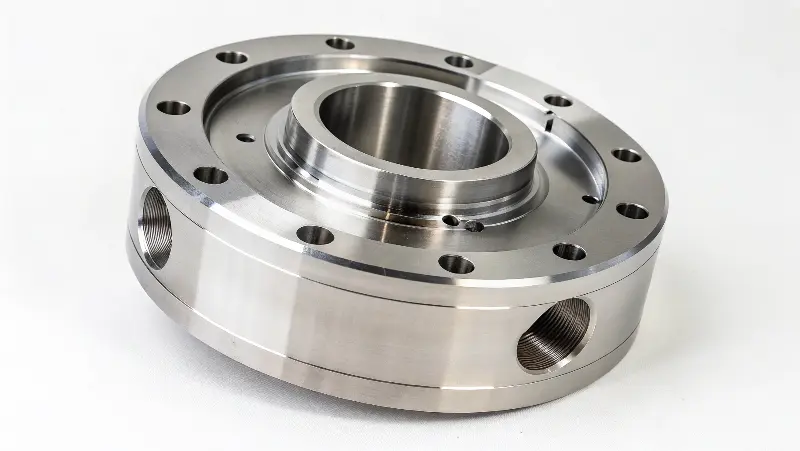
Indexed 3+2 machining positions the workpiece and then cuts with fixed rotary axes, often giving good rigidity for multi-face features. Simultaneous five-axis moves rotary and linear axes together for sculpted surfaces, swarf cutting or changing tool orientation along the path. The simpler method is preferred when it meets the drawing.
Programming, collision control, tooling and machine time can make five-axis more expensive. Critical features may require CMM inspection with a defined alignment. Provide an accurate 3D model, a 2D drawing, datum scheme, finish requirements and target quantity for a defensible quotation.
Content reviewed for manufacturing accuracy by the QuickCNCs engineering coordination team. Updated August 29, 2026.