
Your design is ready, but your project timeline is stuck waiting for a prototype. Every day of delay pushes your launch further back, creating pressure. Knowing what affects CNC prototyping time helps you manage expectations and meet your deadlines. Let’s break it down.
Generally, a simple CNC prototype can be completed in 1 to 3 days, while more complex parts may take 5 to 10 days or longer. The total time depends on factors like part complexity, material choice, quantity, and the shop’s current workload. For a precise estimate, it’s always best to submit your CAD file for a formal quote from your machining partner.
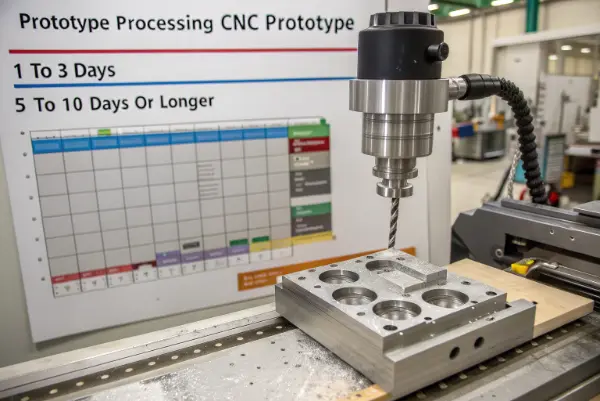
That quick answer gives you a general idea. But as an engineer, you know the details are what matter. The total lead time isn’t just about the machine running; it’s a multi-step process. I remember a project for a client in Germany, Alex, who needed a complex robotic joint. The timeline was his biggest concern. Let’s look closer at the entire journey from design file to finished part to understand where the time really goes.
How long does it take to manufacture a prototype?
You see "5-day turnaround" advertised, but your parts always seem to take longer to arrive. This mismatch between expectation and reality can disrupt your development schedule and cause frustration with your suppliers. Understanding the full process reveals where the hidden delays are.
Total prototype manufacturing time, from quote to shipment, typically ranges from 3 to 15 business days. This includes quoting, design review (DFM), programming, material sourcing, the actual machining, and any post-processing or finishing steps. Simple, unfinished parts are on the faster end, while complex parts requiring special materials or finishes take longer. Clear communication is key to speeding this up.
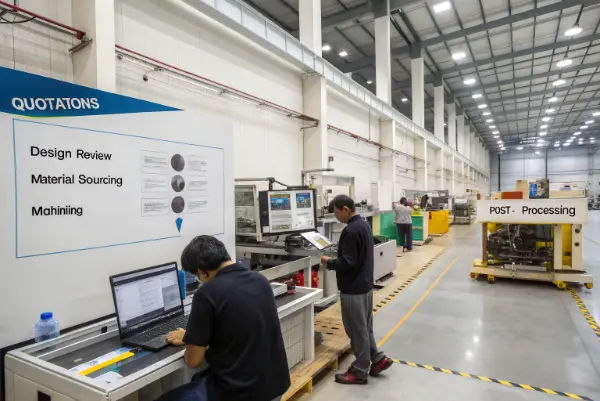
The total lead time is much more than just the hours a machine is running. From my experience helping hundreds of engineers like Alex, the process can be broken down into several key stages, each consuming its own portion of the timeline. A part that takes only five hours to machine might still have a five-day lead time. Let’s explore why.
The Stages of Prototype Manufacturing
Each step is essential for ensuring quality and accuracy. Skipping or rushing a stage often leads to errors and even longer delays.
-
Stage 1: Quoting and DFM (0.5 – 2 Days)
After you submit your CAD file, our team reviews it. We don’t just calculate a price; we perform a Design for Manufacturability (DFM) analysis. We look for potential issues like features that are too small, walls that are too thin, or tolerances that are unnecessarily tight. Addressing these upfront saves you from costly revisions later. This back-and-forth communication, while it takes time, is crucial for success. -
Stage 2: Programming and Setup (0.5 – 1 Day)
Once the design is confirmed, a programmer creates the CAM toolpaths—the G-code that directs the CNC machine. Then, a skilled machinist sets up the machine. This involves selecting and installing the right cutting tools, fixturing the raw material block, and calibrating the machine’s reference points. For complex 5-axis parts, this setup can be quite involved. -
Stage 3: Machining and Finishing (1 – 5+ Days)
This is the core manufacturing step, which we’ll discuss next. After machining, parts often require post-processing. This can include deburring sharp edges, bead blasting for a uniform matte finish, anodizing for corrosion resistance, or painting. Each of these steps adds time to the overall process.
This breakdown shows how a simple machining job is part of a much larger workflow. A well-managed process ensures a smooth journey from file to physical part.
How long does CNC machining take?
You have an urgent deadline and need to know exactly how long your part will be on the machine. You worry that complex features or tight tolerances will cause major delays. Understanding what influences machine time helps you create more realistic project schedules.
The actual CNC machining time can range from under 30 minutes for a simple part to over 24 hours for a highly complex one. Key factors are part complexity, the number of setups, material type, and required tolerances. For example, a simple aluminum bracket might take an hour, while an intricate titanium medical implant could take a full day of machine time.
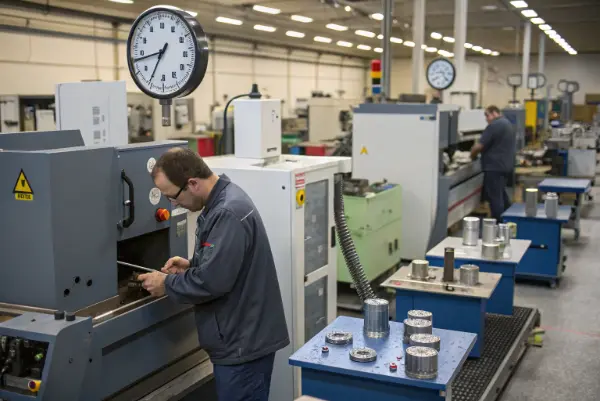
The "machining time" is the heart of the process, but it’s not a single, constant number. It varies greatly based on the design itself. When I worked hands-on in the shop, I learned that two parts of the same size could have vastly different machining times. One part might be done in an hour, while another could tie up a machine for an entire shift. It all comes down to the details of your design and the material you choose. Let’s look at the main factors that determine how long the spindle is actually turning and removing material.
Core Factors Influencing Machining Time
These four elements have the biggest impact on the clock.
| Factor | Impact on Time | Why it Matters |
|---|---|---|
| Part Complexity | High | Complex geometries with organic surfaces, deep pockets, and many features require more toolpaths and longer machining cycles. A simple block with a few holes is much faster than a contoured housing. |
| Number of Setups | High | If a part needs to be rotated and re-fixtured to machine all six sides, each setup adds significant time. This is where 5-axis machining can be a time-saver by accessing more faces in a single setup. |
| Material Type | Medium to High | Soft materials like aluminum can be cut quickly. Hard materials like tool steel, stainless steel, or titanium require slower cutting speeds and feeds to manage heat and tool wear, extending machining time. |
| Tolerance Requirements | Medium | Standard tolerances (e.g., ±0.1mm) can be achieved efficiently. Tighter tolerances (e.g., ±0.01mm) require slower finishing passes, more frequent in-process measurements, and potentially special tooling, all of which add time. |
Thinking about these factors during the design phase can help you optimize your part for faster and more cost-effective manufacturing without sacrificing function.
What is the hardest material to CNC?
You need a part with extreme strength or heat resistance, so you’ve chosen an exotic superalloy. But you’re concerned this choice will make machining incredibly slow and expensive. Understanding what makes a material "hard" to machine helps you balance performance needs with manufacturing reality.
Materials like Inconel, hardened tool steels (above 50 HRC), and certain titanium alloys are considered among the hardest to CNC machine. Their difficulty comes from high strength, rapid work-hardening, low thermal conductivity, and abrasiveness, which cause rapid tool wear and require very slow, careful machining strategies. This significantly increases both time and cost.
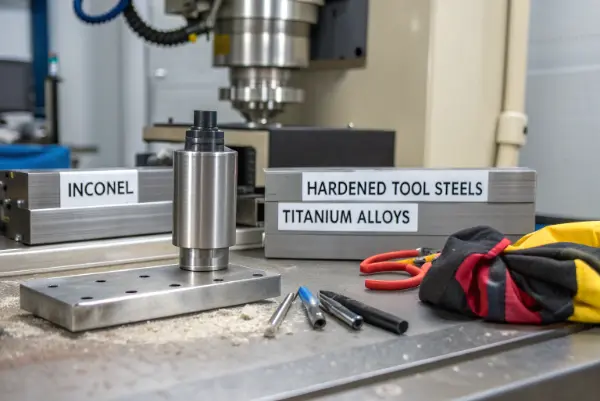
In my career, I’ve seen machinists get excited by a challenge, but I’ve also seen them groan when a drawing specifies a material like Inconel 718. "Hard" in machining doesn’t just mean physical hardness that you can measure on the Rockwell scale. It’s a combination of properties that fight back against the cutting tool every step of the way. Machining standard aluminum is like cutting through butter. Machining a superalloy is like trying to carve a rock with a pocketknife; you need patience, the right tools, and a very specific strategy.
The Challenge of Machining Difficult Materials
Let’s break down why these materials are so tough to work with.
Key Properties of "Hard-to-Machine" Materials
- High Strength & Hardness: This is the most obvious one. The material resists being cut, which puts immense force on the cutting tool. Materials like hardened D2 tool steel or titanium require much more power to machine than mild steel.
- Work Hardening: This is a tricky property. Materials like stainless steel and Inconel get harder as you machine them. The cutting action itself hardens the surface layer, making the next pass even more difficult. This requires constant, aggressive cutting to stay underneath that hardened layer.
- Low Thermal Conductivity: Machining generates a lot of heat. Materials like aluminum are great at conducting this heat away into the chip and the part. Titanium and Inconel are poor thermal conductors. The heat gets concentrated on the cutting tool’s edge, causing it to soften, deform, and fail quickly.
- Abrasiveness: Some materials contain hard carbide particles (like in some tool steels) that act like sandpaper on the cutting tool, wearing it down very quickly.
To successfully machine these materials, we must use specialized cutting tools, apply generous amounts of high-pressure coolant, and use drastically reduced cutting speeds and feeds. This careful, slow approach is why machining a part from Inconel can take 5 to 10 times longer than making the exact same part from aluminum.
Will CNC machinists be replaced by AI?
You hear about AI revolutionizing every industry, from design to logistics. You might wonder if the skilled machinist who makes your parts is becoming obsolete. This could change how you interact with suppliers and what "expertise" really means in manufacturing.
AI will not replace CNC machinists, but it will transform their role. AI excels at optimizing toolpaths (CAM programming), predicting tool wear, and automating quality control. However, the hands-on skills of a machinist—problem-solving, creative fixture design, machine setup, and responding to unexpected issues—remain irreplaceable. AI will become a powerful tool, making skilled machinists even more efficient and valuable.
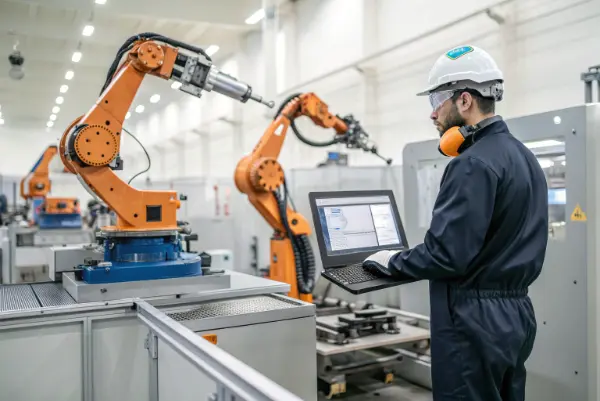
This question comes up a lot, and it’s a valid one. I started on the shop floor, and I’ve seen technology change dramatically over the years. We went from manual mills to CNC, and now we’re seeing AI integrated into our software. Each step was met with some fear, but the reality is that technology has always empowered skilled workers, not replaced them entirely. I see AI as the next great tool in our toolbox, not a replacement for the person holding it. The "art" of machining is still very human.
The Evolving Role of the CNC Machinist
AI is already making a huge impact, but it’s focused on augmenting human skills, not making them redundant. Think of it as giving a machinist superpowers.
-
What AI Does Well:
- CAM Optimization: AI-powered CAM software can analyze a part’s geometry and simulate thousands of cutting strategies in seconds to find the most efficient and safest toolpath. This reduces programming time and machine cycle time.
- Predictive Maintenance: AI can monitor a machine’s sensors to predict when a cutting tool is about to fail or when a component needs service. This prevents catastrophic failures and reduces downtime.
- Automated Inspection: AI-driven vision systems can inspect finished parts far faster and sometimes more consistently than human eyes, flagging any deviations from the CAD model instantly.
-
Where Human Skill Remains Crucial:
- Problem-Solving: What happens when a tool breaks unexpectedly, or the material has a hidden hard spot? A skilled machinist diagnoses the problem and adjusts the strategy on the fly. This requires intuition and experience that AI lacks.
- Setup and Fixturing: Designing a clever fixture to hold a complex or delicate part securely is a form of engineering art. It requires a deep understanding of physics and cutting forces.
- Process Knowledge: A great machinist understands the entire process. They know how the material behaves, how the machine responds, and how to "listen" to the cut to know if everything is right. This sensory, experience-based knowledge is beyond current AI.
The machinist of the future will be a tech-savvy problem-solver, using AI to handle the repetitive calculations so they can focus on the complex, hands-on challenges that ensure your parts are made right.
Conclusion
Understanding CNC prototyping timelines involves looking at the full process—from DFM to finishing. Complexity, materials, and human skill all play a crucial role in getting your parts made right and on time.