
Designing medical parts is hard. A single mistake can cost lives. You need to test and build parts fast. CNC machining gives you the tight tolerances and speed you need to solve this problem quickly.
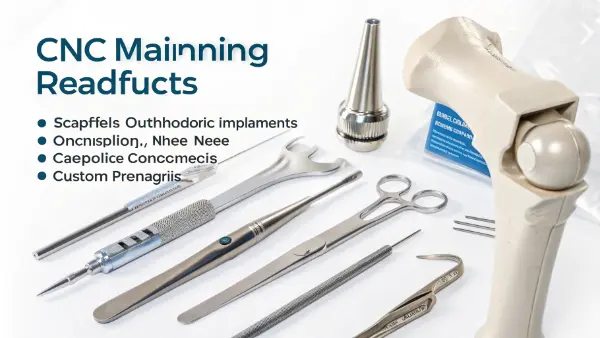
CNC machining creates a wide range of medical products that need tight tolerances and repeatability. Common examples include surgical instruments like scalpels, orthopedic implants like knee replacements, diagnostic equipment components for MRI machines, and custom prosthetics. If a part must be small, accurate, or sterilizable, CNC is the top choice.
I remember my early days working in a CNC shop. I spent hours trying to cut titanium for a tiny bone screw. The pressure was huge. A bad part could hurt someone. But seeing the final piece work perfectly made me realize the true power of this technology. We will look closer at the specific medical items we can make today.
Can CNC machining make reliable surgical tools and instruments?
Surgeons need perfect tools in the operating room. A weak or rough tool will ruin a surgery. CNC machining cuts hard metals into smooth, strong shapes. Doctors can trust these tools every single time.
Yes, CNC machining makes many reliable surgical tools. It creates scalpels, forceps, clamps, retractors, and scissors. The process cuts biocompatible metals like stainless steel into exact shapes. This ensures the tools have smooth finishes, leave no space for bacteria to hide, and survive high heat during sterilization.
Materials matter for surgical tools
Medical tools must touch the human body without causing harm. We use special biocompatible materials. Stainless steel is the most common choice. It is tough and easy to clean. Titanium is also great. It is very light and strong. CNC machines can easily cut these hard metals into the right shapes.
The need for sterilization
Doctors must clean tools after every surgery. They put the tools in very hot steam. If a tool has tiny cracks, bacteria will hide inside those spaces. CNC machining leaves a very smooth finish on the metal. It creates no gaps for germs.
| Tool Type | Material | Key Feature |
|---|---|---|
| Scalpel handles | Stainless Steel | Easy to grip, very smooth |
| Bone clamps | Titanium | Strong hold, high durability |
| Surgical scissors | Surgical Steel | Sharp edge, no rust |
High precision saves lives
A retractor must hold skin back gently but firmly. A tiny mistake in the size can cause bad damage to a patient. CNC machines follow computer instructions perfectly. They cut the metal exactly to the required size. This means every single tool looks and works the same. When a hospital buys fifty surgical scissors, all fifty will feel exactly the same way in the doctor’s hand. This repeatability makes CNC the best method for making daily medical tools.
How does CNC machining build custom implants and prosthetics?
Every human body is different. Mass-produced medical parts often fit poorly. A bad fit causes pain. CNC machining solves this problem by carving custom shapes from digital scans. It gives each patient a perfect fit.
CNC machining builds custom implants and prosthetics by reading 3D models of a patient’s body. It creates dental implants, hip stems, knee replacements, spinal rods, and custom heart valves. The machines carve these parts out of solid blocks of titanium or medical-grade plastic to fit the patient perfectly.
Making parts fit the person
A few years ago, a client asked me to help make a batch of custom knee joints. I saw firsthand how much a good fit matters. If a bone plate is just one millimeter off, the patient will suffer. Doctors now scan a patient’s broken bone or missing tooth. They send this 3D scan to an engineer. The engineer creates a digital model. A CNC machine then reads this model. It cuts the metal or plastic exactly to match the scan. A dental implant will fit your jaw perfectly.
Common implant parts
We see many types of implants in the CNC shop. Orthopedic devices like braces and joint supports need tight tolerances. Hip and knee replacements must handle the full weight of a person walking.
| Implant Type | Used For | Common Material |
|---|---|---|
| Dental crowns | Replacing teeth | Titanium, Zirconia |
| Hip stems | Fixing broken hips | Titanium |
| Spinal rods | Straightening the back | Stainless Steel |
Why titanium is the king of implants
Titanium is a very special metal. The human body actually likes it. Bone will grow around a titanium screw and lock it in place safely. But titanium is very hard to cut. Normal tools break when they touch it. CNC machines are strong enough to carve titanium slowly and carefully. This process makes strong, safe parts. These parts can stay inside a human body for a whole lifetime without rusting or breaking.
Why is CNC machining used for large medical imaging equipment?
Big medical machines break down easily. They fail if their inner parts shake or move. A blurry scan means a wrong diagnosis. CNC machining builds perfectly stable parts that keep imaging equipment steady and accurate.
CNC machining is used for large medical imaging equipment to build strong, highly accurate internal parts. It creates complex housings, spinning frames, and structural components for MRI, CT, and X-ray machines. These parts must hold heavy lenses and sensors perfectly still so doctors can get clear medical images.
Holding heavy sensors
When we think of medical products, we often think of tiny things like bone screws. But huge machines need CNC parts too. I once managed a project for a company building a new MRI machine. The size of the parts was massive. The required accuracy was just as tight as a small watch. An MRI machine has huge magnets and sensors. They must spin very fast around the patient. If the metal frame holding these sensors wobbles even a tiny bit, the picture will be blurry. CNC machining cuts solid blocks of aluminum to make super strong frames. These frames do not bend.
Custom housings and covers
Medical machines need covers to protect the delicate electronics inside. We use CNC machines to cut these covers from plastic or soft metals. They fit together perfectly. They keep dust and water out of the machine.
| Machine Type | CNC Part Required | Function |
|---|---|---|
| CT Scanner | Rotor frame | Holds spinning parts steady |
| MRI Machine | Sensor housing | Protects magnets and wires |
| X-ray Machine | Arm joint | Lets the camera move smoothly |
Mixing plastics and metals
Many diagnostic machines use medical-grade plastics for the outside. They use strong metals for the inside. CNC routers cut big sheets of plastic for the shells. CNC mills cut the heavy metal gears inside. This mix keeps the machine light but strong. A hospital can use these machines every day for ten years. The CNC-made parts will still move smoothly and hold everything in the right place.
Can CNC machining help create new medical prototypes quickly?
Developing new medical devices takes too much time. Waiting months for a test part delays new treatments. CNC machining speeds this process up. It turns ideas into real, testable parts in just days.
Yes, CNC machining creates new medical prototypes very quickly. Engineers use it to build test models of experimental medical technologies, such as patient-specific heart valves or new robotic joints. This rapid iteration allows designers to test the part, find flaws, fix the design, and make a new version immediately.
Rapid iteration is the key
I work with many engineers who design new medical tools. Alex, a mechanical engineer in Germany, often needs to test tiny mechanical joints for surgical robots. He cannot wait weeks for a mold. CNC machining gives him the exact part in a few days. When you invent a new medical device, your first idea is rarely perfect. You must test it. You find mistakes. You change the drawing. CNC machining allows for rapid iteration. We can cut a new prototype the very next day. You test it again. This fast cycle helps new medical tools reach the market faster.
Real materials for real tests
Some people use 3D printing for prototypes. 3D printed plastic is often weak. If you are designing a new bone saw, you must test it on real bone. You must use actual surgical steel. CNC machines cut the exact same hard material you will use in the final product. Your tests become real and trustworthy.
| Prototype Type | Material Used | Why CNC is best |
|---|---|---|
| Robotic surgery arm | Aluminum | Fast to cut, easy to change |
| New heart valve tool | Stainless Steel | Tests real-world strength |
| Insulin pump case | Medical Plastic | Shows true fit and finish |
Moving from test to production
The best part about using CNC for prototypes is the easy switch to mass production. The engineer finishes testing the prototype. We already have the computer code. We just tell the machine to make one thousand more parts. We do not need to build expensive molds. This simple step saves a lot of money and time for new medical companies.
CNC machining creates precise surgical tools, custom implants, imaging equipment frames, and fast prototypes. It gives engineers the accuracy needed to build safe, reliable medical products that save lives daily.