
Machining Kovar is hard. Your tools wear out fast. The parts get too hot. This causes bad tolerances and missed delivery times. It is a big headache for engineers. But do not worry. I will share the best ways to cut this tough metal.
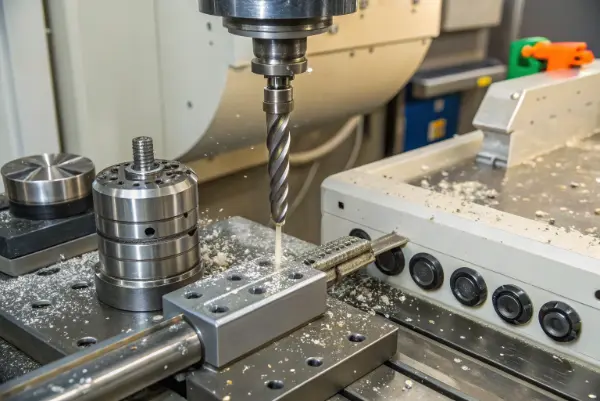
To machine Kovar efficiently, you must use sharp carbide tools with positive rake angles. Keep your cutting speeds low, around 30 to 50 surface feet per minute. Keep your feed rates high to avoid work hardening. Always use a lot of high-quality cutting fluid to cool the part and wash away chips. This keeps your tools safe and holds tight tolerances.
Now that you know the basic rules, we need to dig deeper. Understanding Kovar will help you design better parts and save money on tools. Let us look at how this metal works and how to cut it right so you never miss a deadline.
How is Kovar made?
You want to use Kovar for a glass seal. But the material price is high. If you do not know how it is made, you might buy bad material. Bad material ruins your parts. Let us look at the melting process to ensure you get the best quality.
Kovar is made by melting iron, nickel, and cobalt together in a vacuum furnace. This careful melting stops oxygen and carbon from mixing into the metal. The mix is usually 29% nickel, 17% cobalt, and 54% iron. After melting, it is formed into bars or sheets. Vacuum melting ensures the metal expands at the exact same rate as glass.
The Importance of Vacuum Melting
When I buy raw materials for my CNC shop at QuickCNCs, I always ask how the metal was made. Kovar must be very pure. If it has dirt or oxygen in it, the metal will not work right. The glass will break when it gets hot.
The makers put the iron, nickel, and cobalt into a big pot. They put the pot in a room with no air. This is called a vacuum. They heat the pot until the metal melts. Because there is no air, the metal stays very clean. There are no tiny bubbles inside.
After the metal is liquid, they pour it into a shape. Then they roll it or forge it into long bars or flat sheets. They also bake it in a special oven to make the inside of the metal soft and even. This step is called annealing.
When you design a robotic part that needs a tight glass seal, you must use pure Kovar. If the Kovar is cheap and made with air, your tools will break when you machine it. The hard spots in bad Kovar destroy end mills.
Here is a simple look at what is inside good Kovar:
| Element | Amount in Kovar | Why it is there |
|---|---|---|
| Iron (Fe) | About 54% | The main base of the metal |
| Nickel (Ni) | About 29% | Helps the metal resist heat |
| Cobalt (Co) | About 17% | Makes it expand like glass |
| Carbon (C) | Less than 0.02% | Kept very low so the metal is not brittle |
Always ask your metal seller for a paper that shows these numbers. This paper is a material certificate. It proves the metal is made right.
What is the difference between Kovar and Alloy 42?
Choosing the wrong metal costs you a lot of money. Alloy 42 is cheaper. Kovar is better for hard glass. If you mix them up, your seals will leak and your machine will fail. Here is how to choose the right one for your parts.
The main difference between Kovar and Alloy 42 is the cobalt content. Kovar has 17% cobalt, while Alloy 42 has zero cobalt. Because of the cobalt, Kovar matches the thermal expansion of hard borosilicate glass perfectly. Alloy 42 only works well with soft glass or ceramics. Kovar is also harder to machine and costs more.
Choosing the Right Metal for Your Project
Many times, a customer will ask me to use Alloy 42 instead of Kovar to save money. I always stop and ask them what kind of glass they are using. This is the most important question.
Kovar is special. When you heat it up, it grows bigger. But it grows bigger at the exact same speed as hard glass. If you put a Kovar pin through a glass window, they will heat up and cool down together. The seal will never break. This is why it is used in deep space and medical tools.
Alloy 42 is different. It is just iron and 42% nickel. It has no cobalt. Cobalt is very expensive. So, Alloy 42 is cheaper. But Alloy 42 grows faster than hard glass when it gets hot. If you use Alloy 42 with hard glass, the glass will crack. Alloy 42 is only good for soft glass or computer chips.
When you machine them, Alloy 42 is a little bit easier to cut. It is not as gummy. Kovar is very gummy. It sticks to your cutting tools. This makes Kovar harder to machine.
Let us compare them so you can decide clearly:
| Feature | Kovar | Alloy 42 |
|---|---|---|
| Cobalt Inside? | Yes (17%) | No (0%) |
| Best Glass Match | Hard glass | Soft glass |
| Material Cost | Very high | Medium |
| Machining Difficulty | Very hard and gummy | Hard, but easier than Kovar |
If your robotic joint does not need a hard glass seal, do not buy Kovar. Use Alloy 42 and save your money. But if you need perfect deep-sea or space seals, you must pay for Kovar.
How to machine Kovar?
You put a block of Kovar in your CNC machine. Ten minutes later, your expensive tool is broken. The part is ruined. This hurts your project timeline and wastes money. Here are the exact steps to machine Kovar without breaking your tools.
To machine Kovar safely, use a rigid CNC machine setup. Use solid carbide cutting tools. Set your spindle speed very low, and your feed rate high enough to cut under the hardened surface layer. Peck drill your holes to clear chips. Flood the cutting area with sulfur-based cutting oil. Never let the tool rub the metal without cutting.
The Best Ways to Cut Kovar
In my years of running QuickCNCs, Kovar has taught me many hard lessons. The biggest problem with Kovar is work hardening. This means the metal gets very hard if you hit it but do not cut it. If your tool rubs the metal, the metal turns into armor. Then your tool breaks.
To stop this, you must cut deep. Your tool must always take a bite. Never let it just slide over the top. This means your feed rate must be strong. You push the tool into the metal firmly.
But you must keep your speed slow. If you spin the tool too fast, it gets too hot. Kovar does not carry heat away. The heat stays right on the cutting edge. The tool melts and dies. I always tell my machine workers to turn the speed down. We run about 40 surface feet per minute. It feels slow, but it saves the tool.
You also need the best coolant. Water mixed with oil is okay, but dark cutting oil is better. The oil stops the metal from sticking to the tool.
Here are the basic numbers I use in my shop:
| Operation | Tool Type | Speed (SFM) | Feed Rate | Coolant |
|---|---|---|---|---|
| Turning | Carbide insert | 40 – 50 | 0.005 inch per turn | Heavy oil |
| Milling | Solid carbide end mill | 30 – 40 | 0.002 inch per tooth | Flood oil |
| Drilling | Carbide drill | 20 – 30 | 0.001 inch per turn | Oil (Peck drill) |
If you follow these numbers, your Kovar parts will come out perfect. Your tools will live longer, and your sizes will be correct.
Which method is commonly used for optimizing machining parameters?
Guessing your cutting speeds wastes a lot of time. You run test parts, break tools, and measure. This guessing method is too slow. You need a fast way to find the perfect speed and feed. Let me show you how to find it fast.
The Taguchi method is commonly used for optimizing machining parameters. It uses a special math table to test different speeds, feeds, and depths of cut at the same time. This method finds the best settings with very few test runs. It helps you get the smoothest surface finish and longest tool life without wasting expensive Kovar material.
Using Math to Save Time and Money
When you are cutting a new part made of Kovar, you have many choices. You can change the speed. You can change the feed. You can change how deep you cut. If you test every single choice, it will take weeks. You will throw away a lot of expensive metal.
Engineers use the Taguchi method to fix this. It is a very smart trick. A man named Dr. Taguchi invented it in Japan. He made a special grid. You pick three speeds, three feeds, and three depths. Instead of doing twenty-seven tests, the grid tells you to do only nine tests.
You run the nine tests. You measure the part. You look at the tool. Then you use easy math to see which mix of speed and feed is the absolute best.
I use this method in my factory when we get a strange new shape to cut. It takes away the fear. We do not guess. We let the numbers tell us what to do.
Here is what we look for when we run the tests:
| What We Test | Why We Test It | What We Want to Find |
|---|---|---|
| Spindle Speed | To control the heat | The fastest speed that does not burn the tool |
| Feed Rate | To stop work hardening | The thickest chip we can take safely |
| Depth of Cut | To remove metal fast | The deepest cut the machine can push |
| Surface Finish | To make the customer happy | The smoothest face possible |
By using this smart grid, you will lock in your cutting numbers on the first day. Your machine will run all night without breaking. Your Kovar parts will be perfect every single time.
Conclusion
Machining Kovar is tough but possible. By using sharp carbide tools, low speeds, strong feeds, and smart testing methods, you will save money and get perfect parts every time.