
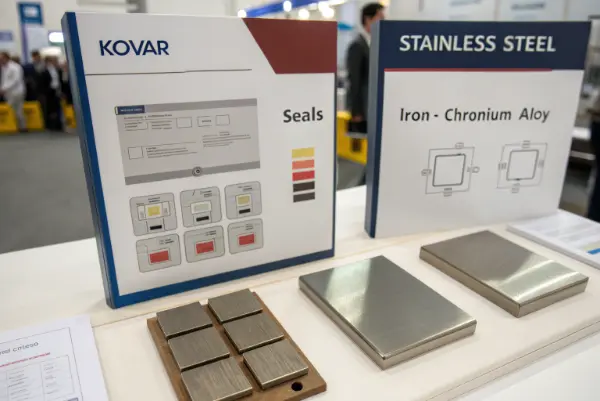
Are you struggling to choose a metal for your electronic housing? Picking the wrong material can cause your glass seals to break when parts get hot. This leads to costly leaks and failed projects. Let us look at how Kovar and stainless steel compare.
Kovar is a nickel-cobalt-iron alloy made to match the thermal expansion of glass, making it perfect for electronic glass-to-metal seals. Stainless steel is an iron alloy with chromium that offers high strength and great rust resistance but expands too much with heat. Choose Kovar for thermal matching, and choose stainless steel for basic strength and rust protection.
Deciding between these two metals can be confusing. I have seen many engineers pick stainless steel just because it is cheaper, only to watch their expensive sensors fail in testing. Let us dig into the real details so you can make the safest choice for your next project.
Is Kovar considered steel?
You might look at a piece of Kovar and think it is just another type of steel. But treating it like normal steel can ruin your design. If you do not know what Kovar really is, you might use it in the wrong places.
No, Kovar is not considered steel. While it contains iron like steel does, Kovar is actually a controlled-expansion alloy. It is made of 29% nickel, 17% cobalt, and 53% iron. Steel is mostly iron and carbon. Kovar lacks the carbon that makes steel strong, focusing instead on holding its shape when heated.
Let us break down why Kovar stands in a class of its own. When I first started working in a CNC shop, I thought Kovar was just a fancy stainless steel. I saw the shiny metal and assumed it would act just like the steel we cut every day. I was very wrong.
The Secret Ingredient Mix
Steel gets its power from carbon. When you mix iron and carbon, you get a hard metal that can hold heavy weights. But Kovar is built for a completely different job. The makers put a lot of nickel and a lot of cobalt into the iron base. They keep the carbon very low, almost at zero. This changes how the entire metal acts from the inside out. It is not made to hold up buildings; it is made to stay exactly the same size when the temperature changes.
Why Not Just Use Normal Steel?
If you need to glue a piece of glass to a metal box, normal steel is a terrible idea. Think about a hot light bulb. When steel gets hot, it gets bigger very fast. The glass does not get bigger at the same fast speed. So, the glass pulls and then cracks. Kovar gets bigger at the exact same slow speed as the glass. This is the only reason this metal exists.
Comparing the Two Metals
Here is a simple look at what makes them so different from each other:
| Feature | Kovar Material | Stainless Steel (Like 304) |
|---|---|---|
| Main Metals Inside | Iron, Nickel (29%), Cobalt (17%) | Iron, Chromium (18%), Nickel (8%) |
| Carbon Level | Very Low (under 0.02%) | Low (under 0.08%) |
| Heat Expansion Rate | Very Low (matches glass) | High (expands a lot) |
| Main Factory Use | Electronic Glass Seals | General Strong Parts |
Because Kovar has so much pure nickel and cobalt, it costs a lot more money than regular steel. You should only use Kovar when you absolutely need that special heat trick to save your glass. If your electronic housing does not have any glass or ceramic seals, you do not need Kovar at all. Plain stainless steel will do the job just fine and save you a lot of money in the end. It is all about using the right tool for the specific job.
Does Kovar rust?
You might worry that your shiny new electronic housing will turn brown and ugly over time. Rust can eat away your parts and let water inside your device. Let us see if Kovar can survive in bad weather.
Yes, Kovar can rust. Because it is made mostly of iron and does not have chromium, it will rust if you leave it in wet or salty air. Stainless steel has chromium, which stops rust. To keep Kovar from rusting, you must coat it or plate it with another metal like gold or nickel.
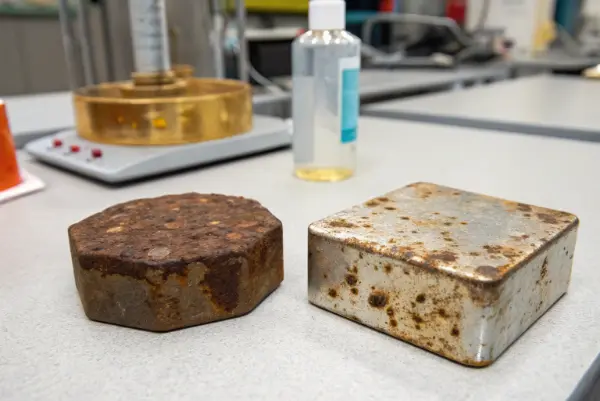
Rust is a big headache for any mechanical engineer. I remember a client from Germany who designed a great robot arm. He used bare Kovar for a small ocean sensor housing. He thought it was like stainless steel. The part rusted in a week, and the whole device broke. This was an expensive lesson.
The Missing Shield
Stainless steel has a magic shield called chromium. When chromium touches the open air, it makes a clear, hard skin that stops all rust. Kovar does not have this chromium shield. Since Kovar is mostly made of plain iron, water and air attack it right away. It acts much more like normal rusty iron than the shiny stainless steel you see in your kitchen. If you touch it with wet hands, even your sweat can leave a rust mark.
How to Protect Your New Parts
You can still use Kovar in bad weather or wet places, but you have to help it survive. You cannot just leave it bare and hope for the best. At QuickCNCs, we always tell our overseas clients to add a layer of outer protection. This step is key to making the part last a long time.
Common Ways to Stop the Rust
| Protection Method | How It Actually Works | Best Place to Use It |
|---|---|---|
| Nickel Plating | Adds a hard, shiny nickel skin on the outside | Basic indoor electronics and small parts |
| Gold Plating | Puts a very thin layer of real gold on top | Space tools and high-end tiny sensors |
| Painting | Covers the metal completely with thick paint | Large outside boxes that do not need tiny details |
If your part just sits inside a dry, clean room, you might not need to coat it right away. But for almost all real electronic housings, plating is an absolute must. If you skip this extra step, the rust will slowly creep under your expensive glass seals. This totally breaks the very seal you used the Kovar to make in the first place. So always remember to factor the extra time and cost of plating into your main project budget.
What is the difference between Kovar and Alloy 42?
You need a metal that matches glass, but Kovar seems too expensive. You might pick Alloy 42 to save money, only to find out it does not match your specific glass. This mistake wastes time and ruins prototypes.
The main difference between Kovar and Alloy 42 is the cobalt. Kovar has cobalt, which makes it match hard glasses perfectly over a wide range of heat. Alloy 42 has 42% nickel and no cobalt. It works well with soft glasses and ceramics but cannot handle the extreme heat changes that Kovar can.
Choosing between Kovar and Alloy 42 is a very common trap for new buyers. Many people look at the high price tag of Kovar and jump straight to Alloy 42 to save money. But as a sourcing expert, I always tell them to look at their glass first before they look at the metal price.
The Important Role of Cobalt
Cobalt is a very expensive metal. Kovar uses a lot of it, right around 17 percent. This cobalt changes the way the metal grows when it gets really hot. Kovar has a magic heat curve. As it gets hotter and hotter, it grows exactly like hard borosilicate glass. Alloy 42 does not have any cobalt at all. It grows in a simple, straight line when it gets hot. It cannot copy the curve of hard glass.
Hard Glass versus Soft Glass
You must always match the metal to the exact glass you are using for your seal. If you use hard glass, you must spend the extra money and use Kovar. If you try to use soft glass, then Alloy 42 is actually the much better and safer choice.
Quick Metal Comparison Guide
| Feature to Check | Pure Kovar | Standard Alloy 42 |
|---|---|---|
| Contains Cobalt Inside? | Yes (about 17%) | No (0%) |
| Total Nickel Amount | 29% | 42% |
| Best Glass Match | Hard glass (like Pyrex or borosilicate) | Soft glass types |
| General Price Tag | Very High | Much Lower |
I once helped a senior robotics engineer who was trying to seal a special ceramic plug. He bought Kovar because he just thought it was the best metal in the world. But for his specific ceramic material, Alloy 42 was actually a much closer match. We switched the material on the very next batch. He saved his company money, and the parts worked perfectly without cracking. Always talk to your glass maker before you buy the raw metal.
Is Kovar hard to machine?
Are you worried that making parts out of Kovar will break your tools and delay your order? Metals that are hard to cut can make your project run late. Let us look at how Kovar acts inside a CNC machine.
Yes, Kovar is quite hard to machine compared to standard stainless steel. It is very gummy and tends to stick to cutting tools. This causes tools to wear out fast and can leave a rough finish on the part. You must use sharp tools, slow cutting speeds, and lots of cooling fluid.
When I first tried to run a CNC machine to cut Kovar, it was a total nightmare. The metal did not chip away cleanly like aluminum or steel. It just pushed out of the way and smeared everywhere. This is a very big deal if you need tight spaces, like a ±0.01mm fit for tiny robotic joints.
The Big Gummy Problem
Kovar is not super hard like heavy tool steel. Instead, it is very tough and very sticky. In the shop, we call this being "gummy." When the sharp cutting tool hits the Kovar metal, the metal grabs onto the tool. It builds up on the cutting edge. Once that build-up happens, the tool snaps, and your expensive part gets a deep, bad scratch that ruins it.
How We Beat the High Heat
Because it is so gummy, cutting Kovar makes a huge amount of heat. If the part gets too hot on the machine table, it will bend out of its proper shape. We have to be very careful and watch the machine closely in the shop.
Our Shop Rules for Cutting Kovar
| Machining Step | The Wrong Way to Do It | The Right Way to Do It |
|---|---|---|
| Cutting Speed | Fast (trying to save time) | Slow and very steady |
| Tool Choice | Standard dull steel tools | Very sharp fresh carbide tools |
| Coolant Fluid Use | Just a little bit of spray | High pressure, a whole lot of it |
| Cut Depth | Tiny scraping cuts | Deep, strong, firm cuts |
If your new design has tiny deep holes or very thin outer walls, machining Kovar will cost you much more money. We have to stop the machine and change our tools very often to keep the final cuts clean and smooth. If you send us a Kovar job at QuickCNCs, we always check your drawing closely to find simple ways to make it easier to cut. Sometimes, making one sharp inside corner just a little bit rounder can save many hours of total machine time.
Conclusion
Choosing between Kovar and stainless steel depends on your need for glass seals and rust protection. Understand these facts to get precise, long-lasting parts for your next big project.