
Are you struggling with Kovar parts failing in space? Bad parts cost a lot of money and ruin big missions. I will show you how strict quality checks stop these errors and keep your aerospace projects safe.
Quality control for Kovar aerospace parts needs tight size limits, clear material tracking, and deep testing. Aerospace makers use strict rules to stop errors. They check parts with CMM machines and track all heat treatments. This stops leaks and keeps the parts safe during extreme heat and cold.
We must look at the exact rules for making these tough metal parts. Let us break down the main questions you might have.
What is the machinability rating of Kovar?
Do your cutting tools break when making Kovar parts? Kovar is a very hard and sticky metal to cut. This slows down your work and costs you money. I will explain why this metal is so tough.
Kovar has a machinability rating of about 30% to 40% compared to standard steel. It is very gummy and makes long metal chips. This causes tools to wear out fast. You need sharp tools, slow cutting speeds, and lots of cooling fluid to cut it well.
I started my CNC shop many years ago. I remember my first Kovar job very well. The cutting tools broke in five minutes. Kovar is a special mix of iron, nickel, and cobalt. It expands at the exact same rate as hard glass. This makes it perfect for space parts that need glass windows. But it is very stubborn on the CNC machine. We must control the cutting process very carefully. We use Statistical Process Control to watch our work. We call this SPC. SPC tells us if a tool is getting dull. A dull tool makes the part too hot. Heat changes the size of the metal part. Aerospace parts need sizes correct down to the micrometer level. We cannot allow any heat damage.
We also need perfect surface finishes on these parts. Often, we must make the surface 16 microinches or better. A smooth surface stops leaks in sealed space boxes. A rough surface will cause a leak. We change our cutting tools often to keep the surface smooth. We use special cutting oils to keep the metal cool. I always tell my team to watch the chip shape. Good chips mean the tool is cutting well. Long chips mean the tool is struggling.
How we cut Kovar safely
| Tool Type | Cutting Speed | Cooling Fluid Need | Reason for Rule |
|---|---|---|---|
| Carbide tools | Very slow | High pressure oil | Carbide stays sharp longer. |
| Coated drills | Slow | Lots of fluid | Stops the drill from melting. |
| Fine mills | Medium | Direct spray | Makes the surface very smooth. |
What are the aerospace material standards?
Do you worry about getting fake metal from your suppliers? Using the wrong metal can cause your airplane parts to break. I will show you the exact material rules you must follow for safety.
Aerospace material standards are strict rules for the chemicals and strength of metals like Kovar. The main rule for Kovar is AMS 2072 or ASTM F15. These rules make sure the metal has the exact mix of iron, nickel, and cobalt. This keeps the thermal expansion perfect.
I always check the metal papers first. We call this traceability. We must keep records of every piece of metal we buy. We track the heat lots. We track the cleaning steps. We track the baking steps. If an engineer asks for the history of a part, I must show it to him. The metal must pass extreme tests. Space gets very hot and very cold. Kovar parts must go through thermal cycling tests. This means we freeze them and heat them over and over again. They must not crack. They must hold their shape.
We also check the chemicals inside the metal. We use special machines to look at the iron, nickel, and cobalt mix. The mix must be perfect. If the mix is wrong, the part will expand too much in space. It will break the glass it holds. I always buy metal from trusted mills. I never buy cheap metal from unknown places. Cheap metal has dirt inside it. Dirt ruins the glass seal. We must test the metal before we cut it. We must test the metal after we cut it. We must test the metal after we heat it. This is the only way to be safe.
Key rules for Kovar metal
| Test Type | What we look for | Tool Used | Why we do it |
|---|---|---|---|
| Chemical check | Exact metal mix | Spectrometer | Stops bad expansion. |
| Thermal test | Shape changes | Heat chamber | Proves it survives space. |
| Paper check | Mill history | Record book | Proves the metal is real. |
What is aerospace quality control?
Are hidden cracks ruining your space boxes? Small hidden flaws are impossible to see with your eyes. They will cause big leaks in space. I will show you how deep quality checks find these hidden dangers.
Aerospace quality control is a deep system of checks to make sure parts are perfect and safe. It uses tight size checks, material tracking, and special tests that do not break the part. Inspectors use CMM machines to measure sizes. They also use X-rays to find hidden cracks.
In my years making parts, I learned that looking is not enough. You cannot see a tiny hole inside solid metal. We use special testing to look inside. We call this Non-Destructive Testing. We use sound waves to check the metal. We call this ultrasonic testing. We also use X-rays to look inside the metal. We call this radiographic testing. These tests find hidden flaws. If we miss a flaw, the part will fail in space. A failed part ruins the whole mission.
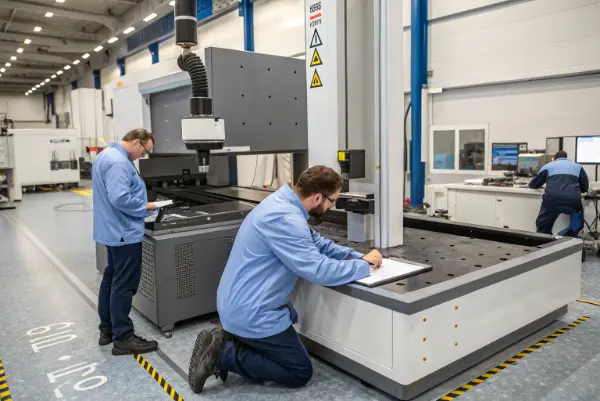
We also use a CMM machine. A CMM measures the part with a tiny probe. It checks if the part is flat. It checks if the holes are perfectly round. We also put sensors on our CNC machines. These sensors watch the work in real time. They tell us if something goes wrong right away. We can stop the machine before it makes a bad part. This saves material and time. We also write a strict acceptance checklist. We check the approved metal papers. We do a First Article Inspection. We check the first part against the drawing. We do dimensional checks while the machine is running. We document every single result.
Tests we do on every part
| Test Name | What it finds | When we do it | Result we want |
|---|---|---|---|
| X-ray test | Hidden air holes | After cutting | Solid metal only. |
| CMM check | Size mistakes | After cutting | Exact size match. |
| Sensor check | Tool problems | During cutting | Smooth machine running. |
What is the standard for aerospace QMS?
Is your factory messy and making mistakes? A bad system causes late parts and angry buyers. You need a strict rulebook to fix this. I will explain the best rulebook for making airplane parts.
The standard for aerospace Quality Management Systems is AS9100. This is a strict rulebook for factories making space and flight parts. It forces factories to write down all steps, fix mistakes quickly, and audit their work. Following AS9100 means you get safe parts every single time.
I worked hard to understand the AS9100 rules. It is the big boss of rulebooks. At QuickCNCs, we respect these rules very much. Engineers need trust. AS9100 gives them trust. The standard tells us to make a control plan. A control plan lists every check we must do. We also use a tool called PFMEA. This tool helps us guess what might go wrong before we even start cutting. We try to stop mistakes early. We do not want surprises.
We also use advanced computer programs. These programs simulate stress and heat on the Kovar parts. We see how the part acts in space before we cut the metal. We can change the design if the computer shows a problem. AS9100 also tells us how to handle bad parts. If we make a bad part, we lock it in a red box. We find out why it is bad. We write down the reason. We change our process to never make that mistake again. We also check our suppliers. We only use suppliers who pass our tests. We audit them every year. We make sure they follow the same strict rules we follow.
What AS9100 asks us to do
| Rule Name | What we must do | Why we do it | Benefit to you |
|---|---|---|---|
| Control Plan | Write all checks | Stops missed steps | You get perfect parts. |
| PFMEA | Guess mistakes | Stops errors early | You get parts on time. |
| Audit | Check suppliers | Stops bad material | You get safe material. |
Conclusion
Making Kovar aerospace parts requires strict AS9100 rules, exact machining, and deep testing. Good quality control stops leaks, saves money, and keeps space missions flying safely every single time.