
Struggling to get consistent results when grinding hardened steel parts? The process can be unforgiving, where tiny mistakes lead to costly scrapped parts and project delays. Mastering the specific parameters and best practices for these tough materials is the key to achieving repeatable precision and a flawless surface finish.
To master centerless grinding for hardened steels, you must focus on three critical areas: selecting the right abrasive wheel (like CBN or seeded gel ceramics), meticulously controlling process parameters such as wheel speeds and feed rates, and implementing a precise dressing strategy. The key is the careful balance between the grinding wheel, regulating wheel, and work rest blade to manage the unique challenges of hard materials.
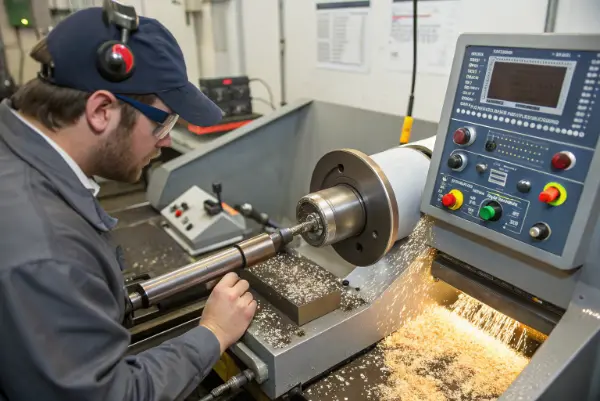
That’s the short answer, but achieving true mastery requires a much deeper understanding. It’s about knowing not just what to do, but why you’re doing it. Over my years in manufacturing, I’ve seen countless projects get derailed by simple oversights in the grinding process. Let’s break down the principles, parameters, and common problems I’ve encountered, so you can avoid those same mistakes and turn this challenge into one of your most reliable manufacturing processes.
What are the principles of centerless grinding?
Many engineers I’ve worked with understand what centerless grinding does, but they don’t fully grasp the physics behind it. This knowledge gap becomes a huge problem when things go wrong. When you face issues like chatter or taper, not knowing why it’s happening makes troubleshooting feel like guesswork.
The core principle of centerless grinding is a three-point contact system that secures and machines a workpiece without using centers or chucks. It relies on the interaction between a high-speed grinding wheel for material removal, a slower regulating wheel for rotation and feed control, and a stationary work rest blade for support. This setup generates the necessary forces to ensure stability and roundness during the grinding operation.
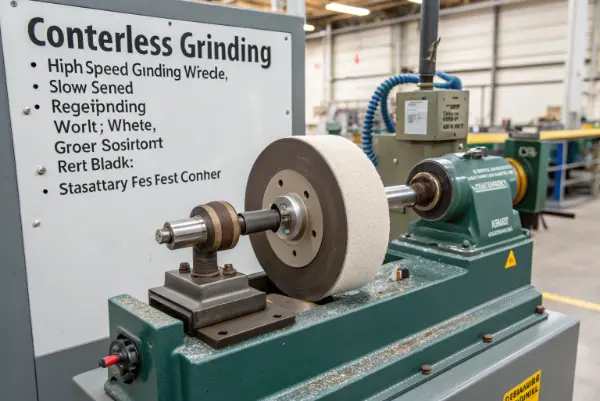
To really get it, you need to look at how these three parts work together. I once had a project with extremely tight roundness tolerances for some hardened steel pins. We were getting inconsistent results, and the team was stumped. The parameters seemed perfect. The problem, it turned out, was a tiny amount of wear on the work rest blade, which was slightly changing the geometry of this three-point system. Understanding these fundamentals is what allowed us to spot it.
The Three-Point Contact System Explained
The magic of centerless grinding lies in how the workpiece is positioned and controlled. It’s a dynamic balance of forces.
| Component | Primary Function | Key Characteristic for Hardened Steel |
|---|---|---|
| Grinding Wheel | Removes material at high surface speed. | Must use superabrasives like CBN or engineered ceramics. |
| Regulating Wheel | Rotates the workpiece and controls the axial feed. | Provides consistent friction; angle dictates through-feed speed. |
| Work Rest Blade | Supports the workpiece from below. | Blade angle and height are critical for achieving roundness. |
The Grinding Wheel is the tool doing the actual cutting. For hardened steels (typically above 45 HRC), you can’t just use a standard aluminum oxide wheel. You’ll get excessive heat, surface burn, and rapid wheel wear. This is where superabrasives like Cubic Boron Nitride (CBN) or advanced ceramic wheels shine. They cut cooler and hold their form much longer, which is essential for maintaining tolerance over a long production run.
The Regulating Wheel is the "brains" of the operation. It’s usually made of a rubber-bonded material to provide a firm, high-friction grip on the workpiece. It spins at a much lower speed than the grinding wheel. By tilting the regulating wheel at a slight angle, you create an axial force that pulls the workpiece through the machine in a process called through-feed grinding. The rotational speed of this wheel directly controls the surface speed of the part you’re grinding, a critical parameter for finish.
Finally, the Work Rest Blade supports the part. Its height is one of the most critical setup adjustments. Setting the workpiece centerline above the centerline of the two wheels is what generates the rounding action. If it’s too high or too low, you’ll produce lobed or out-of-round parts, no matter how perfect your other settings are.
What are the key parameters in centerless grinding?
You know the principles, but setting the machine parameters can feel like navigating a minefield, especially with hardened materials. A wrong setting for wheel speed or feed rate doesn’t just ruin the part; it can cause surface burns, introduce microcracks, or even damage your very expensive CBN grinding wheel.
The most critical parameters for centerless grinding hardened steel are grinding wheel speed (typically 45-60 m/s for CBN), workpiece rotational speed (15-30 m/min), and feed rate (controlled by regulating wheel angle). Equally important are the dressing parameters—the depth and speed of the diamond tool used to true the grinding wheel—as this directly impacts the wheel’s cutting ability and the final surface finish.
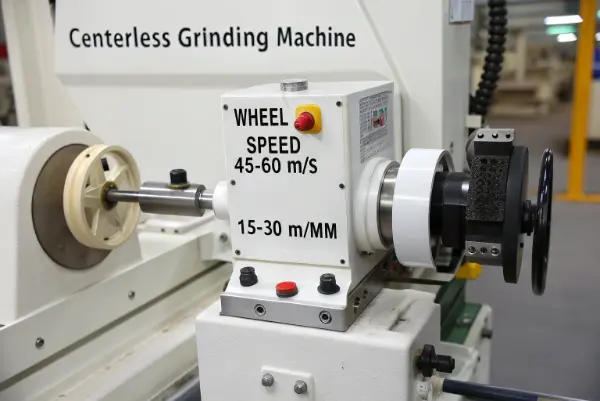
Think of these parameters as a recipe. If one ingredient is off, the whole dish is ruined. For hardened steel, the "heat" in your recipe is much higher, so your control needs to be tighter. I often tell younger engineers on my team that the datasheet for the grinding wheel is their starting point, not the final answer. We always run a few test pieces, document the parameters, and inspect the results under a microscope before committing to a full production run. This disciplined approach saves us from creating a whole batch of expensive scrap metal.
Fine-Tuning Your Grinding Recipe
Getting the parameters right is a balancing act. You’re trying to maximize material removal rate without introducing too much heat or stress into the workpiece. Let’s break down the most important settings.
1. Speeds and Feeds
- Grinding Wheel Speed: This is the surface speed of the abrasive. For hardened steels using CBN wheels, this is typically set high, often in the 45 to 60 meters per second (m/s) range. A higher speed allows each abrasive grain to take a smaller chip, reducing the cutting force and generating less heat.
- Workpiece Rotational Speed: This is controlled by the regulating wheel and determines how many times the workpiece surface passes the grinding wheel. A typical range is 15 to 30 meters per minute (m/min). A slower speed gives a better surface finish but increases cycle time.
- Feed Rate (Through-Feed): This is how fast the part moves axially through the grinder. It’s controlled by the angle of the regulating wheel. A steeper angle means a faster feed rate. For roughing passes on hardened steel, you might use a faster feed, then slow it down significantly for the final finishing pass to achieve the required size and surface finish.
2. Dressing Parameters
Dressing is the process of re-sharpening and truing the grinding wheel face. For hardened steel grinding, this is not an optional step—it’s part of the process. An undressed or poorly dressed wheel won’t cut; it will rub, generate immense heat, and cause thermal damage.
- Dressing Depth: How deep the diamond dresser cuts into the wheel. A deeper cut creates a "sharper," more open wheel surface, good for roughing. A shallower cut creates a finer surface, ideal for finishing.
- Dressing Traverse Speed: How fast the dresser moves across the wheel face. A faster traverse creates a rougher wheel texture, while a slow traverse creates a smoother one. I’ve seen operators use the same dressing parameters for both roughing and finishing, which is a huge mistake. We use a fast, coarse dress for the initial passes and a slow, fine dress just before the final pass. This two-stage approach is critical for achieving both efficiency and a mirror-like finish.
What are common problems in centerless grinding and how do you solve them?
Even with perfect principles and well-chosen parameters, problems will arise. The real test for an engineer is not avoiding problems, but being able to diagnose and solve them quickly. In my experience, most issues in centerless grinding can be traced back to a handful of common culprits.
The most common problems in centerless grinding are out-of-roundness (lobing), chatter marks, taper, and surface burn. These are often solved by adjusting the setup geometry, such as the work rest blade height and angle, optimizing wheel dressing parameters to ensure sharpness, or modifying speeds and feeds to reduce grinding forces and heat generation. A systematic, one-change-at-a-time approach is crucial for effective troubleshooting.
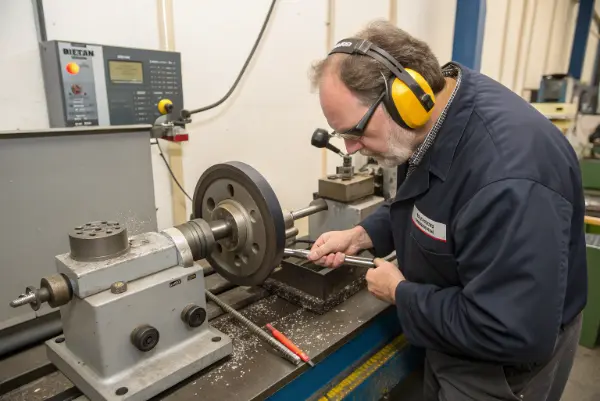
I remember a high-volume job for hardened shafts where we suddenly started seeing chatter marks on every single part. The operator was convinced the machine was broken. Instead of panicking, we went through a checklist. We checked the wheel balance, the dressing, the coolant flow. The issue turned out to be vibrations from a nearby stamping press that had just been installed. We solved it by adding vibration-damping pads under the grinder. It’s a reminder that sometimes the problem isn’t even inside your machine.
A Practical Troubleshooting Guide
When you see a defect, resist the urge to change multiple things at once. Change one thing, measure the result, and document it. Here’s a guide to the most common issues I’ve faced.
1. Out-of-Roundness (Lobing)
- Symptom: The part is not perfectly circular. You’ll often see a "triangular" shape (3-lobe) or a 5-lobe pattern.
- Common Cause: Incorrect work rest blade height. The workpiece centerline is either too low or too high relative to the wheel centerlines, preventing the natural rounding action. A worn or incorrectly angled blade top can also be the culprit.
- Solution:
- Primary Fix: Adjust the height of the work rest blade. For generating roundness, the part centerline should be above the centerline of the wheels, typically by about half the part’s diameter.
- Secondary Fix: Check the work rest blade for wear. Ensure the top angle is correct for your part diameter. A flatter angle is generally better for finishing.
2. Chatter or Vibration Marks
- Symptom: Regular, repeating marks or waves on the workpiece surface.
- Common Cause: This is a system vibration issue. It can come from an unbalanced grinding wheel, a glazed or loaded wheel that is rubbing instead of cutting, incorrect dressing, or even external vibrations.
- Solution:
- Primary Fix: Re-dress the grinding wheel. Use a slightly faster traverse speed and a slightly deeper cut to create a sharper, more free-cutting wheel face.
- Secondary Fix: Check the grinding wheel balance. If it’s an older machine, check the spindle bearings for wear. Ensure the coolant is clean and flowing properly to wash away swarf.
3. Taper
- Symptom: The workpiece has a different diameter at one end than the other.
- Common Cause: The work rest blade is not parallel to the centerline of the grinding wheel. Also, the regulating wheel or grinding wheel dressers may not be set parallel to the wheel axis.
- Solution:
- Primary Fix: Indicate the work rest blade to ensure it is perfectly parallel to the grinding spindle.
- Secondary Fix: Use a test bar and indicators to check the alignment of the regulating wheel. If the part is tapered, you can introduce a very slight correction in the dresser path to compensate, creating a "corrected" wheel face that produces a straight part.
Conclusion
Mastering centerless grinding for hardened steel comes down to controlling the interplay between the machine’s geometry, the process parameters, and the condition of your grinding wheel. It requires a methodical approach.