
Aerospace components demand near-perfect precision, as even a small flaw can lead to catastrophic failure. You need cylindrical parts with flawless surfaces and tight tolerances, but traditional grinding methods are slow and costly. How do you get the required quality without breaking your budget and timeline?
To achieve ultra-precision, you must master three areas. First, select the correct grinding wheel composition (like CBN or diamond) for exotic aerospace alloys. Second, maintain extreme process stability through machine rigidity, thermal control, and optimized coolant delivery. Finally, implement advanced metrology and in-process monitoring to verify that every single part meets strict geometric and surface finish requirements before it leaves the machine.
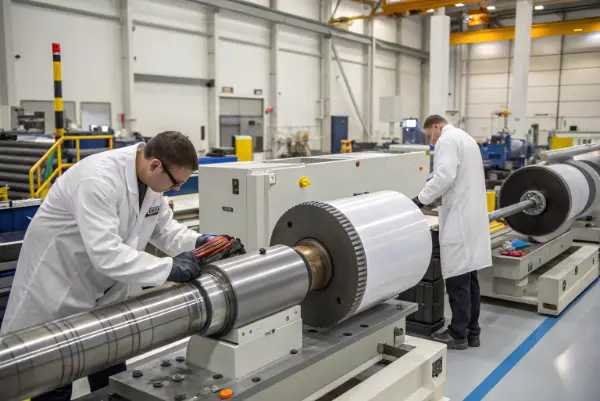
Achieving these tight specifications is not a simple task. I remember working on a project for a client developing actuators for aircraft landing gear. The central shaft was made of a high-strength titanium alloy and required a roundness tolerance of less than 2 microns. The initial supplier struggled, producing parts with chatter marks and inconsistent diameters. This experience taught me that true aerospace-grade grinding goes far beyond just having a good machine. It is a complete system where the material, the process parameters, and the verification methods must all work in perfect harmony.
This guide will break down the essential elements needed to conquer these challenges. We will explore how to handle difficult materials, what geometric controls are most critical, and how to stabilize the entire process from start to finish. Understanding these details is the key to successfully sourcing or manufacturing high-precision aerospace components.
How Do Exotic Aerospace Materials Challenge Centerless Grinding?
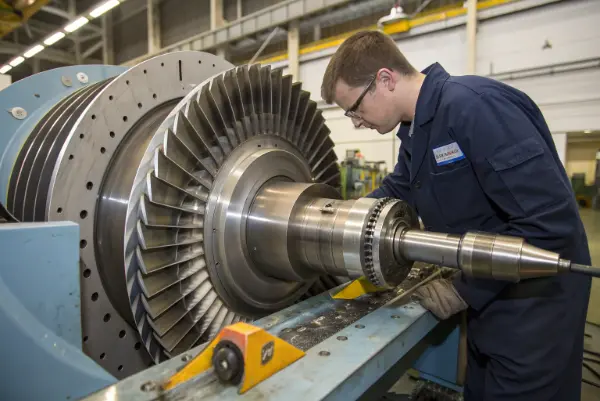
You have a perfect design for a turbine shaft or a hydraulic piston, but it is made from Inconel or a titanium alloy. These materials are incredibly strong and heat-resistant, but they are a nightmare to machine. They can wear out grinding wheels fast, cause surface defects, and make holding tolerances seem impossible.
Exotic aerospace materials challenge centerless grinding primarily through their high hardness and low thermal conductivity. Materials like Inconel and titanium alloys cause rapid grinding wheel wear and generate intense localized heat. This can lead to thermal damage, surface hardening, and residual tensile stress in the workpiece. This makes it difficult to maintain consistent surface finish and dimensional accuracy throughout a production run without specialized wheels and cooling techniques.
Dive Deeper: Taming the Toughest Materials
When I first started managing projects involving these superalloys, the scrap rate was a major concern. A common mistake is to treat them like hardened steel. But their properties are completely different, and your grinding strategy must adapt accordingly. The heat they generate doesn’t dissipate into the part easily. Instead, it concentrates right at the point of contact with the grinding wheel. This is the root cause of many grinding problems. To succeed, you need to manage heat and abrasion with precision.
Material-Specific Grinding Challenges
The difficulty of grinding these materials is not uniform. Each alloy family presents its own set of problems that require a tailored approach. For engineers like Alex, understanding these differences is crucial when specifying manufacturing requirements or troubleshooting production issues.
| Material Family | Primary Challenge | Recommended Grinding Wheel Abrasive | Key Process Consideration |
|---|---|---|---|
| Titanium Alloys (e.g., Ti-6Al-4V) | High chemical reactivity, tendency to smear | Silicon Carbide (SiC) or CBN | High-pressure, high-volume coolant to prevent wheel loading and part ignition. |
| Nickel-Based Superalloys (e.g., Inconel 718) | Extreme work-hardening, high cutting forces | Seeded Gel (SG) Ceramic or CBN | Lower wheel speeds to reduce heat; sharp, open-structured wheel to minimize rubbing. |
| High-Strength Stainless Steels (e.g., 17-4 PH) | Gummy behavior, poor surface finish | Aluminum Oxide (Al2O3) or SG Ceramic | Frequent wheel dressing to maintain sharpness; use of active coolants (EP additives). |
The Role of the Grinding Wheel
The grinding wheel is not just a tool; it’s the heart of the operation. Using a standard aluminum oxide wheel on Inconel is like trying to cut a diamond with a plastic knife. The abrasive grains will dull almost instantly, and you’ll spend more time rubbing and generating heat than actually removing material. This is why advanced abrasives are necessary.
- Cubic Boron Nitride (CBN): CBN is the second hardest material after diamond. It is ideal for grinding hardened ferrous alloys and nickel-based superalloys because it has excellent thermal stability and wear resistance.
- Diamond: While it is the hardest material, diamond is not suitable for grinding ferrous metals (like steel or Inconel) because the carbon in the diamond reacts with the iron at high temperatures, causing rapid wheel breakdown. It is, however, excellent for grinding non-ferrous materials like titanium composites and ceramics.
Choosing the right abrasive is only the first step. The bond that holds the abrasive grains, the grain size, and the wheel’s structure (porosity) are equally important for creating a wheel that cuts freely and stays cool.
What Goes Beyond Simple Diameter Tolerances in Aerospace Grinding?
You have received a batch of parts. The diameter measures perfectly within the ±0.01mm tolerance you specified. However, when you assemble them, the bearing fits loosely on one end and binds on the other. The system fails a vibration test. The problem is not the diameter; it’s the hidden geometric errors that calipers cannot detect.
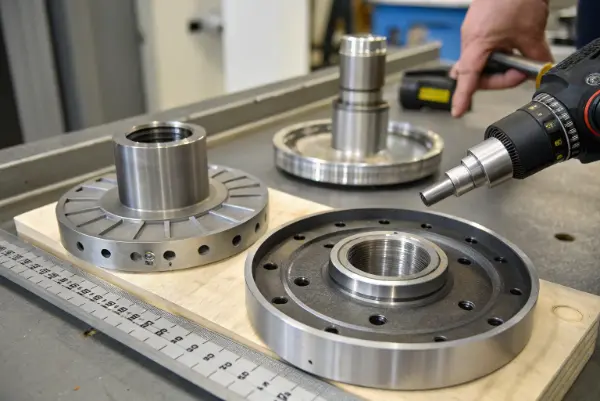
Beyond simple diameter, aerospace grinding demands strict control over geometric form. This includes roundness (how perfectly circular a part is), straightness (the deviation from a perfectly straight line), and cylindricity (the combination of roundness, straightness, and taper along the part’s length). In addition, surface finish (Ra, Rz) and the absence of surface defects like chatter or thermal damage are critical for component life and performance.
Dive Deeper: The Geometry of Performance
In aerospace, how a part is shaped is just as important as its size. A shaft for a high-speed rotor might have a diameter tolerance of 10 microns, but its roundness tolerance could be less than 2 microns. Why? Because any deviation from a perfect circle will create an imbalance, leading to vibration at high RPMs. This vibration can cause premature bearing failure or even catastrophic system failure. I’ve seen projects delayed for weeks because of a failure to control these subtle geometric characteristics.
Key Geometric and Surface Parameters
Let’s break down the most important characteristics that engineers like Alex must manage. These are the details that separate a simple cylindrical part from a true aerospace-grade component.
| Parameter | What It Measures | Why It’s Critical in Aerospace | Common Centerless Grinding Cause of Error |
|---|---|---|---|
| Roundness (Circularity) | How closely a cross-section conforms to a perfect circle. | Prevents vibration in rotating parts (shafts, pins); ensures uniform seal pressure. | Incorrect blade angle, part height, or regulating wheel speed causing multi-lobed shapes. |
| Straightness | How much a surface deviates from a perfectly straight line along its axis. | Ensures smooth linear motion in actuators and pistons; prevents binding in long shafts. | Misalignment between grinding and regulating wheels; worn or poorly dressed wheels. |
| Cylindricity | A 3D tolerance controlling roundness, straightness, and taper simultaneously. | Guarantees the entire form of a cylindrical part is within a tolerance zone. | A combination of all factors that cause roundness and straightness errors. |
| Surface Finish (Ra) | The average roughness of a surface. | Reduces friction and wear; improves fatigue life by eliminating stress risers. | Incorrect wheel grit, slow traverse speed, or inadequate coolant. |
| Surface Integrity | The condition of the subsurface layer, including residual stress and microcracks. | Prevents premature fatigue failure under cyclic loading. | Excessive heat (grinding burn) causing tensile stress or microstructural changes. |
The Challenge of Multi-Lobed Shapes
A unique problem in centerless grinding is the creation of "lobed" shapes. A part can have an odd number of lobes (e.g., 3, 5, 7) and still measure the same constant diameter with a two-point micrometer. However, it is not truly round. This is a classic trap for inexperienced shops. The part passes a simple diameter check but will fail in a V-block or a precision collet. This error is typically caused by incorrect geometric setup of the machine, where the angles between the work-rest blade, grinding wheel, and regulating wheel are not optimized. Verifying true roundness requires multi-point measurement equipment, not just calipers.
What Are the Hidden Keys to a Stable Centerless Grinding Process?
Your supplier is producing good parts, but not consistently. The first 50 pieces are perfect, but the next 50 have chatter marks and are out of tolerance. Production stops, the machine is readjusted, and the cycle repeats. This inconsistency costs you time, money, and confidence in your supply chain.
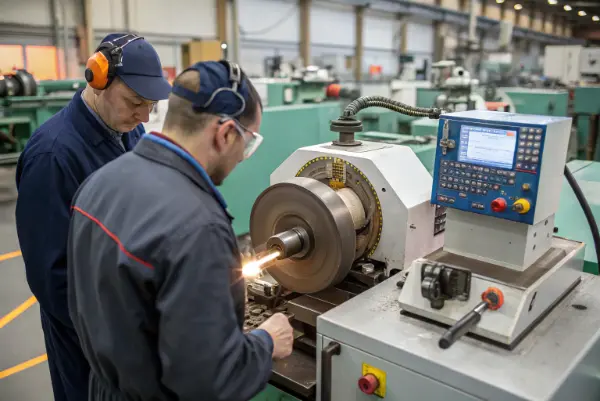
The hidden keys to a stable centerless grinding process are controlling machine rigidity, thermal stability, and coolant management. A machine must be stiff enough to resist vibration (chatter). Its temperature must be controlled to prevent thermal expansion from affecting tolerances. Finally, coolant must be filtered, chilled, and delivered at the exact point of cut with enough pressure and volume to prevent grinding burn and wash away swarf.
Dive Deeper: Building a Fortress of Stability
I often compare a high-precision grinding process to a three-legged stool. The legs are Mechanical Stability, Thermal Stability, and Coolant System Integrity. If any one of them is weak, the entire process becomes wobbly and unreliable. Many people focus only on the grinding wheel and speeds, but the foundation supporting the process is where consistency is truly born. Over the years, I have learned to spot the signs of an unstable process just by looking at a machine and its support systems.
The Three Pillars of Process Stability
Let’s examine each of these "hidden keys" in more detail. For an engineer overseeing production, asking your supplier about these specific areas can reveal a lot about their capability.
-
1. Mechanical Stability (The Fight Against Vibration)
- Machine Rigidity: The foundation starts with the machine itself. A heavy, granite-composite base is better at damping vibration than a cast iron one. Hydrostatic or linear motor ways provide stiffer, smoother motion than traditional mechanical screws.
- Wheel Balancing: An unbalanced grinding wheel is a primary source of vibration, which prints directly onto the workpiece as chatter. Modern systems use dynamic in-process balancing to continuously correct for imbalance as the wheel wears.
- Work-Rest Blade: This small, often overlooked component is critical. The blade material (e.g., carbide vs. cast iron), its angle, and its condition directly influence part roundness and stability. A worn or chipped blade is a direct cause of defects.
-
2. Thermal Stability (The Fight Against Expansion)
- Machine Growth: As a grinder runs, motors and friction generate heat. This heat causes the machine structure to expand, which can change the position of the wheel relative to the part by several microns. I once chased a tolerance issue for days, only to find the machine was "drifting" as it warmed up in the morning.
- Solution: Top-tier machines have thermal compensation systems. Sensors monitor temperature at key points, and the CNC control proactively adjusts axes to counteract thermal growth. Chilling the machine’s hydraulic and spindle oil is also standard practice.
-
3. Coolant System Integrity (The Unsung Hero)
- Filtration: Grinding creates incredibly fine particles (swarf). If this swarf is recirculated in the coolant, it gets trapped between the wheel and the part, causing scratches and damaging the surface finish. A system with multi-stage filtration down to 5-10 microns is essential.
- Temperature Control: Hot coolant cannot effectively remove heat from the grinding zone. This leads to "grinding burn," a form of thermal damage that creates tensile stress and can ruin a part’s fatigue life. The coolant must be chilled to a stable temperature.
- Delivery: It’s not enough to just flood the area. High-pressure nozzles aimed directly at the grinding zone are needed to break the air barrier rotating with the wheel and ensure coolant reaches the point of cut.
By focusing on these three foundational pillars, a workshop can move from inconsistent results to a predictable, stable process capable of holding aerospace tolerances all day long.
Conclusion
Mastering aerospace centerless grinding requires a holistic approach that balances material science, geometric precision, and unwavering process stability to meet the industry’s extreme demands for quality and reliability.