
Struggling to find a manufacturing method that meets the extreme precision required for medical devices? Off-the-shelf parts fail to meet unique patient needs, delaying critical innovations and compromising care. CNC machining provides the speed, precision, and material flexibility to solve these challenges effectively.
CNC machining can create a vast range of medical products, including custom surgical instruments, orthopedic implants like hip and knee replacements, dental implants, and housings for electronic medical equipment. Its precision allows for parts perfectly matched to a patient’s anatomy, from tiny bone screws to complex components for diagnostic machines. This capability directly improves patient outcomes and device performance, making it a cornerstone of modern medical manufacturing.
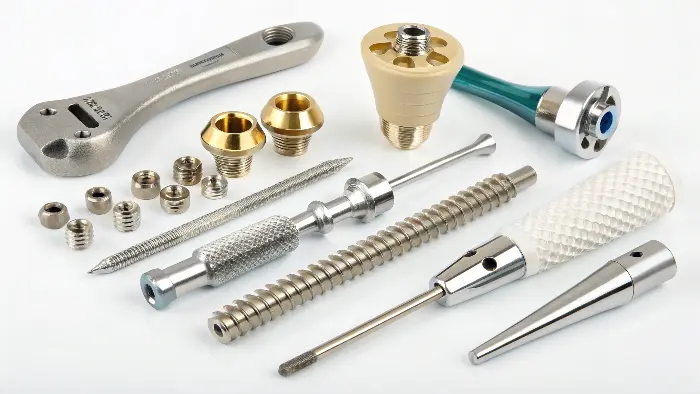
The list of products is impressive, but it only scratches the surface of what’s possible. To truly appreciate the impact of this technology, we need to understand what CNC machining actually means in this highly regulated field. It’s more than just cutting metal; it’s a process built on a foundation of precision, quality control, and deep material knowledge. Let’s break down the key aspects, starting with the fundamentals of how it works in the medical world.
What is CNC machining in the medical industry?
You hear the term "CNC machining" often, but you might not be sure how it applies to the strict standards of the medical field. This uncertainty can lead to choosing the wrong partner or process, causing compliance issues. Understanding its specific role is the first step to leveraging its power for your projects.
In the medical industry, CNC (Computer Numerical Control) machining is a subtractive manufacturing process that uses computer-controlled machines to precisely remove material from a solid block to create a final part. This method is vital for producing high-tolerance, complex components from medical-grade materials like titanium, stainless steel, and PEEK. It ensures consistency, accuracy, and compliance with strict medical standards like ISO 13485.
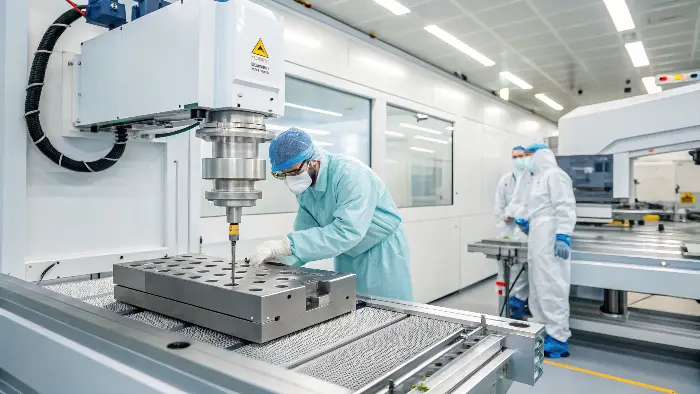
To dive deeper, CNC machining is the bridge between a digital design and a physical, functional medical part. The process is methodical and controlled, which is exactly why it’s so trusted in an industry where there is no room for error.
From Digital to Physical
The journey starts with a CAD (Computer-Aided Design) model. As an engineer, you create a detailed 3D file of the component you need. This file is then loaded into CAM (Computer-Aided Manufacturing) software. The CAM software translates the design into a set of instructions, called G-code, that the CNC machine can understand. This code dictates every movement of the cutting tool—its path, speed, and depth. The machine then executes these instructions flawlessly, carving the final part from a solid block of material. This direct digital-to-physical workflow minimizes human error and ensures that the part produced is an exact match to the original design, every single time.
Key Machine Types in Medical Machining
Not all CNC machines are the same. The type of machine used depends on the complexity of the part. In my experience helping clients like Alex bring their designs to life, we rely on a few key types.
| Machine Type | Description | Best For |
|---|---|---|
| 3-Axis Milling | The cutting tool moves along the X, Y, and Z axes. It’s a foundational technology. | Simpler parts like housings, plates, and brackets. |
| 5-Axis Milling | The cutting tool moves along five axes simultaneously. This allows for machining highly complex shapes in a single setup. | Complex orthopedic implants, surgical instruments, and intricate housings. |
| Swiss-Type Lathe | The workpiece moves, not just the tool. This provides excellent support for long, slender parts. | Bone screws, dental implants, and small pins or connectors. |
I remember a project for a German robotics company that needed a complex component for a surgical robot arm. The part had deep pockets and curved surfaces that were impossible to create with a 3-axis machine. By using 5-axis milling, we machined the entire part from a single piece of titanium in one setup. This maintained the part’s structural integrity and ensured all features were perfectly aligned, a critical requirement for robotic precision.
What makes CNC machining ideal for medical devices?
Choosing the right manufacturing process for a medical part is a critical decision. The wrong choice can lead to part failure, regulatory rejection, and significant budget overruns. CNC machining offers a unique combination of benefits that directly addresses the intense demands of medical device manufacturing, making it a safe and reliable choice.
CNC machining is ideal for medical devices because of its incredible precision, material compatibility, and scalability. It can achieve extremely tight tolerances, often below ±0.005 mm, which is critical for implants and surgical tools. The process works with a wide range of biocompatible materials, from metals to plastics, and can efficiently produce everything from a single custom prototype to thousands of production parts.
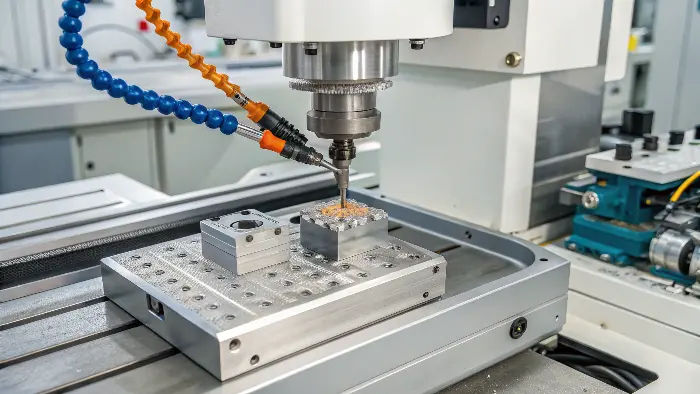
These core benefits—precision, materials, and scalability—are not just buzzwords. They translate into real-world advantages that I see helping engineers every day. They allow for innovation, ensure patient safety, and streamline the entire product development lifecycle from the first idea to the final product.
Unmatched Precision and Complexity
The primary reason CNC is so dominant in medical manufacturing is its precision. Medical devices, especially implants and surgical tools, often have features that must fit together with tolerances measured in microns. For example, the components of a knee implant must move smoothly against each other for decades without wear. CNC machining can create surfaces with specific roughness profiles (Ra) and geometries that are impossible with other methods like casting or molding. This precision ensures that mating parts fit perfectly, fluid-dynamic properties are controlled, and the device functions exactly as designed. This level of control is fundamental to the safety and efficacy of the final product.
Material Versatility and Biocompatibility
Medical devices must be made from materials that are biocompatible, meaning they do not cause a negative reaction when in contact with the human body. They also often need to be strong, lightweight, and resistant to corrosion and repeated sterilization. CNC machining is compatible with a huge range of these specialized materials.
| Material | Key Properties | Common Medical Applications |
|---|---|---|
| Titanium (Ti-6Al-4V) | High strength-to-weight ratio, excellent corrosion resistance, biocompatible. | Orthopedic implants (hips, knees), bone screws, dental implants. |
| Stainless Steel (316L) | High corrosion resistance, durable, easily sterilized. | Surgical instruments, guide pins, bone plates. |
| PEEK | Biocompatible, radiolucent (transparent to X-rays), strong, chemical resistant. | Spinal fusion cages, suture anchors, dental healing caps. |
| Radel (PPSU) | High heat resistance, can withstand repeated sterilization cycles (autoclave). | Instrument handles, trial sizers for implants, device trays. |
This ability to work with the right material for the job, without compromising on design complexity, is a massive advantage.
From Prototype to Production
For an engineer like Alex, who manages multiple design revisions, the path from prototype to production needs to be seamless. CNC machining excels here. You can use the exact same CNC process and the exact same medical-grade material to create a single prototype for testing. Once the design is validated, you can use the very same program to move into low- or high-volume production. This guarantees that the final production parts will have the same properties and performance as the prototype you approved. This consistency eliminates the risk of discovering performance differences late in the process, saving enormous amounts of time and money.
What specific medical components are made with CNC?
You know CNC is used in medicine, but what does it actually make? Without seeing concrete examples, it can be hard to visualize how this technology can apply to your specific project. Let’s explore the exact types of medical products that rely on CNC machining every day in hospitals and clinics around the world.
CNC machining creates a wide array of critical medical components. This includes orthopedic implants like custom knee and hip joints, spinal fusion cages, and bone plates. It’s used for surgical instruments such as forceps and scalpels. Dental labs use it for crowns and abutments. Additionally, CNC is essential for making housings and components for complex diagnostic equipment like MRI machines and insulin pumps.
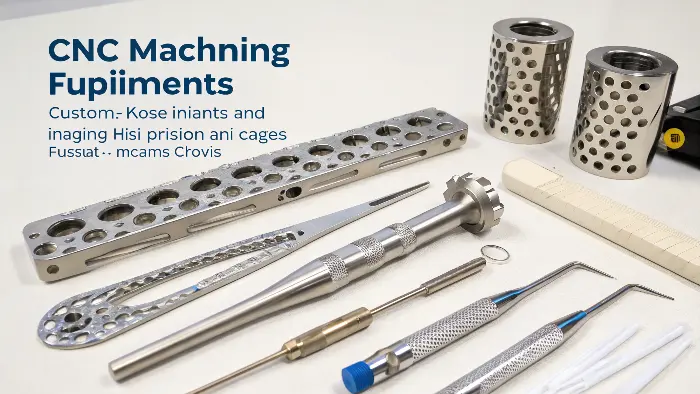
The applications are incredibly diverse, touching almost every area of modern medicine. The common thread is the need for precision, reliability, and often, customization. My insight about creating personalized parts is especially relevant here, as CNC allows us to move away from a one-size-fits-all approach to medicine.
Patient-Specific Implants and Instruments
This is where CNC machining truly shines. Using data from a patient’s CT or MRI scan, a CAD model of a custom implant can be created. This could be a hip stem perfectly matched to the patient’s femur or a cranial plate that perfectly fits the contours of their skull. CNC machines can then produce this one-of-a-kind part from biocompatible titanium or PEEK. The same principle applies to surgical instruments. For complex surgeries, surgeons can use custom-machined drill guides and templates that are based on the patient’s anatomy, increasing the accuracy and success rate of the procedure. This level of personalization was unimaginable just a few decades ago.
A Breakdown of Common CNC Medical Products
To make it clearer, I’ve broken down the common applications into categories. This shows the breadth of CNC’s role in the medical field.
| Category | Examples | Key CNC Benefit |
|---|---|---|
| Orthopedic Implants | Hip Stems, Knee Joints, Spinal Cages, Bone Plates & Screws | Patient-specific customization, complex geometries, superior surface finish for bone integration. |
| Surgical Instruments | Forceps, Scalpels, Retractors, Custom Drill Guides, Biopsy Needles | High strength, corrosion resistance for sterilization, ergonomic and complex shapes. |
| Dental Components | Implants, Abutments, Crowns, Bridges, Surgical Guides | Extreme precision for perfect fit, biocompatible materials, fast turnaround for custom parts. |
| Electronic Housings | Pacemaker Cases, MRI Parts, Monitor Enclosures, Insulin Pump Components | Durability, tight seals to protect electronics, complex internal features, EMI shielding. |
Each of these products presents unique manufacturing challenges. For electronic housings, the key is creating a durable, sealed enclosure with precise internal features to hold sensitive electronics. For surgical instruments, it’s about achieving a balance of strength, light weight, and the ability to withstand harsh sterilization. CNC machining is the versatile tool that can meet all these different demands.
How do you choose the right CNC partner for medical manufacturing?
You have a critical medical component to produce and you need to outsource it. Choosing the wrong supplier can be a disaster, leading to quality defects, missed deadlines, and compliance nightmares that put your project at risk. Knowing what to look for in a CNC partner is the key to protecting your project and your company’s reputation.
To choose the right CNC partner for medical parts, prioritize experience and certifications. Look for a supplier with a proven track record in the medical industry and certifications like ISO 13485. Verify their quality control processes, including material traceability and inspection reports. Clear communication and robust project management are also essential for a successful partnership, especially for complex projects.
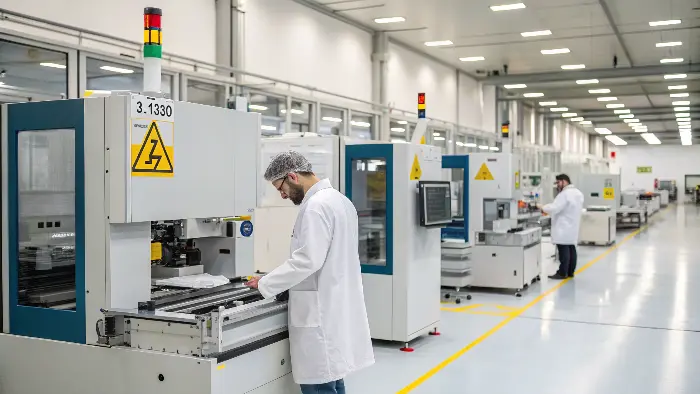
Finding a partner is not just about finding the lowest price; it’s about finding a supplier who becomes an extension of your own team. This is a decision that should be based on trust, capability, and a shared commitment to quality. As someone who has been on both sides of this relationship, I know what truly matters.
Certifications are Non-Negotiable
In the medical industry, certifications are not just a nice-to-have, they are proof that a supplier has a robust quality management system in place. The most important one to look for is ISO 13485:2016. This is the international standard for a quality management system specific to medical devices. A supplier with this certification has demonstrated that their processes for design, production, and traceability meet the strict requirements of the medical industry. ISO 9001 is a good foundation for general quality, but ISO 13485 is the gold standard for medical work. Don’t even consider a partner without it.
Scrutinize Their Quality Control Process
A good partner will be transparent about their quality control. Ask them specific questions:
- How do you ensure material traceability? They should be able to provide material test reports (MTRs) for every batch of raw material, proving it’s the exact medical-grade alloy you specified.
- What inspection equipment do you use? Look for advanced equipment like Coordinate Measuring Machines (CMMs), which can verify complex geometries with incredible accuracy.
- Can you provide full inspection reports? A reliable partner will provide detailed reports with every shipment, showing the measured dimensions for critical features on your part.
I once worked with a new client, an engineer like Alex, who was burned by a previous supplier. The parts arrived out of tolerance and the material certificates were missing. We took over the project, implemented a strict quality plan with documented inspections at every stage, and provided a full documentation package with the final parts. This rebuilt his trust in outsourcing and, more importantly, saved his project timeline.
Evaluate Technical Capability and Communication
Finally, assess their actual machining capabilities and how they communicate. Do they have the 5-axis machines needed for your complex part? Does their engineering team understand Geometric Dimensioning and Tolerancing (GD&T) on your drawings? Even better, can they provide Design for Manufacturability (DFM) feedback to help you optimize your part for cost and quality? Clear, responsive, and technically competent communication is the glue that holds a successful manufacturing partnership together.
Conclusion
CNC machining is a cornerstone of modern medical device manufacturing. Its ability to deliver unparalleled precision with a wide range of biocompatible materials makes it essential for creating everything from patient-specific implants to complex surgical instruments. Choosing a certified and experienced partner is the critical final step to success.