
Developing medical devices requires parts with extreme precision and biocompatibility. Finding a reliable manufacturing partner who can deliver this at a competitive cost is a huge challenge. A single bad batch can lead to failed certifications, project delays, and even patient safety risks. The pressure is immense.
Yes, partnering with Chinese CNC services for medical devices is often a very effective choice. The best suppliers offer a powerful combination of advanced technology, skilled technicians, and significant cost advantages. The key to success is selecting a vetted supplier with proven experience in medical-grade materials and strict quality control systems like ISO 13485.
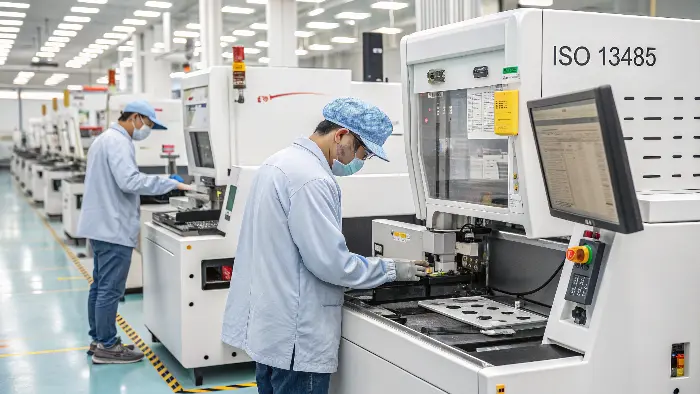
Making the decision to outsource such critical components is a big step. It’s not just about finding a lower price; it’s about finding a true partner who understands the high stakes of the medical industry. You need to be sure they have the right technology, the right processes, and the right experience. Let’s break down the most important questions I hear from engineers like you when they consider sourcing from China.
How do Chinese suppliers guarantee the precision and tolerances required for medical parts?
You’ve designed a critical medical component with tolerances as tight as ±0.005mm. You’re worried a supplier might cut corners to save money, delivering parts that fail inspection and derail your entire project timeline. Top Chinese suppliers use a combination of advanced machinery and rigorous quality control to meet these demands consistently.
Reputable Chinese CNC shops guarantee precision by investing in high-end 5-axis CNC machines, climate-controlled environments, and advanced metrology equipment like CMMs and optical comparators. They follow strict quality protocols, often with ISO 9001 and ISO 13485 certifications, and provide detailed inspection reports with every shipment to prove their work.
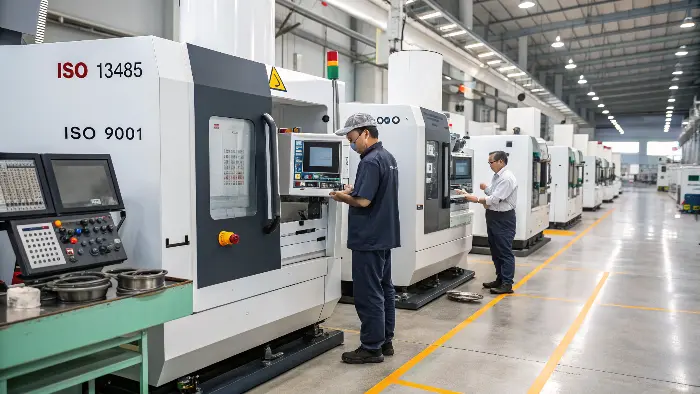
When I first started helping overseas clients, their number one concern was always precision. They saw attractive prices but feared it would come at the cost of quality. But the reality in today’s top-tier Chinese facilities is very different. Over the years, I’ve seen these shops invest heavily to compete on a global scale, especially for demanding industries like medical and aerospace. It’s not about being the cheapest anymore; it’s about being the best value.
The Role of Advanced Machinery
You can’t achieve micro-level precision with outdated equipment. The best suppliers know this. They run fleets of modern 5-axis CNC mills from brands like DMG MORI and Mazak, along with Swiss-type lathes for small, incredibly complex parts like bone screws or dental implants. These machines can produce complicated geometries in a single setup. This reduces the risk of error from re-fixturing the part and ensures better accuracy. A climate-controlled workshop is also standard practice. It prevents temperature fluctuations from causing micro-expansions or contractions in the metal, which could throw off tight tolerances.
Quality Control and Metrology
A great machine is only part of the equation. What confirms the precision is the inspection process. This is where a robust Quality Management System (QMS) is critical. Look for suppliers with ISO 9001 certification for general quality, but for medical parts, ISO 13485 is the gold standard. It shows the supplier has processes specifically for medical device components. They use tools like Coordinate Measuring Machines (CMMs) to verify dimensions against your CAD model with pinpoint accuracy. For every batch of critical parts, you should expect a First Article Inspection Report (FAIR) and a final inspection report that confirms every dimension is within tolerance.
| Tolerance Level | Typical Application | Required Equipment & Process |
|---|---|---|
| Standard (±0.1mm) | Non-critical housings, brackets | Digital Calipers, Micrometers, Standard QC checks |
| Tight (±0.025mm) | Surgical instruments, diagnostic tools | CMM, VMM, Height Gages, Climate Control |
| High-Precision (±0.005mm) | Implants, robotic surgery components | High-end CMM, Optical Comparator, Surface Profilometer, ISO 13485 certified process |
What about material traceability and biocompatibility when outsourcing to China?
Your medical device will be in contact with human tissue, so material certification is non-negotiable. You might worry about receiving parts made from a counterfeit or uncertified material. This could lead to catastrophic biocompatibility failures and serious legal consequences. Vetted Chinese manufacturers manage this risk with very strict material traceability protocols.
Experienced Chinese suppliers ensure full material traceability by sourcing only from certified raw material providers and maintaining meticulous documentation. They provide full material certificates (e.g., matching DIN or ASTM standards) and a Certificate of Conformance (CoC) with each order. For biocompatible materials like Titanium Grade 23 (Ti-6Al-4V ELI) or PEEK, they can provide specific lot-traceable documentation.
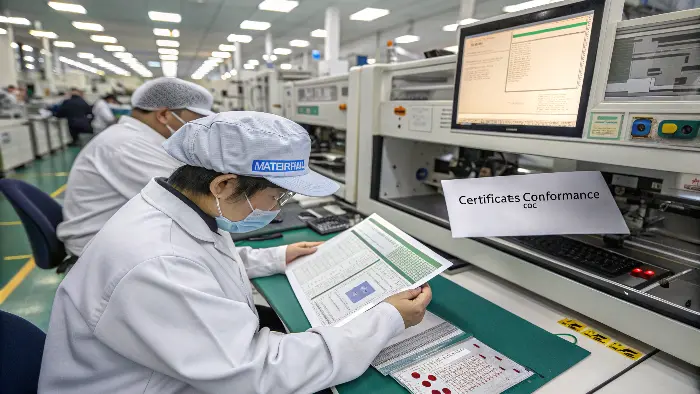
I remember a client from Germany who was developing a new spinal implant. He was extremely anxious about the material. He needed absolute certainty that the titanium we used was Ti-6Al-4V ELI (Extra Low Interstitials), not the standard Grade 5. A mix-up would be a disaster. We walked him through our entire supply chain. We showed him how we quarantine and label raw materials upon arrival, and how the material certificate follows the job from the stock room to the CNC machine to the final inspection box. This transparency gave him the confidence to move forward.
Common Biocompatible Materials
The choice of material is fundamental in medical device design. Your supplier must have experience machining the specific grade you require. Some of the most common materials we machine for our medical clients include:
- Titanium Alloys (e.g., Ti-6Al-4V ELI): Used for implants, bone screws, and dental fixtures due to its excellent strength-to-weight ratio, corrosion resistance, and superior biocompatibility.
- Stainless Steel (e.g., 316LVM): Commonly used for surgical instruments and temporary implants. It is corrosion-resistant and can be easily sterilized.
- PEEK (Polyetheretherketone): A high-performance polymer that is radiolucent (transparent to X-rays), making it ideal for spinal fusion cages and other implantable devices.
- Delrin (Acetal): A strong, low-friction plastic used for moving parts in medical devices, such as handles or actuators.
The Documentation Chain of Custody
A trustworthy supplier doesn’t just say they use the right material; they prove it. This proof comes from an unbroken chain of documentation. The process should look like this:
- Procurement: Material is ordered from a reputable, audited mill.
- Receiving & Inspection: The raw material arrives with its original mill test report (MTR) or material certificate. It’s inspected and assigned a unique lot number.
- Production: This lot number is attached to the job’s work order, so everyone from the programmer to the machine operator knows the exact material being used.
- Shipment: The final parts are shipped with a copy of the original material certificate and a Certificate of Conformance (CoC) from the manufacturer. The CoC is a formal declaration that the parts were produced according to your drawings and specifications.
| Material | Common Medical Application | Key Standard to Verify |
|---|---|---|
| Titanium Ti-6Al-4V ELI | Orthopedic & Dental Implants | ASTM F136, ISO 5832-3 |
| Stainless Steel 316L | Surgical Tools, Bone Plates | ASTM F138, ISO 5832-1 |
| PEEK | Spinal Implants, Suture Anchors | ASTM F2026 (Implant Grade) |
| Cobalt-Chrome (CoCr) | Knee & Hip Joint Replacements | ASTM F1537, ISO 5832-12 |
How can you ensure clear communication and protect your intellectual property (IP)?
You need to communicate complex technical requirements for a new surgical tool. You worry that language barriers and cultural differences could lead to misunderstandings, costly mistakes, and lots of rework. Even worse, you are concerned about your innovative design being stolen by an untrustworthy supplier. Professional Chinese CNC partners have overcome these challenges with dedicated processes and legal protections.
To ensure clear communication, top Chinese suppliers employ English-speaking project managers and engineers who are experts in international standards like ISO and GD&T. For IP protection, they readily sign Non-Disclosure Agreements (NDAs). Working with an established platform like QuickCNCs adds another layer of security, as we vet suppliers and manage the entire process to safeguard your designs.
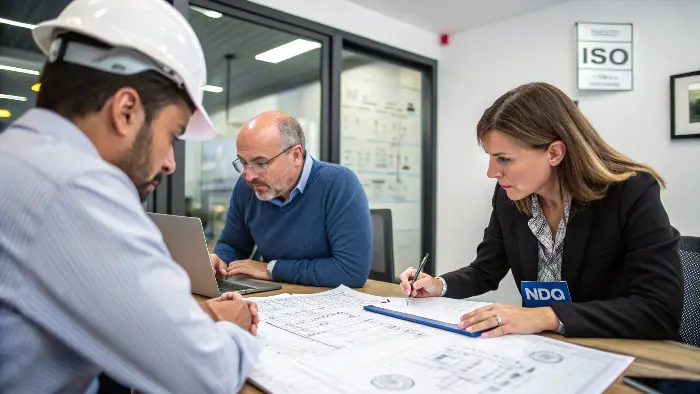
This is a very personal topic for me. When I started QuickCNCs, my goal was to be the bridge that prevents these problems. I’ve acted as that bridge for hundreds of projects. Clear communication isn’t just about speaking the same language; it’s about speaking the language of engineering. And protecting a client’s design is the foundation of trust. Without that trust, a long-term partnership is impossible. A good partner understands this and has clear systems in place to protect you.
Bridging the Communication Gap
Effective communication is all about eliminating ambiguity. Vague instructions lead to incorrect parts. The best suppliers assign you a single point of contact—usually a project manager who speaks fluent English and has an engineering background. This person is your advocate. They translate your needs to the production team and ensure nothing gets lost. Always provide a complete technical data package: a 3D CAD file (like .STEP) for programming the CNC machine, and a 2D PDF drawing for inspection. The 2D drawing is where you must clearly call out all critical dimensions, tolerances, surface finishes, and material specs using universal Geometric Dimensioning and Tolerancing (GD&T) symbols.
Practical Steps for IP Protection
Protecting your IP is a valid concern, but it is manageable. First, always start with a Non-Disclosure Agreement (NDA). For work in China, a more specific "NNA" (Non-Disclosure, Non-Use, Non-Circumvention) agreement is often recommended because it is crafted with Chinese law in mind. However, the best protection comes from your choice of partner. Work with established, reputable suppliers who have a long track record and a public reputation to uphold. They have far more to lose from stealing a design than they have to gain. For highly sensitive projects, another strategy is to split the manufacturing of a complex assembly across multiple suppliers. This way, no single supplier has the complete design.
| Communication Best Practices Checklist | |
|---|---|
| Action | Why It’s Important |
| Provide both a 3D model and a 2D drawing. | The 3D model drives the machine path; the 2D drawing is the legal document for inspection and tolerances. |
| Use GD&T on your 2D drawings. | It’s a universal engineering language that removes ambiguity about how to measure and inspect a feature. |
| Clearly mark all Critical-to-Function (CTF) dimensions. | This tells the supplier where to focus their most rigorous inspection efforts. |
| Work with a supplier who provides a DFM report. | A Design for Manufacturability (DFM) report shows they’ve reviewed your design and provides feedback to optimize it for production. |
| Insist on an English-speaking project manager. | A single, skilled point of contact prevents miscommunication between you and the technical team. |
Conclusion
Sourcing CNC machined medical parts from China is a smart strategy when you partner with the right supplier who values precision, quality, and trust above all else.