
Are you struggling to find a machine shop that actually delivers on its promises? We have all experienced the frustration of delayed parts and missed tolerances. Choosing the wrong partner can ruin your project timeline and budget instantly.
To select the right CNC machining service provider, you must verify their capabilities beyond their website claims. Start by auditing their quality certifications (like ISO 9001), reviewing their equipment list for capacity, and requesting a specific sample part. Prioritize communication speed and technical feedback during the quoting phase, as these are the best indicators of future project success.
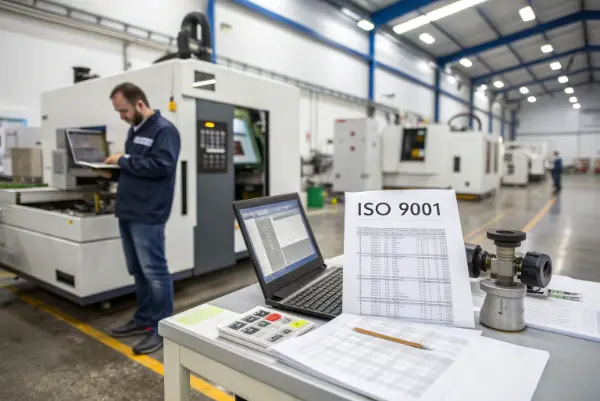
Finding a supplier is easy, but finding a partner is hard. I have been on both sides of this table—working on the shop floor and sourcing parts for global clients. I know exactly where things go wrong. In this guide, I will walk you through the critical steps to filter out the noise and find a machining service that matches your engineering standards.
Does the supplier have the right technical capabilities for your specific needs?
Many shops claim they can "do it all," but generalists often fail at specific, high-precision tasks. If you need complex 5-axis parts, a shop full of 3-axis mills will struggle. You need to know if their machinery matches your design requirements before you send a single file.
A capable supplier should transparently list their machine inventory and material expertise. Look for specific evidence of their experience with your required materials, whether it is titanium, aluminum, or engineering plastics. The right provider will also offer Design for Manufacturing (DFM) feedback during the quote, proving they understand your technical challenges.
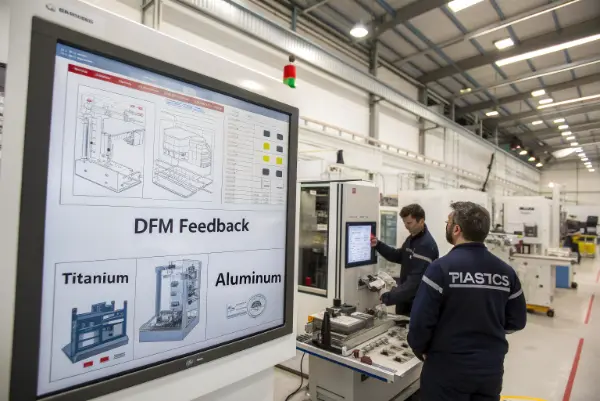
We need to look closer at what "capability" really means. It is not just about having a machine; it is about knowing how to use it. When I talk to engineers like Alex from Germany, the biggest issue is often a mismatch in expectations.
To dig deeper, you should break down their technical capacity into three specific areas.
1. Equipment Verification
Don’t just trust a text list. Ask for photos or a video tour if possible.
- 3-Axis vs. 5-Axis: If your part has complex geometries or undercuts, a 3-axis machine will require multiple setups. This increases the risk of tolerance stacking errors. A 5-axis machine handles this in one setup.
- Turning vs. Milling: Does the shop have live tooling lathes? This allows for turning and milling in one operation, which improves concentricity and speed.
2. Material Proficiency
| Not all metals cut the same. | Material | Challenge | What to ask the supplier |
|---|---|---|---|
| Aluminum (6061/7075) | High speed, gumming up tools | Do you have high-RPM spindles for smooth finishes? | |
| Stainless Steel (304/316) | Work hardening, heat generation | What coolant systems and carbide grades do you use? | |
| Titanium | Flammability, tool wear | Can you show me previous titanium projects? | |
| Plastics (PEEK/Delrin) | Thermal deformation, clamping marks | How do you hold plastic parts without crushing them? |
3. Tolerance Capabilities
If your drawing says ±0.01mm, you need to know how they verify it. Do they have a CMM (Coordinate Measuring Machine)? Do they use manual calipers? "We are very precise" is not an answer. You need to ask: "What is your standard inspection equipment for this tolerance range?"
How does their quality assurance process actually work?
Quality is not something you check at the end; it must be built into every step of the process. A certificate on a wall looks nice, but it does not guarantee your part will fit. You need to understand their workflow to prevent receiving a box of scrap metal.
A robust quality assurance process must include in-process inspections, not just a final check. The best providers use CMM reports, material certifications (COA), and First Article Inspections (FAI) to validate their work. You should always request a sample inspection report from a previous job to see their attention to detail.
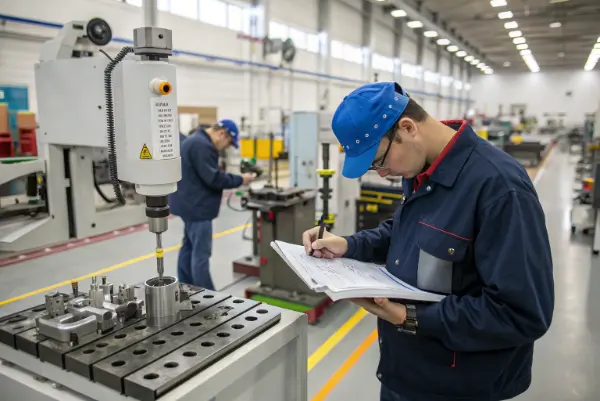
I have seen many shops that have ISO certification but still ship bad parts. This usually happens because they treat quality as paperwork, not a culture. When you are evaluating a new partner, you need to act like an auditor.
Here is how you can stress-test their quality system before you issue a Purchase Order.
The Paper Trail of Quality
You should ask for these three documents during the quoting phase. If they hesitate or say they don’t usually provide them, that is a red flag.
- Material Certifications (Mill Certs): This proves the metal actually is what they say it is. For aerospace or medical parts, traceability is non-negotiable.
- FAI (First Article Inspection) Report: This is a detailed report of the first part off the machine. It lists every dimension on your drawing against the actual measured result.
- Non-Conformance Reports (NCR): Ask them how they handle mistakes. A good honest shop will say, "When we make a mistake, we document it, fix the root cause, and remake the parts." A bad shop will say, "We never make mistakes."
The "Golden Sample" Strategy
Before you commit to a production run of 1,000 parts, buy one. Or buy five.
- Purpose: This tests their entire system—quoting speed, shipping packaging, surface finish, and dimensional accuracy.
- Cost: It will be expensive per unit. That is okay. You are buying insurance.
- Evaluation: When the sample arrives, measure it yourself. Does it look clean? are the edges deburred? Is the packaging protective enough for international shipping?
If the sample is perfect, great. If it has issues, how they react tells you everything. Do they blame the drawing, or do they offer to fix it immediately?
Is their communication style compatible with your project management?
Engineering projects move fast, and silence from a supplier causes anxiety and delays. You cannot afford to chase a supplier for updates every day. The way they communicate during the quote is exactly how they will communicate during a crisis.
Effective communication is defined by speed, clarity, and technical transparency. A good CNC partner will reply to emails within 24 hours and ask clarifying questions about your drawings before cutting. If they simply say "yes" to everything without asking questions, they likely do not understand the complexity of your design.
In my experience serving clients from Europe and the US, the time zone difference is a challenge, but it is not an excuse. As the founder of QuickCNCs, I tell my team that "bad news early is better than bad news late."
Let’s break down what good communication actually looks like in this industry.
The "No" Test
I often advise clients to include a small, very difficult feature in their request for quote (RFQ), or a very tight deadline, just to see what the supplier says.
- The "Yes Man": "Yes, we can do everything, no problem, cheapest price." Risk: High. They will likely fail and make excuses later.
- The Partner: "We can do this feature, but it will increase the cost by 30%. If you change this radius to 2mm, we can save you money and time." Value: High. This supplier is thinking about your project, not just the sale.
Technical Language Barrier
If you are outsourcing to China or another country, language can be a barrier. However, technical drawings are a universal language.
- Annotated Screenshots: Good suppliers will take screenshots of your CAD model, circle problem areas, and send them back to you with questions.
- Video Updates: For complex assemblies, I sometimes send short videos showing the movement. A good supplier might send a video back showing the part on the machine.
Project Tracking
How do you know where your parts are?
- Weekly Updates: For long projects (4+ weeks), ask for a weekly status report.
- Photos: Demand photos of the raw material before machining starts, and photos of the parts before they go to anodizing or plating. This visual confirmation gives you peace of mind that work is actually happening.
Conclusion
To select the best CNC provider, verify their specific equipment, demand proof of their quality process, and test their communication skills early. A true partner improves your design, not just your parts.