
Are you tired of inconsistent parts and production delays? These manual errors can derail your projects and inflate costs. CNC machining solves this by automating the process, delivering incredible precision and efficiency that transforms how we make things.
CNC machining is revolutionizing manufacturing by using computer-controlled tools to create parts with extreme precision and repeatability. This automation reduces human error, speeds up production cycles, and allows for the creation of complex geometries that were once impossible. It makes high-quality, custom manufacturing accessible and reliable for engineers and product developers everywhere.
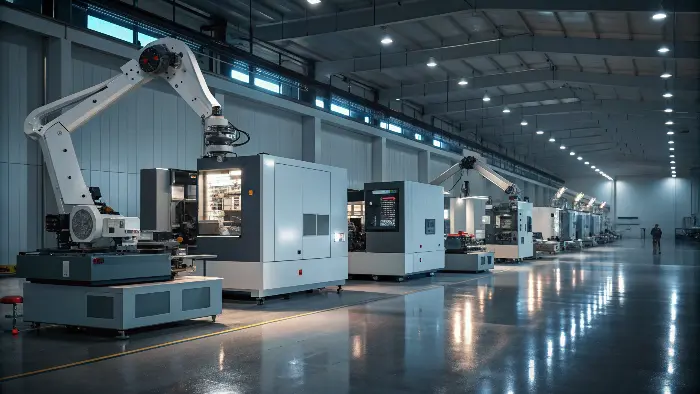
The impact of CNC technology is clear in any modern workshop. But this revolution didn’t happen overnight. To truly understand its power, we need to look at where it came from and how it has grown. Let’s explore the journey of CNC machining and see how it became the cornerstone of modern production.
How has CNC machining evolved?
Do you think of CNC machining as a new technology? Many people do, but its roots go back decades. This journey from simple automation to sophisticated digital control is fascinating. It shows how years of innovation built the powerful manufacturing tools we rely on today.
CNC machining evolved from early Numerical Control (NC) systems in the 1940s, which used punched paper tape to guide machines. The introduction of computers in the 1970s transformed NC into CNC, replacing tape with digital software. Since then, advancements in processors, software (like CAD/CAM), and multi-axis machines have made it faster, more precise, and capable of creating incredibly complex parts.
The story of CNC is a perfect example of how one good idea builds on another. It didn’t just appear out of nowhere. It grew from a real need for more complex and repeatable parts, a need I see from engineers like Alex every single day.
From Punched Tape to Digital Code
The journey started after World War II with a system called Numerical Control (NC). The first NC machines were controlled by punched paper tape. Each hole in the tape represented a specific command for the machine’s movement. I remember seeing some of these old systems early in my career. They were groundbreaking for their time, but incredibly clumsy. If you found a mistake in the program, you had to punch a whole new tape. There was no "undo" button. This made the process slow and unforgiving. The real change came with the microcomputer. Computers replaced the paper tape, and NC became CNC, or Computer Numerical Control. This meant programs could be written, edited, and stored digitally. It was a massive leap in flexibility and efficiency.
The Software Revolution: CAD and CAM
The next big step was the integration of software. Computer-Aided Design (CAD) allowed engineers to create detailed 3D models of their parts. Then, Computer-Aided Manufacturing (CAM) software was developed to translate those CAD models directly into G-code, the language the CNC machine understands. This eliminated the need for machinists to manually write thousands of lines of code. It bridged the gap between the designer’s screen and the physical part. This integration is what makes our work at QuickCNCs so fast and reliable today. An engineer in Germany can send us a CAD file, and our CAM software can generate the optimal toolpaths in minutes.
The Hardware Leap: Multi-Axis Machining
As the software got smarter, the machines got more capable. We went from simple 2 or 3-axis machines, which move left-right, forward-back, and up-down, to advanced 5-axis machines. These machines can rotate the part and the tool at the same time. This allows us to machine incredibly complex shapes, like turbine blades or custom robotic joints, in a single setup. Fewer setups mean better accuracy and faster production times.
| Feature | Numerical Control (NC) | Computer Numerical Control (CNC) |
|---|---|---|
| Control Method | Punched Paper Tape | Digital Software (G-code) |
| Flexibility | Very Low (Hard to edit) | Very High (Easy to edit) |
| Data Storage | Physical Tape | Digital Files |
| Complexity | Limited to simpler paths | Can produce highly complex geometries |
| Integration | Standalone | Integrates with CAD/CAM software |
This evolution from clunky tape readers to intelligent, multi-axis systems is the foundation of the modern manufacturing revolution.
What is the CNC machining process in manufacturing?
Have you ever wondered what actually happens after you send your design file for manufacturing? It can feel like a mystery. But not knowing the key steps can cause costly mistakes. Let’s break down the CNC machining process so you can design parts more effectively.
The CNC machining process starts with a 3D CAD model. This model is converted into machine-readable G-code using CAM software. A block of raw material (a workpiece) is secured in the CNC machine. The machine then follows the G-code instructions, using cutting tools to subtract material from the workpiece until the final part is formed. Finally, the part is inspected for quality.
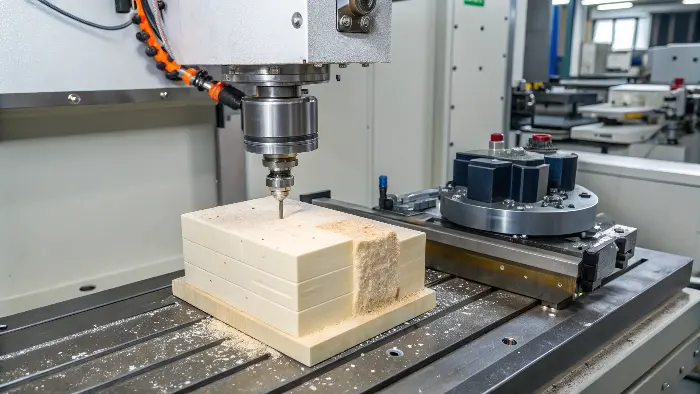
Understanding this workflow is crucial for any engineer. When you know how your part will be made, you can design it in a way that is faster, cheaper, and more reliable to produce. I’ve spent years helping clients refine their designs for better manufacturability, and it always starts with understanding these core steps.
Step 1: The Digital Blueprint (CAD/CAM)
Everything begins with your design. You create a 3D model of your part using CAD software like SolidWorks, Fusion 360, or CATIA. The most common file formats we work with are STEP and IGES because they are universal. Once the design is finalized, we bring it into our CAM software. This is where the manufacturing expertise comes in. The software helps us plan the entire operation. We decide which tools to use, the cutting speeds and feeds, and the exact path the tool will take to carve out the part. This plan is then converted into G-code, which is essentially a long list of coordinates and commands for the machine.
Step 2: Machine Setup and Preparation
This is where the digital plan meets the physical world. First, we select a block of the specified material, whether it’s aluminum 6061, stainless steel 304, or a plastic like Delrin. This block, called the workpiece, is securely clamped into the machine using a vise or custom fixture. Proper fixturing is critical to prevent the part from moving during machining, which would ruin the accuracy. Next, we load the necessary cutting tools into the machine’s automatic tool changer. Finally, the machine operator sets the "work offset." This tells the machine the exact location of the workpiece, so all the cuts are made relative to the correct starting point.
Step 3: The Machining Operation and Quality Control
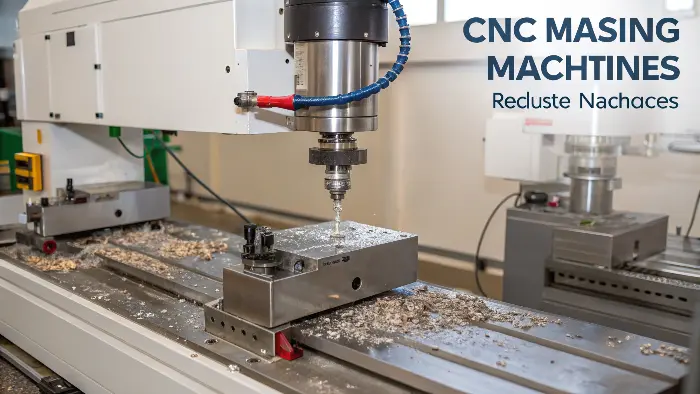
With everything set, the operator presses "start." The machine’s controller reads the G-code line by line and executes the commands with incredible speed and precision. The spindle spins the cutting tool, and the machine axes move the tool and workpiece relative to each other. This is the subtractive process in action, as chips of material are removed to reveal the final shape. After the machining is complete, the part is removed, cleaned, and deburred to remove any sharp edges. The final, and most important, step is quality inspection. We use precision instruments like digital calipers, micrometers, and even Coordinate Measuring Machines (CMMs) to verify that every dimension is within the specified tolerance.
| Stage | Key Activity | Responsible Party |
|---|---|---|
| 1. Design | Create 3D CAD model | Design Engineer (e.g., Alex) |
| 2. Programming | Generate toolpaths and G-code with CAM | Machinist / CAM Programmer |
| 3. Setup | Secure workpiece and load tools | Machine Operator |
| 4. Machining | Execute G-code to cut the part | CNC Machine |
| 5. Inspection | Verify dimensions and quality | Quality Control Technician |
How have CNC machines impacted modern manufacturing?
Are you facing limitations with traditional manufacturing methods? Sticking to older techniques can mean slower production and less precision, putting you at a disadvantage. CNC machining has created a massive shift, offering powerful benefits that drive modern industry forward. Let’s see how.
CNC machines have profoundly impacted manufacturing by enabling mass production of highly precise and consistent parts. They have drastically reduced lead times for both prototypes and full production runs. This technology also allows for greater design freedom, making it possible to create complex parts that improve product performance. It has made manufacturing more agile, cost-effective, and reliable.
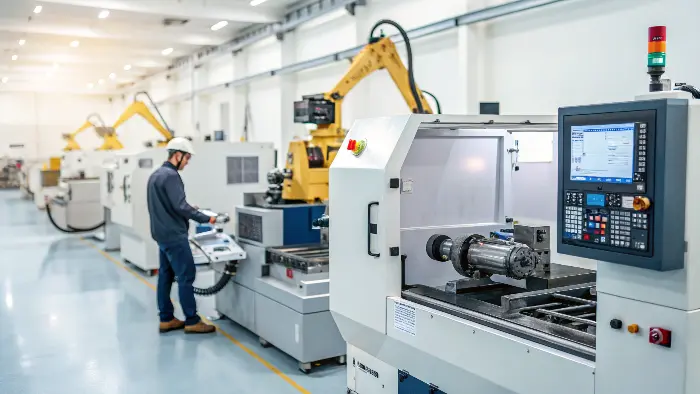
The impact isn’t just theoretical. I see it every day in the projects we handle. From a startup needing a single prototype to a large corporation requiring thousands of identical components, CNC is the technology that makes it possible. It has fundamentally changed what engineers can expect from a manufacturing partner.
Unlocking Precision and Repeatability
Before CNC, the quality of a part depended heavily on the skill of an individual machinist. This meant that getting two identical parts was a challenge, and producing thousands was nearly impossible. CNC machining changed everything. Because the machine is following a computer program, it can produce the first part and the ten-thousandth part with the exact same dimensions. For an engineer like Alex, who works with tolerances of ±0.01mm for robotic components, this repeatability is not a luxury; it’s a necessity. This consistency is critical in industries like aerospace, medical devices, and automotive, where part failure is not an option.
Accelerating Innovation with Rapid Prototyping
In the past, getting a functional prototype could take weeks or months and cost a fortune, especially if it required custom tooling. CNC machining allows for rapid prototyping. An engineer can design a part on Monday, send us the file, and have a physical, functional prototype made from the real material in their hands by the end of the week. This speed completely changes the development cycle. It allows for faster iteration—you can design, test, and refine your product much more quickly. This agility helps companies innovate faster and get their products to market ahead of the competition.
Enabling Complex Geometries
Modern products demand parts that are stronger, lighter, and more efficient. Often, this requires complex shapes that are difficult or impossible to make with traditional methods. 5-axis CNC machining allows us to create parts with complex curves, undercuts, and angled features in a single operation. This capability gives engineers incredible design freedom. They are no longer limited by what can be easily cut on a manual mill. They can design the best possible part for the application, knowing that CNC technology can bring it to life.
| Metric | Traditional Machining | CNC Machining |
|---|---|---|
| Precision | Operator-dependent, lower | Extremely high, computer-controlled |
| Repeatability | Low to medium | Very high, near-perfect consistency |
| Speed (for prototypes) | Slow | Very fast (days) |
| Complexity | Limited to simple shapes | Can produce highly complex geometries |
| Labor Cost | High (requires constant skilled labor) | Lower (one operator can monitor multiple machines) |
How can CNC machines be used for greener manufacturing?
Is your company looking for ways to make manufacturing more sustainable? It’s a big challenge, as traditional methods often create a lot of waste. CNC machining provides smart solutions to reduce environmental impact, making production cleaner and more efficient.
CNC machines contribute to greener manufacturing by optimizing toolpaths to reduce material waste and machining time, which saves energy. They enable the use of recycled or lighter materials. The high precision of CNC also reduces the number of scrapped parts, further minimizing waste. This efficiency makes the entire production lifecycle more sustainable from start to finish.
Sustainability is no longer just a buzzword; it’s a real business consideration. Clients are increasingly asking about our environmental practices. The good news is that the core principles of CNC machining—efficiency and precision—are naturally aligned with the goals of green manufacturing.
Minimizing Material Waste Through Optimization
One of the biggest sources of waste in manufacturing is scrap material. CNC machining tackles this head-on. Using advanced CAM software, we can create highly optimized toolpaths that remove only the necessary material. For parts made from sheet metal, the software can "nest" multiple parts together on a single sheet, like puzzle pieces, to maximize material usage and leave very little waste. Even the waste that is produced—the metal chips and shavings called swarf—is clean and uniform, making it very easy to collect and recycle. At our facility, we recycle nearly 100% of our scrap aluminum and steel.
Reducing Energy Consumption
Energy is another major factor in sustainable manufacturing. CNC machining helps reduce energy consumption in two key ways. First, optimized toolpaths don’t just save material; they also reduce the total time it takes to machine a part. Shorter cycle times mean the machine is running for less time, consuming less electricity per part. Second, modern CNC machines are designed with energy efficiency in mind. They have high-efficiency motors and systems that power down non-essential components when idle. This focus on efficiency means we can produce more parts with a smaller energy footprint.
Enabling a Circular Economy
A circular economy is one where we reuse and repair products instead of throwing them away. CNC machining is a key enabler of this concept. For example, if an expensive industrial component is worn down, it doesn’t have to be scrapped. We can use a 3D scanner to create a model of the worn part and then use a CNC machine to precisely add material back (through welding) or machine the surface back to its original specifications. This process, known as remanufacturing, extends the life of valuable assets and saves a huge amount of material and energy compared to making a new part from scratch.
| Green Strategy | How CNC Helps | Environmental Benefit |
|---|---|---|
| Waste Reduction | Optimized toolpaths and part nesting | Less raw material consumed, less landfill waste |
| Energy Savings | Shorter cycle times, efficient machines | Lower electricity consumption per part |
| Recycling | Produces clean, recyclable swarf | High recycling rates for scrap metal |
| Remanufacturing | Precisely repairs or resurfaces worn parts | Extends product life, supports circular economy |
Conclusion
In short, CNC machining has fundamentally reshaped manufacturing. It delivers unmatched precision, speed, and design freedom. From its early days to its current role in green manufacturing, it continues to be the engine driving innovation and efficiency for engineers and creators worldwide.