
Worried a small misunderstanding with your Chinese CNC supplier could lead to a batch of useless parts? The language barrier and cultural differences can turn simple instructions into costly mistakes, delaying your project for weeks. But with the right strategies, you can ensure crystal-clear communication.
To communicate effectively with Chinese CNC suppliers, use simple, direct English and provide detailed 2D/3D CAD files with clear annotations. Supplement technical documents with visual aids like photos. Also, understand key cultural aspects, like the concept of "face," to build a strong, trust-based relationship. This approach minimizes misunderstandings and ensures your parts are machined exactly to spec.
I’ve spent over a decade bridging the communication gap between engineers like you and manufacturing teams here in China. I’ve seen firsthand how simple shifts in communication can make the difference between project success and total failure. The following strategies aren’t just theories; they are practical steps I use every day at QuickCNCs. If you want to avoid costly rework and frustrating delays, keep reading.
How can you overcome language barriers for technical precision?
Afraid your complex technical terms will get lost in translation? Using industry jargon or complex sentences can lead to incorrect material choices or tolerance issues, completely derailing your project schedule and budget. The solution is to simplify your language and documentation intentionally.
Overcome language barriers by using simple, concise English. Avoid slang, idioms, and overly complex sentence structures. Always provide a bilingual glossary for key technical terms in your drawings. This ensures your engineering team and the supplier’s team are referencing the exact same standards, materials, and specifications, leaving no room for interpretation and error.
In my experience, the biggest source of error is not the machining process itself, but the assumptions made during communication. An engineer in Germany, like Alex, might use a very specific DIN standard that isn’t commonly used on the shop floor here. The project manager at the supplier might understand it, but the information can get diluted by the time it reaches the actual machinist. The key is to remove any chance for misinterpretation at every step.
Keep It Simple and Direct
Your supplier’s English may be excellent for general conversation, but highly technical or poetic language creates risk. Always choose the simpler word. Write short, direct sentences.
| Instead Of This (Complex) | Use This (Simple) |
|---|---|
| "It is imperative that the aforementioned component’s surface roughness does not exceed Ra 1.6." | "The surface finish must be Ra 1.6 or better." |
| "Subsequent to the initial machining pass, please ensure all burrs are meticulously removed." | "Deburr all edges after machining." |
| "The component’s structural integrity is contingent upon the utilization of aerospace-grade AL-7075." | "Use material AL-7075." |
For every project, I insist on creating a "Key Terms" box directly on the 2D drawing. List critical terms in English and have your supplier fill in the Chinese equivalent. This includes materials, specific finishes, critical tolerances, and any special instructions. This simple box becomes your shared source of truth.
Confirm, Don’t Assume
Never assume your message was understood just because you sent an email. A simple follow-up question works wonders. Ask, "To make sure we are on the same page, could you please confirm the material and the CMF requirements for this part?" This invites them to repeat the information back to you, closing the loop and catching any potential misunderstandings before a single piece of metal is cut.
Are visual aids more effective than text for technical specifications?
Are you tired of writing long emails explaining a simple design feature, only to have it misinterpreted? Text-only instructions are easily misunderstood, especially across languages, leading to incorrect features and wasted prototypes. A well-annotated drawing often communicates more than a thousand words.
Yes, visual aids are significantly more effective. A universally understood 3D model and a clearly annotated 2D drawing are your most powerful communication tools. They transcend language barriers. Use them to highlight critical dimensions, tolerances, surface finishes, and specific features. This visual clarity is the fastest way to get everyone on the same page.
I once worked with a client on a complex housing. He wrote a long paragraph describing a specific internal undercut. The supplier’s sales manager said he understood. But the final part was wrong. The problem was that the written description was open to interpretation. If he had simply put a clear callout and a detail view on the 2D drawing, the mistake would never have happened. We lost two weeks on that project because of missing lines on a drawing. From that day on, I’ve always told my clients: "Trust the drawing, not the description."
The Power of the 2D Drawing
Think of the 2D drawing as the legal contract for your part. It must contain everything. Don’t leave anything to chance.
- Annotate Everything: Call out every hole, thread, tolerance, and surface finish. Use standard symbols.
- Highlight Critical-to-Function (CTF) Dimensions: Put a box around the 3-5 dimensions that are absolutely essential for your part to work. This tells the machinist and the quality inspector where to focus their attention.
- Add Notes: Use simple notes for instructions that can’t be drawn, like "DEBURR ALL EDGES" or "PART MUST BE CLEAN, FREE OF OILS."
3D Models Provide Context
While the 2D drawing is the contract, the 3D STEP file gives the machinist the overall picture. It helps them visualize the final part and plan their machining strategy. It also allows them to program their CAM software directly, reducing the chance of manual data entry errors. Always send both the 2D PDF and the 3D STEP file together.
Use Photos and Videos for Clarification
Don’t underestimate the power of a simple photo. If you are trying to explain a defect on a sample, take a clear picture and circle the problem area. If you want to show how a part fits into a larger assembly, send a screenshot or a short video. Visuals are fast, clear, and bypass any language issues.
What cultural communication styles should you be aware of when working with Chinese teams?
Ever get a "yes" from your supplier, only to find out later it meant "Yes, I heard you," not "Yes, I agree and can do it"? This misunderstanding can lead to false confidence, missed deadlines, and frustration when the final product doesn’t match your expectations. Understanding a few key cultural norms can prevent this.
Be aware of the concept of "face" (面子, Mianzi), which is about maintaining dignity and respect. This means a direct "no" can be rare. Instead, you might hear "this is difficult" or "we will try." Also, communication is often less direct and more relationship-focused. Building trust before diving into problems is crucial for a smooth partnership.
Early in my career, I was in a meeting with an American client and a factory owner. The client pointed out a flaw and bluntly said, "This is wrong, you need to fix it." The room went quiet. The factory owner became defensive, and the relationship was tense for weeks. The client was not trying to be rude; he was just being direct. But in doing so, he caused the owner to lose face in front of his team. A better approach would have been to discuss the issue privately first, framing it as a shared challenge.
Understanding "Face" (面子, Mianzi)
"Face" is one of the most important concepts in Chinese culture. It represents a person’s reputation, dignity, and social standing. Causing someone to "lose face" by publicly criticizing them, proving them wrong, or embarrassing them is a serious offense. Always give feedback in a way that is respectful and private. Instead of blaming, focus on the technical issue and how "we" can solve it together.
Indirect Communication and "Yes"
Because of the need to maintain face and harmony, communication can be very indirect. You may not get a direct "No." Learning to read between the lines is a critical skill.
| If You Hear This… | It Might Mean… | What You Should Do |
|---|---|---|
| "Yes" or "OK, OK." | "Yes, I heard you and understand the request." | Follow up with a clarifying question: "Great, so you can confirm you can hold the ±0.01mm tolerance?" |
| "我们研究一下" (wǒmen yánjiū yīxià) – "We will study it." | "This is a problem and I don’t know the answer right now." | Give them time, but set a deadline: "OK, please let me know the result by tomorrow." |
| "可能有点问题" (kěnéng yǒudiǎn wèntí) – "Maybe there’s a small problem." | "This is a big problem." | Dig deeper immediately: "Thank you for telling me. What is the specific problem? Let’s look at the drawing together." |
The Importance of Hierarchy
Respect for hierarchy is important. Usually, you should communicate with your main point of contact (like a project manager). It is often considered inappropriate to go directly to their boss or, conversely, to give instructions to a junior engineer on their team without the manager’s knowledge. Follow the established chain of communication.
Why is building a personal relationship so important in Chinese business?
Do you treat your supplier relationship as purely transactional? In China, this can mean you get standard service, but you lack the extra support needed when problems arise. This leaves you stranded during a crisis. Investing a little time in relationship-building pays huge dividends.
Building a personal relationship, known as "Guanxi" (关系), is vital because business in China is built on trust and mutual obligation, not just contracts. A good relationship means your supplier sees you as a partner. They will be more willing to go the extra mile, prioritize your orders, and work collaboratively to solve unexpected problems.

I remember a client, let’s call him Alex, who desperately needed a set of prototype parts before a major trade show. The deadline was incredibly tight. Normally, the factory would have said it was impossible. But Alex had spent time building a good relationship with the project manager. He always started his emails with a friendly "Hope you’re having a good week," and he would ask about her family. Because of that personal connection, the project manager felt a responsibility to help him. She convinced the factory owner to run the machines over a weekend just for his parts. That’s the power of Guanxi.
Moving Beyond the Transaction
In many Western cultures, business is business. A contract and a purchase order are all that’s needed. Here, a contract is just the start. The real collaboration happens when there is mutual trust. When your supplier sees you as a long-term partner, they are invested in your success. They will offer suggestions to improve your design for manufacturing (DFM), they will fight to get you better material prices, and they will be honest with you when problems arise.
What is "Guanxi" (关系)?
Guanxi is often translated as "connections" or "network," but it’s deeper than that. It’s a web of trusted relationships built on mutual respect and obligation. If you help someone, they are expected to help you in the future. It’s the social glue of business here. By building good Guanxi with your supplier’s team, you are moving from a simple customer to a valued partner. This means your projects get more attention and care.
Practical Steps to Build Guanxi
You don’t need to spend a lot of money or time. Small, consistent efforts make a big difference:
- Use Their Name: Learn your contact’s name and how to pronounce it.
- Be Friendly: Start emails with a polite greeting.
- Share a Little: Briefly mention your weekend or a holiday. It humanizes you.
- Say Thank You: Acknowledge when they do good work or help you solve a problem.
- Remember Holidays: Send a simple greeting for major Chinese holidays like the Spring Festival (Chinese New Year) or Mid-Autumn Festival.
These small gestures show that you respect them as a person, not just a supplier.
How should you give feedback or request design changes?
Do you need to request a revision but are worried about offending your supplier or sounding too demanding? Blunt feedback can damage the relationship and make the supplier defensive, slowing down the resolution process. There’s a way to be firm and clear while still being respectful.
When giving feedback, always be objective and focus on the part, not the person. Use data and your drawings as evidence. Frame it as a mutual problem to be solved together. For example, say "The drawing shows a 5mm hole, but this part measures 5.2mm. How can we work together to fix this for the next batch?"
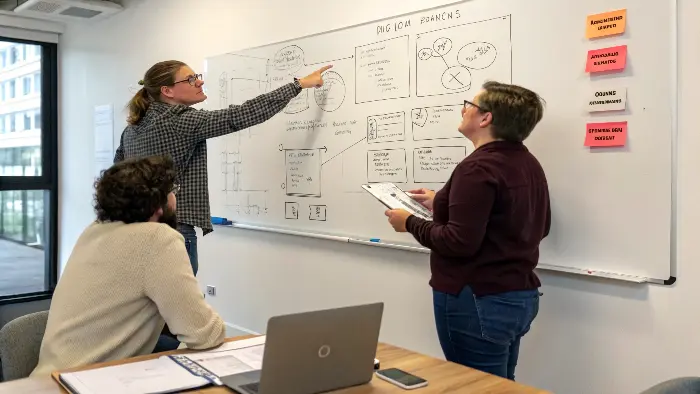
Giving feedback is a delicate art, especially across cultures. I’ve seen clients send angry emails saying, "You made this wrong! Your quality is terrible!" The result is always the same: the supplier gets defensive, communication stops, and the problem takes much longer to solve. A successful engineer I know handles it differently. He sends a photo of the part with the measurement from his digital calipers clearly visible next to the relevant dimension on the drawing. His email simply says, "Hi Team, we see a deviation here. Please see the attached photo. Can you please check on your end and advise?" It’s non-confrontational, data-driven, and effective.
Be Objective and Data-Driven
Your best tools for giving feedback are your drawings, your CAD models, and your measurement tools (calipers, CMM reports, etc.).
- Don’t use emotional language: Avoid words like "bad," "wrong," or "unacceptable."
- State the fact: "The drawing requires a tolerance of ±0.05mm."
- State the observation: "This sample measures +0.1mm outside of tolerance."
- Provide evidence: Always include photos, measurement reports, or screenshots.
Frame it as "We" vs. "You"
Using "we" makes you a team working to solve a problem together. It’s collaborative, not confrontational.
- Instead of: "You need to fix this."
- Try: "How can we ensure this is within tolerance on the next production run?"
- Instead of: "Your quality control missed this."
- Try: "Let’s work together to find the root cause of this issue."
The "Praise, Criticize, Praise" Sandwich
This classic technique is very effective in a face-saving culture. You start with something positive, state the issue clearly but politely, and end with another positive or forward-looking statement.
For example: "Hi Wei, thank you for sending the samples so quickly, we appreciate the fast turnaround. We’ve inspected the parts, and the overall finish is excellent. We did find that the dimension on the main bore is measuring slightly oversized. Could you please look into this? I am confident we can get this resolved for the main order."
This approach shows respect, clearly identifies the problem, and keeps the relationship positive and productive.
What are the best tools for daily communication with Chinese CNC suppliers?
Is your project communication scattered across emails, chats, and calls, making it impossible to track? This disorganization leads to missed information, confusion about the latest file versions, and critical details falling through the cracks. Using the right combination of tools can streamline everything.
For daily communication, email is essential for formal records, quotes, and purchase orders. However, for quick questions, clarifications, and sharing photos from the shop floor, WeChat is the undisputed king in China. It’s fast and direct. Using both effectively—WeChat for speed, email for record-keeping—is the best strategy.

Any professional working with Chinese suppliers needs to understand the communication landscape. Email is the official channel, but the reality is that day-to-day operations and quick problem-solving happen on WeChat. I have seen clients who insist only on using email, and their projects move much slower. They wait a day for a reply to a simple question that could have been answered in 30 seconds on WeChat. The most efficient engineers I work with, like Alex, embrace both. They use WeChat for quick chats and then summarize important decisions in a follow-up email, getting the best of both worlds: speed and a clear paper trail.
Choosing the Right Tool for the Job
| Tool | Best Use Case | Pros | Cons |
|---|---|---|---|
| Formal communication: POs, invoices, formal feedback, final drawing submissions, weekly reports. | Creates a permanent record. Good for detailed, complex information. Universally accepted as official. | Can be slow for urgent questions. Attachments can be large. Tone can be misinterpreted. | |
| WeChat (微信) | Quick questions, sharing photos/videos from the shop floor, urgent updates, relationship building. | Extremely fast response times. Almost everyone in China uses it. Built-in translation is helpful. | Not ideal for formal records. File sharing is limited. Easy for key info to get lost in a long chat. |
| Phone/Video Call | Complex problem-solving, kickoff meetings, urgent and sensitive discussions. | Real-time conversation. Allows for reading tone and body language. Best for resolving complex misunderstandings. | Can be difficult to schedule across time zones. Language barriers can be more pronounced. No written record unless followed up. |
My Recommended Workflow
- Formalize with Email: Start and end every major step with an email. Send the official RFQ, Purchase Order, and final design files via email.
- Clarify with WeChat: Install WeChat. Use it to ask your main contact quick questions like, "Can you send a photo of the first article?" or "Just confirming you received my email."
- Summarize in Email: After an important discussion on WeChat or a phone call, send a brief follow-up email. For example: "Hi Li, confirming our chat on WeChat, we have agreed to change the material to AL-6061 T6. Please see the updated drawing attached."
This simple system ensures nothing gets lost and you have both speed and accountability.
Conclusion
Clear communication transforms your Chinese supplier into a true manufacturing partner. Use these strategies to build trust, eliminate errors, and bring your designs to life with confidence and precision.