Quickcncs Blog

Engineering Guide

How Do You Master Transmission Shaft Design Calculations?

Struggling to design a transmission shaft that won’t fail under pressure? A miscalculation can lead to catastrophic equipment failure, causing expensive downtime and safety risks. Getting the design right from the start is critical for any mechanical system’s reliability. The key to designing a transmission shaft is to calculate the

Read More »
Material

Drive Shaft vs. Transmission Shaft: What’s the Real Difference?

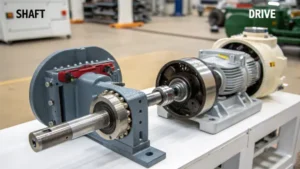
Confusing automotive terms like drive shaft and transmission shaft can lead to costly design or procurement errors. Misidentifying these parts can derail your project, causing delays and budget overruns. Understanding their distinct roles is key to precision engineering and successful project outcomes. A transmission shaft, also known as a mainshaft,

Read More »
tolerance

Why Do Aerospace Tolerancing Requirements Go Beyond Standard ISO Norms?

Struggling to get your aerospace parts accepted? You follow standard ISO tolerances, but your components are still rejected, causing delays and budget overruns. Understanding the unique, safety-critical demands of the aerospace industry is the key to getting it right the first time. Aerospace tolerancing requirements are significantly stricter than general

Read More »
Material

Is Thermal Expansion Silently Ruining Your Machining Tolerances?

You’ve designed a part with perfect, tight tolerances. But after it’s machined, it doesn’t fit the final assembly. This frustrating problem can cause costly delays and rework. The culprit is often an invisible force that engineers sometimes overlook: thermal expansion. To stop thermal expansion from ruining your machining tolerances, you

Read More »
DFM

How Can You Master Tolerances for Cost-Effective CNC Machining?

Struggling to balance precision with your budget? You specify tight tolerances to ensure quality, but your manufacturing quotes come back shockingly high. You need parts that work perfectly without overpaying for unnecessary precision on non-critical features. It’s a common engineering headache. The key to cost-effective production is applying tolerances strategically.

Read More »
CNC Machining

How Do You Measure and Verify ISO 2768 Tolerances Correctly?

Are you struggling to ensure your machined parts meet the required specifications? You’ve put ISO 2768 on your drawing, but you’re not sure if your supplier is checking it correctly. This uncertainty can lead to assembly failures, wasted time, and budget overruns, causing major project delays. To measure and verify

Read More »
CNC Machining

What Can You Realistically Achieve with CNC Machining Tolerances?

Struggling to define realistic tolerances for your parts? Specifying them too tightly drives up costs and manufacturing time. But if they’re too loose, you risk functional failure. Finding that sweet spot is a constant balancing act for every engineer. Standard CNC machining tolerances are typically around ±0.005 inches (±0.13 mm)

Read More »
CNC Machining

ISO Tolerancing Standards Comparison: ISO 2768 vs. ASME Y14.5?

Struggling to choose the right tolerance standard for your parts? Picking between ISO 2768 and ASME Y14.5 can be confusing. This confusion can lead to misinterpretations with your CNC shop, resulting in production delays, wasted materials, and parts that don’t fit, ultimately costing you time and money. The main difference

Read More »
CNC Machining

How Is Smart Manufacturing in China Changing CNC Services?

Have you heard the terms "Industry 4.0" and "IoT" but wonder if they’re just buzzwords? You worry that behind the marketing, your outsourced CNC parts are still being made with old methods, leaving quality and delivery times to chance. You need real results, not just fancy terms. Smart manufacturing, driven

Read More »

Wait! Don’t Leave Without Your Free CNC Quote!

Please send your requirements now — get a fast, no-obligation quote within 12 hours.