
Do you need to machine steel parts but lack the space for huge factory equipment? It costs too much money and time to outsource tiny test batches. The good news is that certain small machines can handle steel if you choose the right setup.
Yes, but not many basic desktop routers can do it well. You need a small benchtop CNC mill to cut steel. This machine must have high rigidity, a metal-cutting spindle, heavy ball screws, and a good coolant system. Standard wood routers lack the power. A tabletop mill like a Tormach is your best choice for frequent steel jobs.
You might think that small machines only work for wood or soft plastic parts. Many buyers ask me if they can just use a cheap machine on their desk to make strong metal brackets. Keep reading, and I will show you exactly what kind of machines actually work for this heavy job.
Are there desktop CNC machines?
Finding room for a giant mill in a small workshop is a nightmare. You want to make real parts, but you only have a normal desk. Luckily, the market is full of desktop CNC machines made for small spaces.
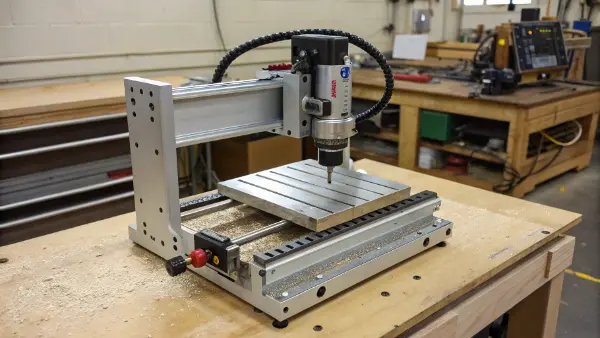
Yes, there are many desktop CNC machines available today. These small machines sit right on a workbench. Most basic models are made for routing wood, plastics, and aluminum. However, only a few heavy benchtop mills are built strong enough to cut tough metals like steel.
Let us look closer at what a desktop CNC actually is. I see many people get confused by the name. A "desktop" machine just means it fits on a table. The name does not tell you how strong the machine is. You need to know the difference between a router and a mill.
Wood Routers vs Metal Mills
Most cheap desktop machines are routers. They spin very fast. They use rubber belts and thin aluminum frames. They are great for soft materials. But they shake too much if you try to cut hard metal. If you want to cut steel, you need a benchtop mill. Mills are very heavy. They use thick iron frames and strong steel ball screws.
Why Rigidity Matters
The tool pushes hard against the metal when you cut steel. A weak machine will bend under this pressure. This bending causes terrible shaking and noise. The cutting tool will break. The final part will look bad. This is why a real metal-cutting machine weighs a lot more than a plastic-cutting one.
Here is a simple way to see the difference:
| Feature | Desktop Router | Benchtop Mill |
|---|---|---|
| Frame Material | Aluminum parts | Heavy Cast Iron |
| Best For | Wood and Plastic | Aluminum and Steel |
| Spindle Speed | Very Fast (20,000 RPM) | Slower (5,000 RPM) |
| Drive System | Belts or cheap screws | Heavy Ball Screws |
| Weight | Light (20 to 50 kg) | Heavy (100 to 250 kg) |
We used giant machines when I started my career in a CNC shop. Now, you can put a cast-iron mill on a sturdy desk. You just need to remember a simple rule. Wood and plastic work fine on light routers. But only stiff metal mills work well for light steel parts.
Can you cut steel with a CNC machine?
Many people buy a small CNC to make steel car parts. Then they break expensive tools right away. It is very frustrating to waste money on broken cutters. You absolutely can cut steel with a CNC machine, but you must follow strict rules.
Yes, you can cut steel with a CNC machine if it has enough spindle power and frame rigidity. Smaller desktop machines can do light steel work. You just need to use very slow feed rates and take shallow cuts. You also need sharp carbide tools and a proper coolant system to stop the metal from getting too hot.
Steel is not like aluminum or plastic. It is much harder. It holds onto heat. Things will go wrong fast if you try to cut it like wood. I have seen many engineers ruin good parts because they used the wrong machine settings. You have to change how you think about machining.
The Heat Problem
A tool makes a lot of heat when it cuts steel. The tool will melt or snap if this heat stays in the metal. Large factory machines use flood coolant to wash the heat away. You still need a way to cool the tool on a desktop machine. A mist coolant system is often the best choice for small machines. It sprays a tiny amount of liquid and air on the cutter.
Tooling and Software
You must use strong carbide cutting tools. Cheap high-speed steel tools will wear out instantly. You also need good computer software. Modern software plans tool paths that take tiny bites out of the metal. This keeps the physical load on the small machine very low.
Key Settings for Steel
Here are the main things you need to control when you cut steel on a small machine:
| Cutting Factor | Why it Matters for Steel | Desktop CNC Approach |
|---|---|---|
| Spindle Speed (RPM) | Steel needs slower speeds to avoid burning tools. | Keep RPM low, use strong torque. |
| Feed Rate | This is how fast the tool moves into the metal. | Move the tool very slowly. |
| Depth of Cut | This is how deep the tool goes in one pass. | Take very shallow bites (like 0.1mm). |
| Coolant | Coolant stops heat and clears metal chips away. | Use mist coolant or a heavy air blast. |
A stiff desktop mill works fine if your goal is just occasional steel machining. But it is better to buy a bigger machine if you need to cut thick steel every day. You can also outsource the heavy steel work to a professional team like us at QuickCNCs.
How much does a dmc2 mini cost?
You want a machine that actually cuts metal, but you are afraid of spending ten thousand dollars. Strict budget limits stop many great ideas from becoming real products. The Shariff DMC2 Mini is an interesting option that balances low cost and real metal power.
The Shariff DMC2 Mini typically costs around $3,000 to $4,000. The final price depends on the exact options you choose. It is built specifically as a compact, rigid desktop CNC mill that can handle steel. This price makes it a great choice for people who need real metal cutting power without a huge price tag.
Let us break down what you actually get for your money when you buy a machine like the DMC2 Mini. I often talk to engineers in Europe who need small brackets with tight sizes. They need something better than a cheap toy machine. They need real results.
Built for Metal
The DMC2 Mini is not a normal desk router. It uses a very heavy frame made of steel plates and linear rails. This gives it the stiffness I talked about earlier. You are paying for that heavy metal frame when you spend $3,000. This heavy weight stops the machine from shaking when the tool hits tough steel.
Hidden Costs
You must remember that the base price of the machine is only the start. I always warn buyers about hidden costs when I manage new projects. A bare machine cannot do anything on its own. You need accessories.
Here is a rough breakdown of what you might really spend:
| Item | Estimated Cost | Why You Need It |
|---|---|---|
| Base DMC2 Mini | $3,500 | This is the actual machine frame and motors. |
| Spindle Upgrade | $300 | You get better power for tough steel cuts. |
| Carbide Tooling | $200 | These are hard tools that will not break easily. |
| Vise and Clamps | $150 | These hold your metal block tightly. |
| Coolant System | $100 | This stops heat from ruining the cutting job. |
You should plan to spend closer to $4,500 by the time you are ready to make metal parts. It is a smart choice for light steel work even at this price. You can make small parts and test your designs in your own room before sending big orders to a real factory.
How much does a Tormach 440 cost?
Maybe a tiny mini mill is too small for your parts. But you still cannot fit a huge factory machine in your garage. Being stuck in the middle is a tough problem. The Tormach 440 steps in as a true entry-level industrial machine for this exact situation.
The base price of a Tormach PCNC 440 starts around $5,000 to $6,000. However, most users spend between $7,000 and $10,000 to get a fully working package. This total cost includes the machine stand, a metal enclosure, a coolant system, tool holders, and control software. It is a highly capable benchtop mill for steel.
You are looking at a machine that acts like large factory equipment when you step up to a Tormach. I have seen many startup companies buy a machine like this to start their business. It is a tabletop mill, but it works like a big one. It has a real industrial design.
A Complete System
Tormach does not just sell a metal frame. They sell a whole cutting system. This is why the price jumps up. You need an enclosure to catch the sharp metal chips and splashing liquid when you cut steel every day. You need a power drawbar to change heavy tools quickly. All these things add money to the final price. But they save you massive amounts of time.
Why Choose Tormach for Steel?
Tormach-style tabletop mills are the right class of machine if your goal is repeatable steel cutting with good accuracy. They have heavy cast-iron beds. They have big spindle motors. They use real tool holders.
Let us look at a realistic budget for a working Tormach 440 setup:
| Component | Rough Price | Importance for Steel |
|---|---|---|
| Tormach 440 Base | $6,000 | This is the heavy cast-iron body. |
| Full Enclosure | $1,200 | It keeps dangerous metal chips inside the box. |
| Flood Coolant Kit | $300 | It washes away heat during deep steel cuts. |
| Tooling Package | $800 | It holds cutters tight so they do not vibrate. |
| Machine Stand | $600 | It holds the heavy machine weight safely. |
This machine works perfectly if your part size is small. It does need regular maintenance. You must clean and oil the machine to cut well. You also must wear safety glasses and ear plugs. Cutting steel is very loud and messy. You can always rely on a global partner like QuickCNCs to make the parts for you if this sounds like too much work.
Conclusion
True desktop routers struggle with tough metals. But strong benchtop mills like the DMC2 Mini or Tormach 440 handle steel well with slow feeds, good coolant, and stiff iron frames.