
When a heavy-duty transmission shaft fails, everything stops. Production halts, costs skyrocket, and reputations suffer. You cannot afford to choose the wrong material when torque loads are extreme and reliability is non-negotiable.
The best high-performance materials for heavy-duty transmission shafts are typically high-strength alloy steels like AISI 4340 or 4140, often treated with induction hardening or carburizing. For extreme applications requiring corrosion resistance or weight reduction, precipitation-hardening stainless steels (like 17-4 PH) or even Grade 5 titanium alloys are superior choices, balancing fatigue strength with durability.
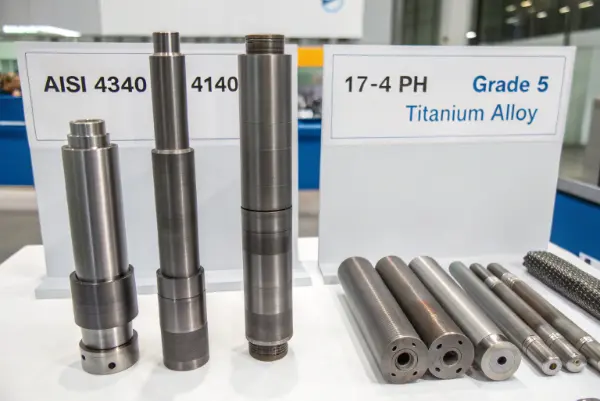
Choosing the right material is not just about looking at a yield strength chart. It is about understanding the entire lifecycle of the part. I have seen too many engineers pick a material that is strong on paper but fails in the real world because it is too brittle or too hard to machine properly. Let’s dig into the specifics of selecting the right metal for the job.
What is the best steel for high torque shafts?
Torque is the enemy of weak materials. If your steel lacks sufficient toughness, high torque will twist it until it snaps, causing catastrophic equipment failure and expensive downtime.
The best steel for high-torque shafts is almost always AISI 4340 alloy steel. This nickel-chromium-molybdenum steel offers an exceptional balance of ductility, toughness, and fatigue strength. It can be heat-treated to very high strength levels while retaining the ability to withstand shock loading, making it ideal for shafts that transfer massive rotational force.
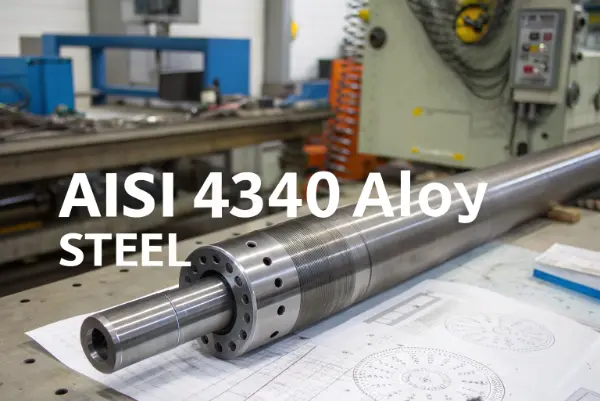
When we talk about high torque, we are talking about resistance to twisting forces. I remember working on a project for a mining equipment manufacturer. They were using standard 1045 carbon steel for their drive shafts. It was cheap, easy to machine, and worked for their smaller machines. But when they scaled up to a larger crusher, the shafts started shearing off within weeks. They were confused because the tensile strength looked "okay" on the datasheet.
The problem was not just static strength; it was shock load and fatigue. We switched them to AISI 4340. This material is a beast. The addition of nickel adds toughness, while chromium and molybdenum help with depth of hardening.
Here is a breakdown of why specific alloy steels work better for torque:
Key Alloy Steels for Torque
| Material Grade | Key Characteristics | Best Use Case |
|---|---|---|
| AISI 4340 | High toughness, deep hardenability, excellent fatigue resistance. | Critical aircraft parts, heavy-duty truck axles, mining shafts. |
| AISI 4140 | Good strength, cheaper than 4340, widely available. | General-purpose high-strength shafts, automotive axles. |
| 300M | Modified 4340 with silicon, higher strength than standard 4340. | Landing gear, extreme performance racing shafts. |
| EN24 (Europe) | Similar to 4340, high tensile steel. | Heavy engineering components, gears, and shafts. |
Why Heat Treatment Matters
You cannot just buy the steel and turn it. To handle high torque, the heat treatment process is critical.
- Quenching and Tempering: This adjusts the hardness and toughness balance.
- Shot Peening: This puts the surface in compression, which significantly improves fatigue life under torque.
For Alex, dealing with robotics, torque might come in sudden bursts (start/stop motion). 4340 gives you that safety margin so the shaft bends slightly rather than snapping if the robot hits a hard stop.
What is the best material for a gearbox shaft?
Gearboxes generate heat and friction. A shaft material that is too soft will wear out quickly at the bearing journals, while a material that is too hard might crack under the gear load.
The best material for a gearbox shaft is often a case-hardening steel like AISI 8620 or 9310. These low-carbon alloy steels allow for a hard, wear-resistant outer surface (case) through carburizing, while maintaining a softer, ductile core. This combination prevents surface wear from bearings and gears while absorbing internal stresses.
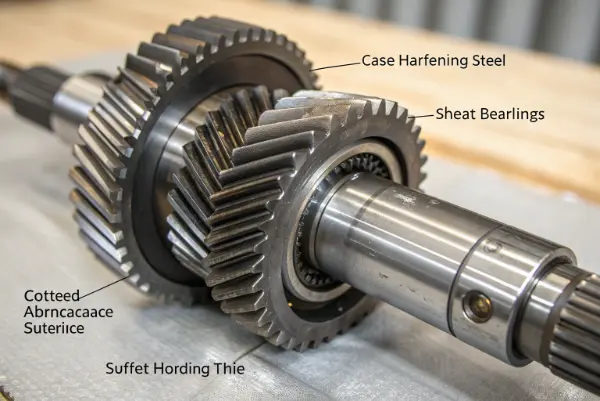
Gearbox shafts live a hard life. They support gears, transfer power, and spin at high speeds inside bearings. This creates a dual requirement: surface hardness and core toughness.
I once consulted for a factory making industrial winches. They were using pre-hardened 4140 for their gearbox shafts. It is a good material, as we discussed before. However, the bearing journals were wearing down prematurely. The 4140 was tough, but its surface hardness (around 30-35 HRC) wasn’t enough to resist the constant friction of the needle bearings over thousands of hours.
We moved them to AISI 8620 and added a carburizing process.
The Case-Hardening Advantage
Carburizing introduces carbon into the surface layer of the steel. When quenched, this layer becomes extremely hard (60+ HRC), like a file. The center of the shaft, however, stays relatively soft.
- The Hard Case: Resists wear from gears pressing on splines and bearings rubbing on journals.
- The Soft Core: Stops cracks from spreading. If the whole shaft were 60 HRC, it would shatter like glass the first time the gearbox jammed.
Material Comparison for Gearboxes
| Material | Surface Hardness Potential | Core Toughness | Cost Factor |
|---|---|---|---|
| AISI 8620 | High (Case Hardened) | Good | Medium |
| AISI 9310 | Very High | Excellent | High |
| 17-4 PH | Medium-High | Good | High |
| AISI 4140 | Medium (Through Hardened) | Very Good | Low-Medium |
For high-precision applications, like the robotics Alex works on, distortion during heat treatment is a massive headache. Case hardening can warp the part. If tolerances are ±0.01mm, we often have to machine the shaft, harden it, and then perform a final precision grinding operation to bring the bearing journals back into spec.
What is the best material for a drive shaft?
Drive shafts face a unique challenge: vibration. A long, spinning shaft acts like a whip if the material isn’t stiff enough or if the weight isn’t balanced, leading to noise and eventual failure.
The best material for a drive shaft depends on the balance between weight and strength; while aluminum (6061-T6) is common for lightweight needs, heavy-duty applications demand AISI 4130 (Chromoly) steel. 4130 offers a high strength-to-weight ratio and welds easily, making it perfect for tubular shafts that need to resist whipping at high speeds.
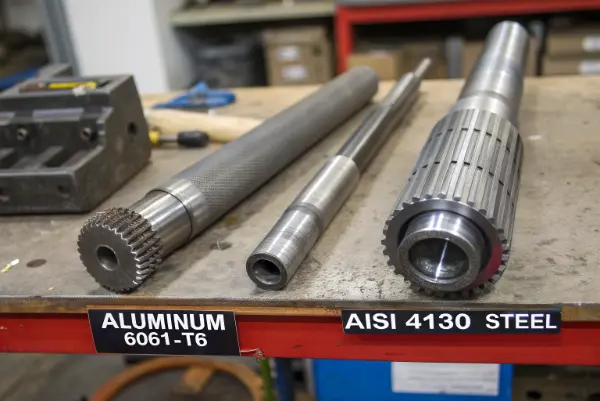
When we move from gearbox internals to the main drive shaft, the geometry changes. These are often long and tubular. Here, "stiffness" (Modulus of Elasticity) and "density" become just as important as yield strength.
In the automotive and heavy machinery world, AISI 4130 is legendary. It is often called "Chromoly."
Why is it better than standard steel for this?
- Weldability: Drive shafts often have yokes or splined ends welded onto a tube. 4130 welds much better than higher carbon steels like 4340, which can crack at the weld zone if you aren’t extremely careful with pre-heating.
- Strength-to-Weight: You can use a thinner wall tubing with 4130 to handle the same load as a thick wall mild steel tube. A lighter shaft has less rotating mass. Less mass means less centrifugal force trying to bend the shaft as it spins. This raises the "critical speed"—the speed at which the shaft starts to vibrate violently.
Composite Alternatives
I should mention that in very high-end robotics or aerospace, we are seeing a shift away from metals entirely for drive shafts. Carbon Fiber is entering the chat.
- Steel (4130): High strength, heavy, cheap.
- Aluminum (6061/7075): Low strength, light, needs larger diameter to handle torque.
- Carbon Fiber: Incredible strength-to-weight, very stiff, extremely expensive.
However, for most heavy-duty industrial applications (like agricultural machinery or large robotic arms), 4130 Steel remains the king. It survives impact. If a forklift hits a carbon fiber shaft, it shatters. If it hits a 4130 shaft, it might just dent. For reliability in a rough environment, steel still wins.
What is the best material for shafts in general?
Sometimes you do not have a specific "extreme" condition, but you need a reliable, cost-effective shaft for general industrial use. Over-engineering is a waste of money.
For general-purpose shafts, AISI 1045 carbon steel is the industry standard and generally the "best" choice for economy and performance. It machines easily, has decent tensile strength for moderate loads, and can be induction hardened in specific areas if wear resistance is needed, making it the most versatile option for non-critical components.
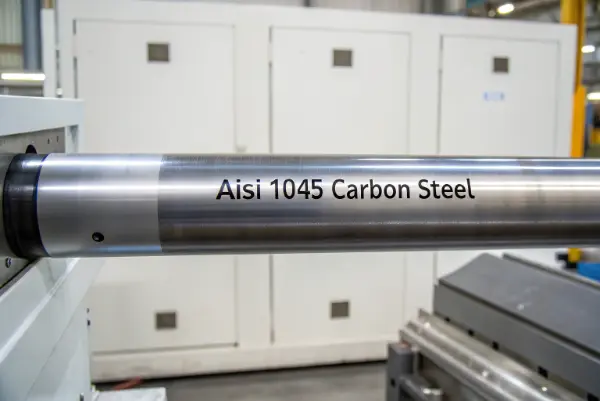
Not every shaft needs to survive a bomb blast or 10,000 RPM. In my CNC shop, if a customer sends a drawing for a simple conveyor roller or a pulley shaft and asks me to suggest a material, I almost always start with AISI 1045 (or C45 in Europe).
Here is why 1045 is the bread and butter of shaft manufacturing:
- Machinability: It cuts clean. We can run our CNC lathes faster, which lowers the part cost for you.
- Availability: Every metal supplier has it. You never have to wait weeks for stock.
- Versatility: It comes in a "Cold Drawn" condition. This means the bar is already very round and smooth. Often, we do not even need to turn the outer diameter if the tolerance allows; we just machine the ends.
When to Upgrade
You start with 1045. You only upgrade if you hit a specific limit.
-
Limit 1: Corrosion. If the shaft works in water or chemicals, 1045 will rust instantly.
- Upgrade: Stainless Steel 303 (easy to machine, low strength) or 304 (harder to machine, better corrosion resistance).
- Premium Upgrade: 17-4 PH Stainless. This is for when you need the strength of steel but the rust resistance of stainless. I use this a lot for food processing machinery shafts.
-
Limit 2: Size Constraints. If the design forces the shaft to be very thin but the load is high.
- Upgrade: 4140 Pre-hardened.
-
Limit 3: Extreme Wear.
- Upgrade: 8620 Case Hardened (as discussed in the gearbox section).
A Summary Table for Engineers
| Scenario | Recommended Material | Why? |
|---|---|---|
| General Purpose / Low Cost | AISI 1045 | Cheap, easy to machine. |
| High Strength / Heavy Load | AISI 4140 | Good balance of toughness and strength. |
| Extreme Torque / Impact | AISI 4340 | Maximum toughness and fatigue life. |
| High Wear / Gears | AISI 8620 | Hard surface, tough core. |
| Corrosive Environment | 17-4 PH Stainless | Strong and rust-proof. |
For a senior engineer like Alex, the goal is not just picking a material; it is picking the material that balances the physical requirements with the manufacturing budget. 1045 is often the right answer because it leaves room in the budget for the parts that actually need 4340.
Conclusion
Selecting the right shaft material is about matching properties to failure modes; use AISI 4340 for torque, 8620 for wear, 4130 for drive shafts, and 1045 for general use.