
You have a perfect design, but finding a reliable manufacturer is a stressful gamble. A bad choice can lead to costly delays, scrap parts, and endless frustration. I’m here to give you a clear framework for finding a partner you can trust to deliver quality parts on time.
To choose the best CNC manufacturer, you must look beyond the price tag. The key is to assess their technical capability, quality control systems, communication effectiveness, and project management experience. A top-tier partner will have modern machinery, rigorous inspection processes like CMM reports, and a responsive team that understands your design intent and communicates proactively.
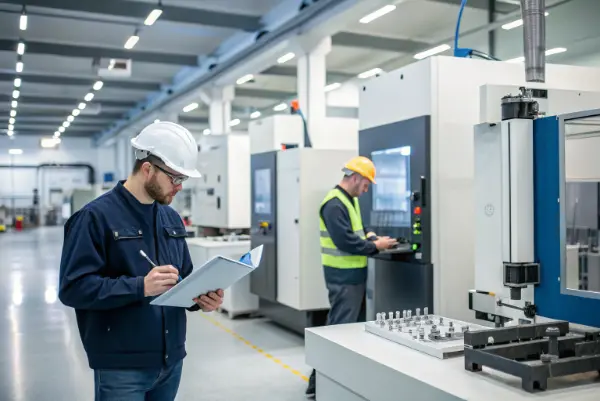
Choosing a manufacturing partner is more than just a transaction; it’s about building a foundation of trust for your project’s success. Many engineers I work with, like Alex from Germany, know that the quality of the workshop is just as important as the skill of the machinist. But before we dive into vetting a company, it’s crucial to understand the tools they use. Understanding the machines is the first step to evaluating the manufacturer. Let’s break down the common questions about the equipment itself.
How to choose the right CNC machine for your project?
Looking at a CNC machine’s spec sheet can be overwhelming, filled with technical jargon. Choosing the wrong machine type for your part can lead to higher costs, slower production, or even make it impossible to manufacture. Let’s focus on the key factors that really matter for your project’s success.
To choose the right CNC machine, you must match its capabilities to your part’s specific needs. Consider the material (spindle power and speed), part size (work envelope), geometric complexity (number of axes), and required precision (machine tolerance). For high-volume production, automation features are also important. This alignment ensures both quality and cost-effectiveness.
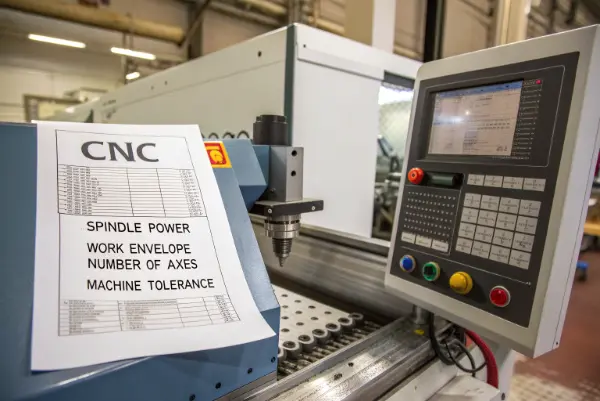
Dive Deeper: Aligning Machine Specs with Your Design
When I help clients like Alex plan their production, the conversation always starts with the part itself, not the machine. The part dictates the tool. Let’s break down how to make that connection. It’s a process I’ve refined over a decade of matching designs to the right machines.
Matching Machine to Material
The material you choose is fundamental. A machine set up for aluminum will struggle with titanium.
- Softer Materials (Aluminum, Plastics): These allow for high-speed machining. You need a machine with a high RPM spindle (12,000 RPM or more) to achieve good surface finishes and fast removal rates.
- Harder Materials (Stainless Steel, Titanium, Inconel): These require a machine with high torque at lower spindle speeds. A rigid, heavy-duty machine frame is essential to handle the cutting forces without vibration, which can ruin the part and wear out tools.
I remember a project with a client who needed a complex part made from Inconel. A supplier tried to run it on a light-duty machine designed for aluminum. The results were terrible—chatter marks, broken tools, and missed deadlines. We moved the project to a shop with a robust, high-torque mill, and the parts came out perfectly.
Understanding Axes and Complexity
The geometry of your part determines how many axes you need.
| Axis Configuration | Best For | Common Applications |
|---|---|---|
| 3-Axis | Simple, prismatic parts with features on one face. | Brackets, plates, housings, molds. |
| 4-Axis | Parts needing features on the sides or a cylindrical profile. | Engravings on a cylinder, gears, cam lobes. |
| 5-Axis | Highly complex parts with curved surfaces and angled features. | Impellers, turbine blades, medical implants, aerospace components. |
A 5-axis machine can produce a complex part in a single setup. This reduces the risk of tolerance stack-up errors from multiple setups and is often faster overall. However, programming and setup are more complex, so it’s only cost-effective if the part geometry demands it. Don’t pay for 5-axis capability if a 3-axis machine can do the job efficiently.
Which is better, VMC or HMC?
You need a milled part, but you see manufacturers listing different machines: VMC and HMC. It’s confusing to know which is better for your job, and you worry that choosing the wrong one might impact your part’s quality or cost. Let’s clarify the real-world differences.
Neither VMC (Vertical Machining Center) nor HMC (Horizontal Machining Center) is universally "better." A VMC is ideal for simpler, single-setup parts and is more common and affordable. An HMC excels at complex, multi-sided parts and high-volume production due to its pallet-changing capabilities and superior chip evacuation, but it represents a larger investment.
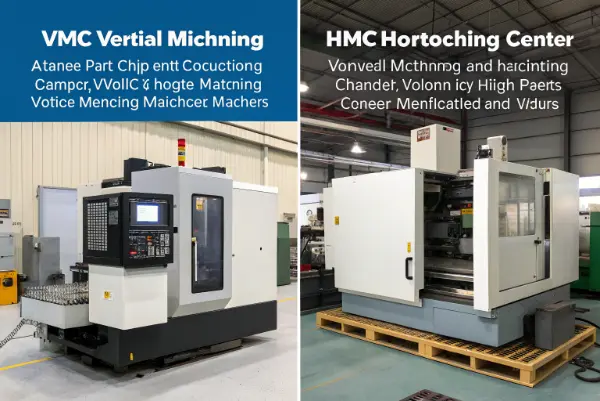
Dive Deeper: Making the Right Choice for Your Parts
The VMC vs. HMC debate is really a question of application and production scale. I’ve used both extensively, and each has its place. For an engineer like Alex, who often works on prototypes and small-to-medium runs of complex parts, understanding this difference is key to optimizing his sourcing strategy.
VMC: The Versatile Workhorse
The VMC is the most common type of CNC milling machine. Its spindle is oriented vertically, and the tool approaches the workpiece from above.
- Best Use Cases:
- Single-Sided Work: Perfect for parts where most or all of the machining occurs on one face, like mold cavities, plates, and simple brackets.
- Prototyping & Small Runs: Setups are generally faster and simpler, making VMCs cost-effective for one-offs and low quantities.
- Large, Heavy Parts: Gravity helps hold the workpiece securely on the table.
The main drawback is chip evacuation. Chips can pile up in pockets, which can lead to recutting, tool breakage, and poor surface finish if not managed with high-pressure coolant. Also, machining multiple sides requires manual intervention to flip and re-fixture the part, adding labor time and potential for error.
HMC: The Production Powerhouse
In an HMC, the spindle is horizontal. The workpiece is typically mounted on a tombstone fixture that can be rotated by the machine’s B-axis.
- Best Use Cases:
- Multi-Sided Machining: The tombstone can present multiple faces of the part (or multiple parts) to the tool in a single setup. This is a game-changer for complex housings or blocks.
- High-Volume Production: Most HMCs come with an Automatic Pallet Changer (APC). While one pallet is in the machine, an operator can be loading/unloading parts on the other. This dramatically reduces downtime, often achieving 85-95% spindle uptime versus 25-35% for a typical VMC.
- Excellent Chip Control: Gravity is your friend. Chips naturally fall away from the part and the cutting zone, leading to better tool life and surface finish.
I once managed a high-volume job for an automotive client. We initially quoted it on our VMCs, but the cycle time was too long due to manual part flipping. By moving it to an HMC with a pallet changer, we cut the per-part cost by 30% and improved consistency, all because we eliminated the setup time between sides.
Are Chinese CNC machines any good?
Engineers often ask me this with a hint of concern. They’ve heard stories about poor quality and wonder if they can trust parts made on Chinese machines. The fear is that lower cost might mean sacrificing the tight tolerances their designs require. Let’s address this common question head-on.
Yes, many Chinese CNC machines are very good, and the quality has improved dramatically. Leading Chinese brands now produce reliable, high-precision machines that are used in demanding industries. However, like anywhere, there is a wide spectrum of quality. The key is not the machine’s country of origin, but the manufacturer’s commitment to investing in high-quality equipment and maintaining it properly.
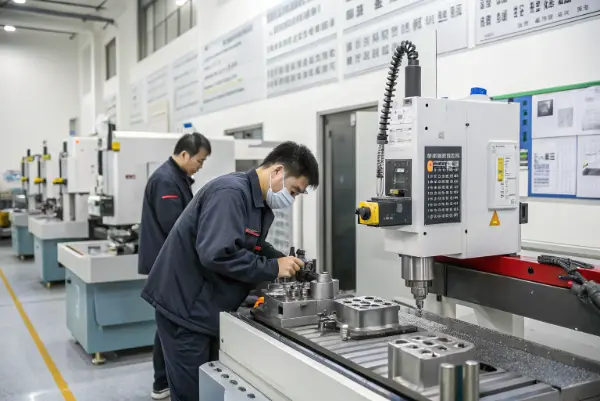
Dive Deeper: A Look Inside the Modern Chinese Workshop
As someone who started on the shop floor and now works with dozens of Chinese suppliers, I have a clear view of this evolution. Twenty years ago, the stereotype might have had some truth. Today, the reality is very different. The best Chinese manufacturers are not cutting corners; they are investing heavily in world-class technology.
The Rise of High-Quality Domestic Brands
The Chinese government and private industry have poured billions into advancing their manufacturing capabilities. This has given rise to several domestic CNC brands that are now serious competitors on the global stage.
- Leading Brands: Companies like Haitian Precision and DMTG (Dalian Machine Tool Group) are producing machines that offer excellent performance and reliability. They use high-quality components, such as German or Japanese control systems (Siemens, Fanuc), spindles, and ball screws.
- Focus on Precision: These manufacturers are not just making basic 3-axis machines. They are producing sophisticated 5-axis machining centers, high-speed turning centers, and large gantry mills capable of holding tight tolerances required for aerospace and medical parts.
When I visit top-tier suppliers in China, their floors are filled with a mix of equipment. You’ll see a Japanese Okuma or a German DMG MORI right next to a new high-end Haitian. The shop owner didn’t choose the Haitian because it was cheap; they chose it because it delivered the required precision and performance for a specific job, offering a better return on investment.
The Real Quality Indicator: Investment and Maintenance
Ultimately, the quality of a CNC part comes from three things: a good machine, a skilled operator, and a robust process. The country of origin of the machine is the least important of these factors.
Here’s what I look for to gauge a manufacturer’s commitment to quality, regardless of the brands they use:
| Quality Indicator | What It Tells You |
|---|---|
| Regular Maintenance Schedule | A clean, well-maintained machine holds tighter tolerances. I always ask to see maintenance logs. |
| Investment in New Technology | A shop that regularly buys new, high-end machines (Chinese or otherwise) is serious about growth and capability. |
| Climate-Controlled Environment | Serious shops keep their facilities temperature-controlled to prevent thermal expansion from affecting machine accuracy. |
| Skilled Programmers & Operators | A great machine is useless in the wrong hands. The team’s experience is paramount. |
The answer is not about the flag on the machine, but about the quality mindset of the manufacturer using it.
Which CNC brand is best?
This is like asking "Which car brand is best?" You’ll get a hundred different answers. Engineers are often loyal to brands they’ve had good experiences with, but this can create a blind spot, preventing them from considering excellent alternatives for their specific needs.
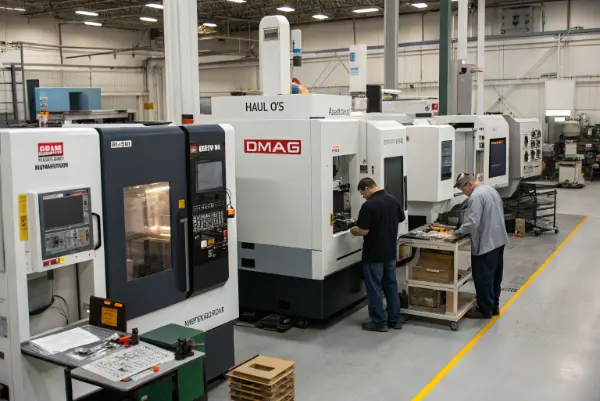
There is no single "best" CNC brand; the best brand depends entirely on the specific application, budget, and desired level of precision. High-end brands like DMG MORI and Okuma are known for top-tier accuracy and reliability, while brands like Haas and Mazak offer excellent value and versatility. The best manufacturers choose a mix of brands to match the right tool to the job.
Dive Deeper: A Pragmatic Look at Machine Brands
As a sourcing professional, I can’t afford to be loyal to a single brand. My loyalty is to the client’s project. I need to know the strengths and weaknesses of each major machine builder to guide my clients and vet my suppliers. The best workshops I partner with have a similar philosophy. They don’t just buy one brand; they build a fleet of machines, each chosen for a specific purpose.
Let’s break down some of the major players and where they fit.
The Tiers of CNC Machine Brands
You can generally group machine brands into a few tiers based on performance, price, and typical application.
| Tier | Representative Brands | Key Characteristics & Best For |
|---|---|---|
| Elite Precision & Performance | DMG MORI (German/Japanese), Okuma (Japanese), Yasda (Japanese) | Highest accuracy and repeatability (sub-5 micron). Built for extreme reliability in aerospace, medical, and die/mold industries. Very expensive, but necessary for the most demanding tolerances. |
| High Performance & Reliability | Mazak (Japanese), Makino (Japanese), Doosan (Korean) | Excellent all-around performers. Known for robust construction, powerful controls, and reliability. They are the workhorses of many high-quality job shops, balancing cost and performance effectively. |
| Value & Versatility | Haas (USA), Hurco (USA), some Taiwanese brands | Great value for the price. Very user-friendly controls (especially Haas) make them popular in the US and Europe for general machining, prototyping, and education. They are highly capable for a wide range of jobs. |
| High-Quality Domestic (China) | Haitian Precision, DMTG | Offer competitive performance, often using key components from Japan or Germany. They provide a strong return on investment for manufacturers looking to scale their capacity for high-precision work without the premium price tag. |
How a Top Manufacturer Builds Their Fleet
A smart CNC manufacturer diversifies their machine assets. When I walk into a potential partner’s workshop, I like to see a thoughtful mix.
For example, a shop might have:
- A DMG MORI 5-axis machine: Reserved for the most complex, high-margin aerospace parts.
- Several Mazak or Doosan HMCs: Used for high-volume production runs of moderately complex parts.
- A dozen Haas or Hurco VMCs: The versatile backbone for prototypes, small runs, and simpler parts.
- A few Haitian turning centers: Handling high-volume production of shafts and other turned parts.
This strategy allows them to be competitive across a wide range of projects. They can use the ultra-precise machine for a medical implant prototype for Alex, and a cost-effective Haas for a simple aluminum bracket for another customer. They match the cost and capability of the machine to the value and requirements of the job. So, when choosing a manufacturer, don’t ask "Do you use Okuma machines?" Instead, ask "What machine will you use for my part, and why is it the right choice?"
Conclusion
Choosing the right CNC manufacturer means assessing their machines, processes, and people. A great partner uses the right tool for your specific part, ensuring a blend of quality, cost, and efficiency.