
Are you struggling to get parts made with the exactness your designs demand? A small error in a component can lead to system failure, costing you time and money. Precision CNC machining services provide the solution, creating parts with the extreme accuracy required for today’s most advanced applications.
Precision CNC machining is an advanced manufacturing process that uses computer-controlled machines to create components with extremely tight tolerances and high accuracy, often within a few microns (μm). Unlike standard machining, it requires specialized equipment, controlled environments, and rigorous inspection methods to produce complex parts where perfect fit and flawless function are absolutely essential for high-performance applications like aerospace, medical devices, and robotics.
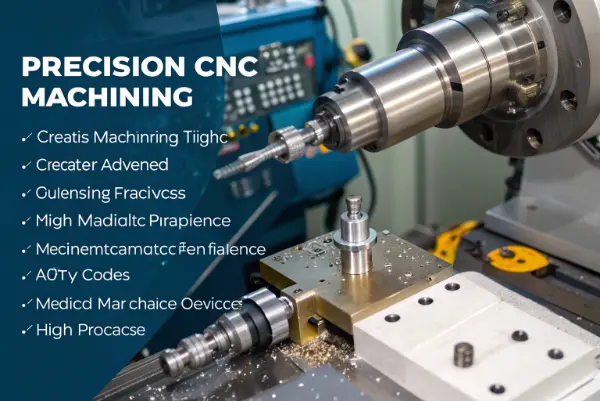
Understanding what makes this process unique is the first step toward getting your parts made right. It’s more than just a buzzword; it’s a specific discipline built on accuracy, repeatability, and an obsession with quality. Let’s explore the details so you can decide if this high-level service is the right fit for your project. This knowledge will help you communicate better with your manufacturing partners and ensure your final product meets every critical specification.
How is precision CNC machining different from standard CNC machining?
You’ve probably sourced parts using "CNC machining," but now you see the term "precision CNC machining." They sound similar, but are they the same? Choosing the wrong one can lead to parts that don’t fit, wasted budgets, and critical project delays. Understanding the key differences is crucial for making the right call and ensuring your project’s success from the start.
The primary difference is the level of tolerance achieved. Standard CNC machining typically offers tolerances around ±0.1mm (or ±0.004 inches). In contrast, precision CNC machining delivers much tighter tolerances, often between ±0.025mm and ±0.005mm (±0.001 to ±0.0002 inches) or even better. This requires superior machinery like 5-axis centers, climate-controlled facilities, and advanced quality inspection tools like Coordinate Measuring Machines (CMMs).
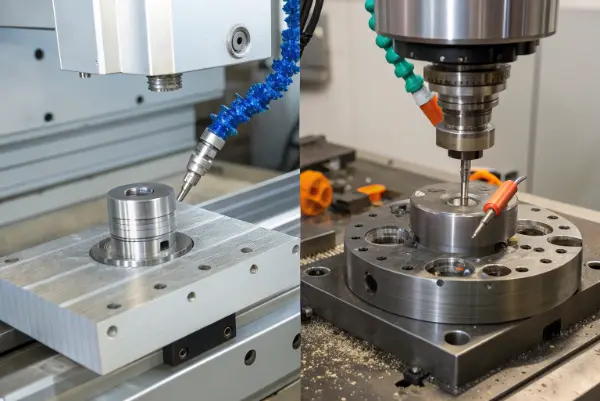
The distinction goes far beyond just the final numbers on a drawing. It involves a completely different approach to manufacturing, from planning to execution. I once had a client, Alex, a robotics engineer from Germany, who needed a set of gears for a robotic joint. A previous supplier had made them using a standard 3-axis CNC process. The parts looked good visually but failed during assembly because the gear meshing was off by just 50 microns (0.050mm). The project was stalled for weeks. We took on the job, but we approached it as a precision project.
The Core Differences: A Deeper Look
To truly grasp the gap between standard and precision work, let’s break down the key areas. It’s about the machine, the environment, and the mindset.
-
Tolerance and Repeatability: As mentioned, this is the most obvious difference. But it’s not just about hitting a tight tolerance once. Precision machining is also about repeatability—the ability to produce hundreds or thousands of parts that are all virtually identical, within the specified micron-level tolerance. Standard machining is great for parts where a little variation doesn’t affect function, like simple brackets or housings. Precision machining is for parts where even the smallest deviation can cause failure, like in an engine piston or a surgical tool.
-
Machinery and Environment: You can’t achieve precision on a standard machine. Precision shops invest heavily in state-of-the-art equipment. This includes 5-axis CNC machines that can create complex geometries in a single setup, reducing the risk of errors from re-fixturing the part. It also includes machines with high-speed spindles and advanced cooling systems to prevent thermal expansion from affecting accuracy. The workshop environment itself is a tool. We keep our precision machining floor at a constant temperature and humidity because a few degrees of change can cause metal to expand or contract enough to throw a part out of tolerance.
-
Quality Control and Inspection: In standard machining, inspection might be done with digital calipers or micrometers. In precision machining, that’s not enough. We rely on advanced metrology equipment. The Coordinate Measuring Machine (CMM) is the industry gold standard. It uses a highly sensitive probe to measure the geometry of a part with sub-micron accuracy, creating a detailed report that compares the physical part to the original CAD model. We also use laser scanners and optical comparators to verify complex profiles and surface features. This isn’t just a final check; it’s an integral part of the process.
| Feature | Standard CNC Machining | Precision CNC Machining |
|---|---|---|
| Typical Tolerance | ±0.1 mm (±0.004") | ±0.005 to ±0.025 mm (±0.0002" to ±0.001") |
| Machinery | Standard 3-axis mills, lathes | High-accuracy 5-axis machines, Swiss lathes, EDM |
| Environment | General workshop | Climate-controlled (temperature and humidity) |
| Inspection Tools | Calipers, micrometers | CMM, laser scanners, optical comparators |
| Operator Skill | Skilled machinist | Highly specialized technician with metrology expertise |
| Best For | General-purpose parts, prototypes, simple structures | Critical components, complex geometries, high-performance assemblies |
What industries demand precision CNC machining?
Are you wondering if your project truly requires the expense and rigor of precision machining? Specifying tolerances that are too tight can needlessly increase your costs, but specifying them too loosely can lead to component failure. Seeing which industries can’t function without this level of accuracy will help you decide if your application belongs in the same critical category.
Industries where performance, safety, and reliability are non-negotiable depend on precision CNC machining. This includes aerospace and defense, where components must withstand extreme conditions without failure. The medical industry relies on it for surgical instruments and implants that require biocompatibility and perfect accuracy. It is also essential in robotics, automation, and the semiconductor industry, where microscopic precision is fundamental to function.
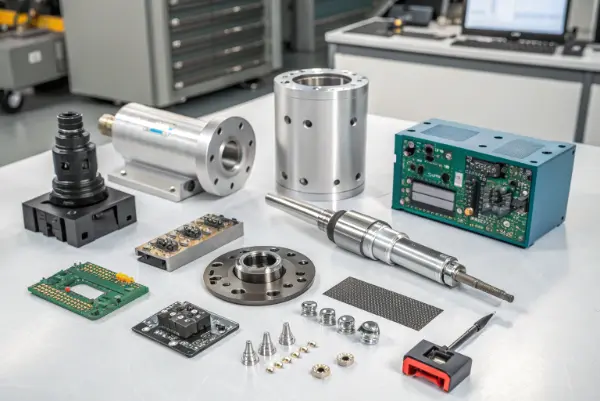
The common thread across these fields is that the cost of failure is exceptionally high. A malfunctioning part in an airplane, a faulty surgical implant, or a misaligned robotic arm can have disastrous consequences. I’ve worked with clients from all these sectors, and their demands are always clear: there is no room for error. The parts we make for them are not just components; they are critical elements of a larger system where people’s safety or a company’s entire production line is at stake. This understanding shapes our entire manufacturing philosophy.
Applications Across Key Sectors
Let’s dive into some specific examples. Seeing how precision parts are used in the real world can give you a clearer picture of the capabilities and why they are so vital.
-
Aerospace & Defense: This was one of the first industries to drive the need for precision. Aircraft engines, landing gear components, and missile guidance systems all contain parts machined to incredibly tight tolerances. These components are often made from high-strength, lightweight superalloys like Inconel or Titanium. The parts must endure extreme temperatures, pressures, and vibrations. A single weak point could lead to catastrophic failure. For one defense project, we machined a series of actuator housings with wall thicknesses of just 0.5mm and tolerances of ±0.01mm. The combination of a difficult material and tight specs made it a classic precision machining challenge.
-
Medical & Healthcare: The human body is the ultimate high-performance machine, and any device implanted in it must be perfect. Precision CNC machining is used to create orthopedic implants like hip and knee replacements, dental implants, and spinal fusion cages. These parts require complex, organic shapes and flawless surface finishes to ensure biocompatibility and prevent rejection. Surgical instruments are another key application. I remember making a set of custom endoscopic tools for a minimally invasive surgery startup. The parts were tiny, complex, and had to assemble perfectly to give the surgeon precise control.
-
Robotics & Automation: For engineers like Alex, precision is everything. In a modern robotic arm, dozens of gears, bearings, and structural components must fit together seamlessly. The positional accuracy of a robot is directly tied to the dimensional accuracy of its parts. Any "slop" or backlash in the system, often caused by out-of-tolerance components, reduces its precision and repeatability. We regularly machine lightweight aluminum and steel parts for robotic systems, focusing on achieving perfect hole locations, shaft diameters, and gear profiles.
| Industry | Example Components | Key Requirements |
|---|---|---|
| Aerospace | Turbine blades, actuator housings, landing gear parts | Extreme durability, heat resistance, tight tolerances |
| Medical | Surgical tools, orthopedic implants, diagnostic equipment | Biocompatibility, flawless surface finish, sterilization |
| Robotics | Robotic arm joints, gears, end-effectors, motor mounts | High positional accuracy, repeatability, low backlash |
| Semiconductor | Wafer handling equipment, vacuum chamber components | Extreme cleanliness, material purity, micro-tolerances |
| Automotive | Engine pistons, fuel injection nozzles, transmission parts | High performance, wear resistance, fuel efficiency |
How do you choose the right precision CNC machining partner?
You know you need precision parts, but how do you find a supplier you can trust? A slick website doesn’t guarantee quality. Choosing the wrong partner can lead to a nightmare of missed deadlines, poor communication, and parts that end up in the scrap bin, destroying your budget and timeline. To avoid this, you need a clear strategy for vetting potential suppliers.
To choose the right precision CNC machining partner, look beyond the price quote. Verify their technical capabilities by reviewing their machine list (do they have 5-axis and CMMs?). Assess their quality system by asking for certifications like ISO 9001. Most importantly, evaluate their communication and engineering support. A good partner acts as an extension of your team, offering design for manufacturability (DFM) feedback to optimize your parts for production.
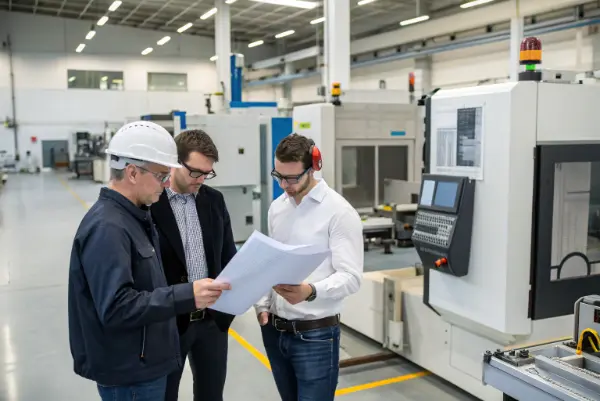
Finding a true partner is about building a relationship, not just placing an order. Over my years in this business, I’ve seen that the most successful projects happen when there is open, transparent communication between the client’s engineers and my team. A low price is tempting, but it’s worthless if the supplier can’t deliver quality or help you solve problems. I always tell new clients, "Don’t just send us a file and ask for a price. Let’s have a conversation." That conversation is where the real value is created.
A Checklist for Vetting Suppliers
When you’re evaluating a potential precision machining shop, whether they are local or overseas, you need a systematic way to assess their suitability. Here are the key areas I recommend focusing on. Think of it as a checklist to protect your project.
-
Technical Capability and Equipment: This is the foundation. A shop can’t produce precision parts without the right tools.
- Machine List: Ask for a list of their CNC machines. Look for modern, well-maintained 5-axis machining centers, Swiss-type lathes for small, complex parts, and EDM machines for hard metals and sharp internal corners. A shop with only basic 3-axis machines cannot be a true precision partner.
- Inspection Equipment: Do they have a CMM? This is non-negotiable for verifying tight tolerances. Ask if they can provide full CMM inspection reports with your parts. This documentation is your proof of quality.
-
Quality Management System (QMS): A strong QMS shows that the supplier is serious about process control and continuous improvement.
- Certifications: ISO 9001 is the most common certification and indicates a documented quality process. For industries like aerospace or medical, you might look for more specific certifications like AS9100 or ISO 13485.
- Process Control: Ask them about their process. How do they handle material traceability? What are their in-process inspection steps? How do they manage non-conforming parts? A good supplier will have clear, documented answers.
-
Engineering and Communication: This is often what separates a good supplier from a great one.
- DFM Feedback: Before you even place an order, a great partner should offer Design for Manufacturability (DFM) analysis. They should review your design and suggest small changes that could make the part easier and more cost-effective to machine without compromising function. This proactive support is invaluable.
- Responsiveness and Clarity: How quickly and clearly do they respond to your technical questions? Are you speaking with a salesperson or an engineer who understands your design intent? Clear, prompt communication is essential, especially when working with overseas suppliers across different time zones. I’ve built my team at QuickCNCs around this principle; every project manager has a strong engineering background.
| Vetting Criteria | What to Look For | Red Flags to Watch Out For |
|---|---|---|
| Technical Capability | Modern 5-axis machines, CMM, climate-controlled facility | Old equipment, no CMM, vague answers about capabilities |
| Quality System | ISO 9001 or higher, clear documentation, material traceability | No certifications, no documented quality process, unable to provide reports |
| Engineering Support | Proactive DFM feedback, access to engineers, clear communication | "Quote only" mentality, slow responses, communication with non-technical staff |
| Project Management | A dedicated point of contact, regular updates, realistic delivery schedules | Poor English skills (for overseas), missed deadlines, lack of transparency |
| Past Work & Reputation | Case studies or samples relevant to your industry, positive client testimonials | No relevant experience, unwillingness to share references, poor online reviews |
Conclusion
In short, precision CNC machining is a top-tier manufacturing service for creating critical parts with extreme accuracy. It’s defined by tight tolerances, advanced technology, and rigorous quality control.