
Finding a reliable supplier for your custom parts feels like searching for a needle in a haystack. A bad partner can lead to missed deadlines, poor quality, and wasted money. You need a supplier you can trust, one that delivers precision parts on time, every time, without any hassle.
To find a good custom CNC parts supplier, you should explore online manufacturing platforms, attend industry trade shows, ask for referrals from your professional network, and search local business directories. The best approach is to vet potential suppliers by checking their certifications, equipment lists, and past customer reviews to ensure they meet your specific quality and capacity needs.
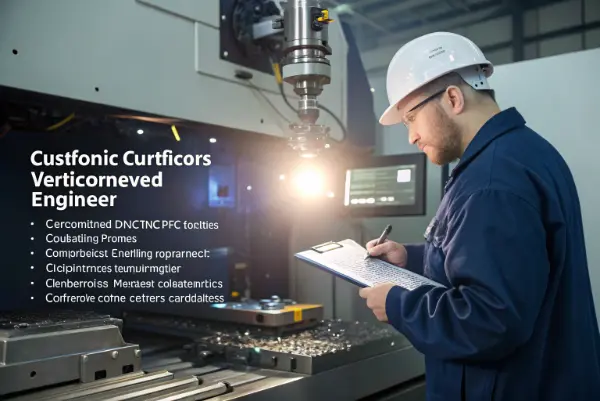
Finding the right partner is one of the biggest challenges for engineers and product developers. I’ve been on both sides of this equation. I started on the shop floor, running the machines myself. Now, I help engineers like you source parts from around the world. The wrong supplier can ruin a project, but the right one becomes an extension of your team. This search isn’t just about finding a company with a machine; it’s about finding expertise, reliability, and a commitment to quality. Let’s break down the key questions that will help you find that perfect manufacturing partner.
What is the hourly rate for a CNC machine?
You have a design ready, but you’re worried about the budget. CNC machining costs can feel unpredictable, making it hard to plan your project expenses effectively. You need a clear understanding of the costs involved so you can get a fair price without sacrificing quality or speed.
The hourly rate for a CNC machine typically ranges from $50 to $150. This rate depends on several factors, including the machine’s complexity (3-axis vs. 5-axis), the operator’s skill level, the shop’s location, and its overhead costs. Simple 3-axis work is on the lower end, while complex 5-axis machining with tight tolerances commands a higher rate due to the advanced technology and expertise required.
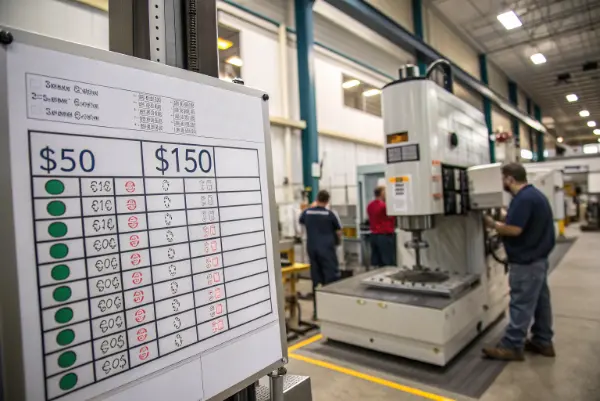
Understanding the hourly rate is crucial, but it’s only one piece of the puzzle. The rate itself doesn’t tell you the final price of your part. The total cost is a combination of this rate and the time it takes to machine your part, plus material costs and any finishing processes. I remember quoting a project for a German robotics company. Their engineer, Alex, was focused on the hourly rate. He saw a lower rate from another shop and was tempted. I had to explain that our more advanced 5-axis machine, while having a higher hourly rate, could produce his complex part in a single setup. This reduced the total machining time by 40% and eliminated the risk of errors from multiple setups. The final part cost was actually lower, and the quality was better. The cheapest hourly rate is not always the most cost-effective solution.
Breaking Down the Hourly Rate
The hourly rate is not an arbitrary number. It’s a calculated figure that covers a shop’s operational expenses and ensures they can continue to invest in quality equipment and skilled people.
- Machine Cost (Amortization): A high-end 5-axis CNC machine can cost hundreds of thousands of dollars. The shop needs to pay for this investment over the machine’s lifespan.
- Labor Cost: This includes the machinist’s salary, benefits, and training. Skilled machinists who can handle complex jobs are highly valuable.
- Overhead: This covers everything else: electricity, rent for the facility, software licenses (CAM software is expensive), tooling, coolant, maintenance, and administrative staff.
- Profit Margin: A healthy margin allows the shop to reinvest in new technology and grow its capabilities.
How Different Factors Impact the Rate
Not all CNC machine hours are created equal. The price you pay is directly related to the capability you need. Here is a simple breakdown:
| Factor | Lower Rate (~$50/hr) | Higher Rate (~$150+/hr) | Why it Matters |
|---|---|---|---|
| Machine Type | 3-Axis Mill or Basic Lathe | 5-Axis Mill-Turn Center | 5-axis machines can create complex geometries in one setup, saving time and improving accuracy. |
| Material | Aluminum, Plastics | Titanium, Inconel | Harder materials are tougher on tools and require slower cutting speeds, increasing machine time. |
| Tolerance | Standard (±0.1mm) | High-Precision (±0.01mm) | Achieving tight tolerances requires better machines, climate-controlled environments, and more skilled operators. |
| Location | Low-Cost Labor Regions | High-Cost Labor Regions | Labor and real estate costs vary significantly around the world, directly impacting overhead. |
Ultimately, when you get a quote, ask the supplier to explain their process. A good partner will be transparent about why they chose a certain machine or strategy for your part. This focus on total value, not just the hourly rate, is the key to a successful partnership.
Which company is best for CNC machines?
You want high-quality parts, but how do you know if your supplier is using the right equipment? The brand and model of the CNC machine can directly impact precision, speed, and reliability. Choosing a supplier with subpar machines could put your entire project at risk of failure.
There is no single "best" company for CNC machines, as the ideal choice depends on the application. Brands like Haas are excellent for general-purpose machining and prototyping due to their affordability and ease of use. For high-precision and complex 5-axis work, German and Japanese brands like DMG Mori, Mazak, and Okuma are industry leaders, known for their rigidity, accuracy, and advanced technology.
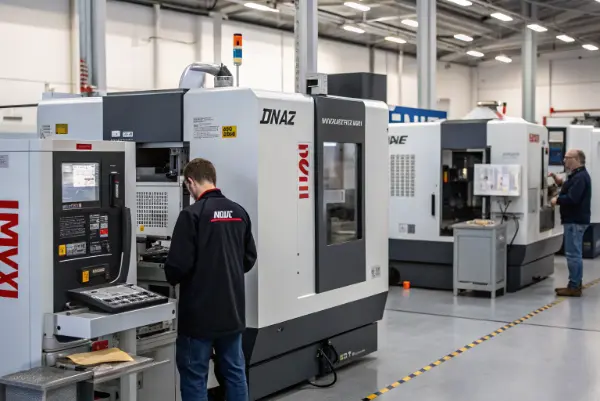
When I was starting my own shop, the first major decision was which machine to buy. It was a huge investment. I spent months researching and talking to other shop owners. I chose a DMG Mori because I knew I wanted to serve clients who needed high-precision parts. The machine’s quality directly translates to the quality of the parts we produce. When you’re vetting a supplier, you should absolutely ask about their equipment list. It tells you a lot about their capabilities and their commitment to quality. A shop that invests in top-tier machines from reputable brands is signaling that they take precision seriously. It shows they are equipped to handle demanding jobs and are not cutting corners on the tools of their trade.
Key Machine Brands and Their Strengths
The world of CNC machinery is diverse, with different brands specializing in different areas. Knowing the key players can help you evaluate a potential supplier’s workshop. Think of it like cars: a Toyota is reliable for daily driving, but you’d want a Porsche for a racetrack.
-
For Versatility and General Use:
- Haas (USA): Known as the workhorse of many machine shops. They are affordable, user-friendly, and have great support. They are perfect for a wide range of parts, from simple brackets to moderately complex enclosures.
- Doosan (South Korea): Offers a great balance of performance and value. Their machines are robust and reliable, often seen as a step up in rigidity from entry-level options.
-
For High-Precision and Complex Machining:
- DMG Mori (Germany/Japan): A global leader in high-end machine tools. They are famous for their 5-axis machines and mill-turn centers that deliver exceptional accuracy and surface finishes.
- Mazak (Japan): Pioneers in multi-tasking machines (e.g., Integrex series) that combine milling and turning. This allows for "done-in-one" manufacturing of very complex parts.
- Okuma (Japan): Another top-tier Japanese brand. They are unique because they build their own machines, drives, motors, and controls (OSP control), leading to outstanding performance and integration.
What a Supplier’s Machine List Tells You
When a supplier sends you their equipment list, don’t just glance at it. Look for these clues to understand their real capabilities.
| What to Look For | What it Signals | Good for You If… |
|---|---|---|
| Multiple 5-Axis Machines | Capability for complex geometries, single-setup efficiency. | Your parts have curved surfaces, angled holes, or complex features. |
| Newer Machine Models | Investment in modern technology, better accuracy, and reliability. | You need tight tolerances and consistent quality across large batches. |
| Reputable Brands (DMG, Mazak, etc.) | A commitment to high-precision work and quality. | Your application is critical (e.g., aerospace, medical) and demands the best. |
| In-house CMM / Inspection Gear | A serious approach to quality control and process verification. | You require inspection reports and guaranteed dimensional accuracy. |
Don’t be afraid to ask a potential supplier why they chose their machines and how they would use them for your specific part. A passionate and knowledgeable supplier will be happy to explain their strategy. This conversation builds confidence and ensures you’re partnering with an expert, not just a machine operator.
Can a CNC machinist make 100k a year?
You see a quote and wonder why the labor component is so significant. It’s easy to think that the machine does all the work. This makes you question the value a machinist adds and whether the high labor cost is truly justified for your project.
Yes, a highly skilled CNC machinist, especially one who can program and operate complex 5-axis machines or has specialized knowledge in areas like aerospace or medical parts, can certainly make $100,000 a year or more in high-cost regions. Their salary reflects their deep expertise in programming, setup, problem-solving, and ensuring parts meet extremely tight tolerances, which is a skill that takes years to master.
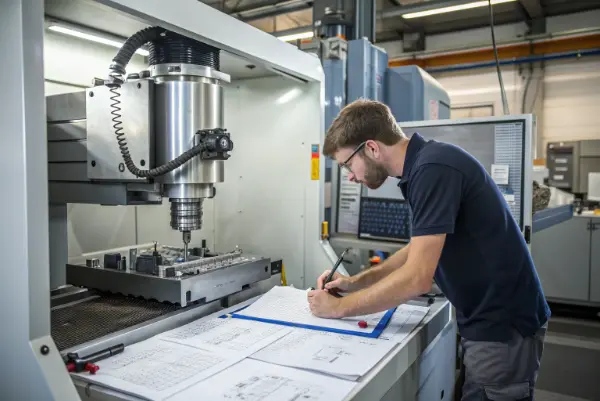
The best machinist I ever worked with, an old-timer named Lee, could listen to a machine and tell you if the cutting tool was getting dull before the machine’s sensors did. He wasn’t just an operator; he was a craftsman. He could take a complex 3D model and devise a machining strategy that was faster and more reliable than what the CAM software suggested. People like him are worth every penny because they save projects. They prevent costly mistakes, reduce scrap, and optimize programs to cut down on cycle time. When you pay for a good CNC shop, you’re not just renting a machine. You are paying for the experience and problem-solving skills of the person running it. That expertise is the difference between a successful part and a pile of expensive scrap metal.
The Path to a Six-Figure Machinist
Becoming a top-tier machinist is not a quick or easy journey. It requires a combination of formal education, hands-on training, and continuous learning. Their value comes from a unique blend of technical and problem-solving skills.
- Foundation: The journey often starts with a technical degree or an apprenticeship. This provides the fundamentals of blueprint reading, shop math, and basic machine operation.
- Skill Development: From there, they spend years on the shop floor. They learn to operate different types of machines, starting with simple 3-axis mills and lathes and progressing to more complex equipment.
- Programming Expertise: A key skill is programming. This involves using CAM (Computer-Aided Manufacturing) software to create the toolpaths for the machine to follow. A great programmer can optimize these paths to reduce machine time and improve surface finish.
- Specialization: The highest earners often specialize. They might become experts in 5-axis machining, mill-turn centers, or working with difficult materials like Inconel or titanium. Some specialize in industries like medical devices or aerospace, where the standards are incredibly high.
Why a Skilled Machinist Matters for Your Project
The machinist’s skill directly impacts the success of your parts. An unskilled operator can ruin a part even on the best machine, while a skilled machinist can achieve great results even with older equipment.
| Task | Unskilled Operator | Skilled Machinist (Craftsman) | Impact on Your Project |
|---|---|---|---|
| Setup | Takes a long time, high risk of error in workholding or tool setting. | Fast, precise, and secure. Anticipates potential issues with vibration or tool clearance. | Faster turnaround. Reduced risk of parts being scrapped due to setup mistakes. |
| Programming | Uses default CAM settings, resulting in slow cycle times and poor finishes. | Optimizes toolpaths, feed rates, and cutting strategies to balance speed and quality. | Lower part cost. Better surface finish and dimensional accuracy. |
| Problem-Solving | Stops the machine and waits for help when a tool breaks or something goes wrong. | Identifies the root cause (e.g., incorrect feeds, chip buildup) and adjusts the program to prevent it. | Higher reliability. Less downtime means your project stays on schedule. |
| Quality Control | Only checks the final part. | Performs in-process inspection, making adjustments as they go to stay within tolerance. | Guaranteed quality. Prevents an entire batch of bad parts from being made. |
So, when you see a quote for CNC machining, remember the hidden value. A significant portion of that cost is for the expertise that ensures your design is translated into a physical part exactly as you intended. That human skill is still the most critical component in precision manufacturing.
Will CNC machinists be replaced by AI?
You hear about AI revolutionizing every industry, and manufacturing is no exception. It makes you wonder if the skilled machinist is becoming obsolete. Will your future parts be made in a fully automated "lights-out" factory, and what does that mean for quality and reliability?
No, AI will not completely replace CNC machinists in the foreseeable future. Instead, AI will become a powerful tool that enhances their capabilities. AI will automate repetitive tasks like toolpath generation and process monitoring, but it cannot replace the critical thinking, problem-solving, and hands-on skills required for complex setups, custom jobs, and troubleshooting unexpected issues. The role will evolve into a "machinist 2.0" who manages and collaborates with AI systems.
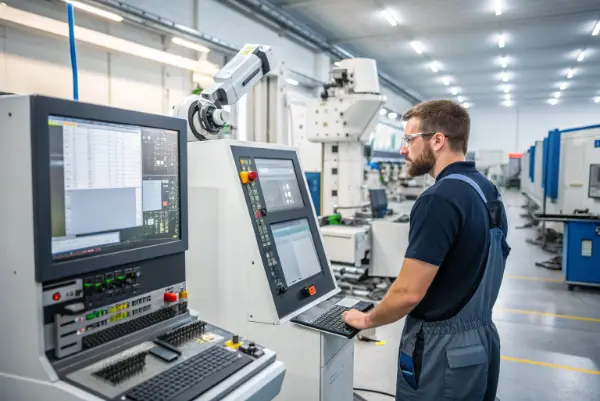
I recently saw a demo of an AI-powered CAM software. It generated a toolpath for a complex part in minutes—a task that would have taken an experienced programmer hours. But then, the machinist in the demo pointed out a flaw. The AI didn’t account for chip evacuation in a deep pocket, which could have led to a broken tool and a scrapped part. He made a small adjustment to the program, adding a pecking cycle, and solved the problem. This is the perfect example of the future. AI will handle 90% of the work, but we will still need that human expert to handle the critical 10% that requires real-world experience and intuition. The future isn’t about AI replacing humans; it’s about humans using AI to do their jobs better and faster.
How AI is Changing the CNC Landscape
AI is already being integrated into modern machine shops, not as a replacement for people, but as a powerful assistant. It’s making the entire process smarter and more efficient.
- Smarter Programming (Generative CAM): AI algorithms can analyze a 3D model and automatically generate efficient toolpaths. They can simulate the entire process to detect potential collisions and suggest the best cutting tools and parameters. This dramatically reduces programming time, especially for complex 5-axis parts.
- Predictive Maintenance: Sensors on CNC machines collect vast amounts of data on temperature, vibration, and power consumption. AI can analyze this data to predict when a component, like a spindle bearing or a ball screw, is likely to fail. This allows shops to schedule maintenance before a breakdown occurs, minimizing costly downtime.
- In-Process Quality Control: AI-powered vision systems and probes can inspect parts while they are still in the machine. If the AI detects a dimension drifting out of tolerance, it can automatically adjust the machine’s offsets to correct it. This ensures every part in a batch is perfect, rather than just inspecting a sample at the end.
The Irreplaceable Human Element
Despite these advancements, there are core aspects of machining that AI struggles with. These are the areas where human expertise will remain essential.
| Human Skill | Why AI Can’t Replace It (Yet) | Example in the Shop |
|---|---|---|
| Creative Problem-Solving | AI works based on data it has been trained on. It can’t "think outside the box" to solve a completely novel problem. | A part is warping due to internal stresses released during machining. An experienced machinist devises a new strategy: machine it in stages with a stress-relief cycle in between. |
| Tactile Feel and Intuition | Machining involves a physical "feel" that is hard to quantify into data. A machinist can feel a bad vibration or hear a tool starting to squeal. | A machinist notices a slight change in the sound of the cut, stops the machine, and finds a nearly invisible hairline crack in the cutting tool, preventing a catastrophic failure. |
| Complex Setups | Prototyping and custom work often require unique, one-off fixtures and workholding solutions. This requires ingenuity and hands-on skill. | Creating a custom soft jaw to hold an oddly shaped casting for a single prototype part. This is a non-standard task that AI-driven robotics would struggle with. |
| Customer Communication | Understanding the design intent behind a drawing requires a conversation. A machinist can talk to an engineer to clarify an ambiguous tolerance or suggest a design change for manufacturability (DFM). | A machinist calls the engineer to ask if a sharp internal corner can be changed to have a small radius, which would make the part much stronger and cheaper to produce. |
The role of the machinist will shift from a manual operator to a high-level manufacturing technician. They will be the ones who manage the automated systems, solve the difficult problems, and provide the final layer of human oversight that ensures quality and reliability.
Conclusion
Finding the right CNC supplier means looking beyond the hourly rate. It’s about finding a partner with the right machines, skilled machinists who add real value, and a forward-thinking approach to technology.