
Choosing the right material for your CNC project can feel overwhelming. A wrong choice leads to failed parts, wasted budgets, and project delays. Understanding the vast range of machinable materials is the first step to streamlining your production and ensuring success from the start.
The most common materials for CNC machining include metals like aluminum, steel, and titanium, and plastics such as ABS, PEEK, and Delrin (POM). The best choice depends on your specific needs for strength, weight, heat resistance, and cost. Even some woods and composites can be machined, offering a wide palette for engineers and designers.
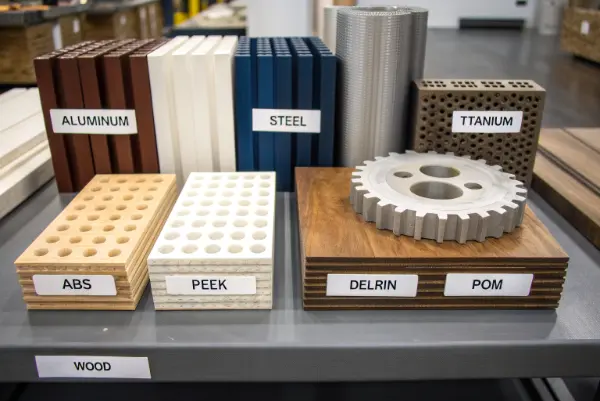
The list of machinable materials is long, but it’s just the starting point. The real expertise lies in matching the material to the application, the tooling, and the desired outcome. I’ve spent years helping clients navigate these choices, and it always comes down to understanding the trade-offs. Let’s break down the common options and explore what makes a material suitable—or unsuitable—for your next CNC project.
What materials are most common in CNC machining?
You have a great design, but you are not sure which material fits your budget and technical needs. Picking a material without knowing its properties can cause unexpected costs or poor performance down the line. Let’s review the most common and effective materials used in CNC machining.
The most common CNC machining materials fall into two main categories: metals and plastics. Metals like Aluminum, Stainless Steel, and Brass are popular for their strength. Plastics such as ABS, Delrin (POM), and PEEK are chosen for their light weight, chemical resistance, and lower cost. Each offers unique benefits for different applications.
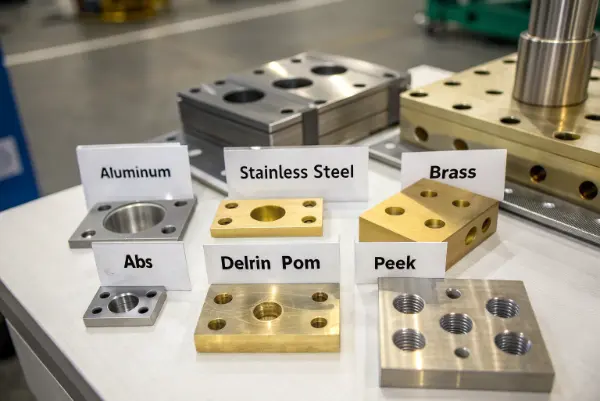
When I work with engineers like Alex, the conversation almost always starts with material selection. The "best" material doesn’t exist in a vacuum; it’s always relative to the part’s function. We break it down into key categories to simplify the decision.
Metals
Metals are the workhorses of CNC machining. They are chosen for strength, durability, and thermal conductivity.
- Aluminum Alloys (e.g., 6061, 7075): These are my go-to for many projects. Aluminum is lightweight, has an excellent strength-to-weight ratio, and is easy to machine. This means faster cycle times and lower costs. 6061 is a great all-rounder, while 7075 offers superior strength for more demanding applications.
- Stainless Steel (e.g., 303, 304, 316L): When you need corrosion resistance, hardness, and strength, stainless steel is the answer. 303 is easier to machine, but 316L offers the best corrosion resistance, which is critical for medical or marine applications.
- Brass (e.g., C360): Brass is fantastic for its machinability and low friction. It’s often used for fittings, connectors, and decorative parts. Its electrical conductivity also makes it useful for electronic components.
Plastics
Plastics offer incredible versatility. They are lightweight, often cheaper than metals, and can have specific properties like chemical resistance or self-lubrication.
- Delrin (POM): This is a top choice for parts that need high stiffness, low friction, and dimensional stability. I’ve used it for gears, bearings, and jigs. It bridges the gap between plastics and metals.
- ABS: If you’re prototyping, ABS is a cost-effective and easy-to-machine option. It’s the same material used in LEGO bricks, so it’s tough and impact-resistant.
- PEEK: This is a high-performance plastic. It is expensive, but it offers incredible mechanical strength, chemical resistance, and can operate at high temperatures. We use it for aerospace, medical, and semiconductor components.
Here is a quick comparison to help guide your choice:
| Material Category | Key Advantages | Common Applications | Relative Cost |
|---|---|---|---|
| Metals | Strength, durability, thermal & electrical conductivity | Structural parts, housings, heatsinks | Medium to High |
| Plastics | Lightweight, corrosion resistance, low cost, versatile | Prototypes, enclosures, low-friction parts | Low to High |
Can you CNC 6061 aluminum?
You need a strong but lightweight metal part and have heard about 6061 aluminum. You wonder if it’s a good candidate for CNC machining and if it will meet your project’s cost and performance targets. The wrong assumption could delay your project.
Yes, you absolutely can CNC machine 6061 aluminum. In fact, it’s one of the most popular and versatile materials used in CNC machining worldwide. Its excellent machinability, good strength-to-weight ratio, and corrosion resistance make it a cost-effective choice for a wide variety of parts, from prototypes to production components.
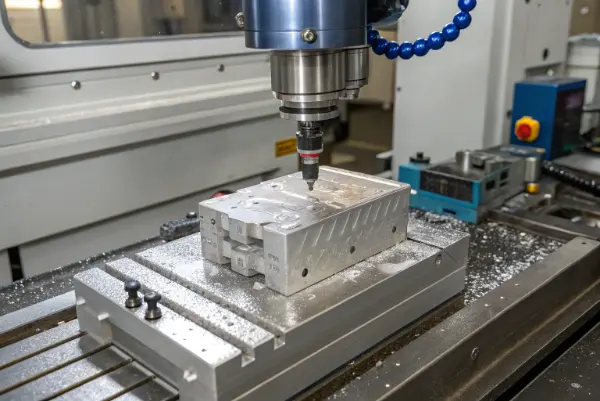
From my first days in a machine shop to managing global projects today, 6061 aluminum has been a constant. It’s a material I trust and recommend frequently. Its friendly machining characteristics mean we can produce parts faster and with less tool wear, which directly translates to cost savings for my clients. The "T6" temper (6061-T6) is the most common variant we use, as it has been heat-treated for significantly increased strength.
Why is 6061-T6 so popular?
The appeal of 6061-T6 aluminum comes down to a balance of properties. It’s not the absolute best in any single category, but it’s very good in almost all of them. This makes it a reliable default choice for many mechanical parts. Let’s look at its specific advantages:
- Machinability: It cuts cleanly, produces predictable chips, and allows for high cutting speeds. This efficiency is a major factor in keeping machining costs down.
- Strength: While not as strong as 7075 aluminum, its strength is more than sufficient for many structural applications, including frames, brackets, and base plates.
- Corrosion Resistance: It holds up well against atmospheric corrosion. For enhanced protection, especially in harsh environments, it can be anodized. Anodizing also allows for adding color to the parts.
- Weldability: Unlike the 7000-series aluminums, 6061 is easily welded, which adds to its versatility for creating complex assemblies.
- Cost-Effectiveness: The raw material is affordable, and its ease of machining reduces production time, making it one of the most economical metal choices.
Common Applications for CNC Machined 6061 Aluminum
When an engineer like Alex needs a robust prototype for a robotic arm or a housing for an electronic device, 6061 is often the first material we discuss. Its applications are everywhere:
- Automotive parts like brackets and suspension components.
- Aerospace fittings and structural frames.
- Bicycle frames and components.
- Electronic enclosures and heat sinks.
- Consumer products and sporting goods.
Essentially, if you need a dependable, lightweight, and affordable metal part, 6061-T6 aluminum is almost always a top contender.
What is the hardest material to CNC?
Engineers sometimes need parts with extreme durability, heat resistance, or hardness. But these super-strong materials can be a nightmare to machine, causing tool breakage and soaring costs. Choosing such a material without understanding the machining challenges is a recipe for budget overruns and production headaches.
The hardest materials to CNC machine are typically superalloys like Inconel and hardened tool steels. These materials resist cutting due to their extreme hardness, high-temperature strength, and tendency to work-harden. Machining them requires specialized tools, low cutting speeds, and deep expertise, making the process slow and very expensive.
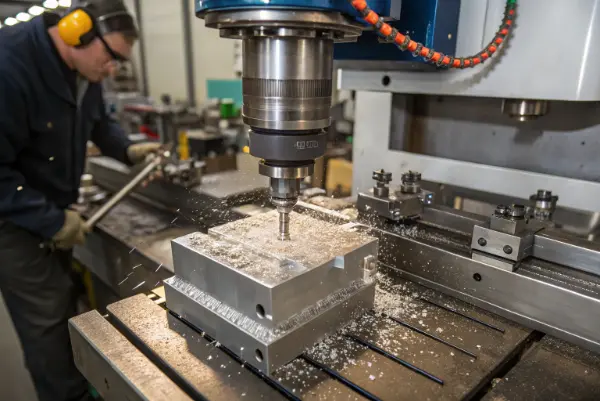
I remember one project that required parts made from Inconel 718. The material properties were perfect for the high-temperature application, but machining it was a completely different challenge compared to aluminum or steel. Our tools wore out incredibly fast, and we had to run the machines at a fraction of their normal speed. This experience taught me that material hardness on paper translates to time and money in the workshop.
Why are some materials so difficult to machine?
The difficulty isn’t just about hardness. Several factors combine to make a material tough to cut:
- Hardness and Strength at High Temperatures: Materials like Inconel and Titanium retain their strength even when heated by the friction of the cutting tool. The tool, which needs to be harder than the material, softens from the heat, while the workpiece does not.
- Work Hardening: This is a huge problem. As you cut the material, the area being machined becomes harder. This means the next pass of the cutting tool has to cut through a surface that is now harder than the original material, leading to rapid tool wear.
- Low Thermal Conductivity: Materials like titanium and stainless steel don’t dissipate heat well. Instead of the heat going into the chips, it concentrates on the cutting tool, causing it to fail quickly. Aluminum, by contrast, is a great conductor, which is one reason it’s so easy to machine.
Comparing Difficult-to-Machine Materials
Here is a look at some of the top contenders for the "hardest to machine" title:
| Material | Key Challenge(s) | Common Use | Machinability Rating (vs. Steel 1212) |
|---|---|---|---|
| Inconel | Extreme work hardening, retains strength when hot | Jet engines, chemical processing | ~10% |
| Titanium | Low thermal conductivity, high strength, reactive | Aerospace, medical implants | ~20% |
| Hardened Steel | High hardness (above 45 HRC), abrasive | Molds, cutting tools, bearings | ~15-30% |
| Tungsten | Extremely high melting point, very dense, brittle | High-temperature applications, electrical contacts | <10% |
Machining these materials isn’t impossible, but it demands a different strategy. It requires rigid machines, specialized coolant systems, and cutting tools made from materials like carbide with advanced coatings. It’s a specialized skill that comes at a premium price.
What materials cannot be CNC machined?
You have a unique material in mind for your design, perhaps a soft rubber or a brittle ceramic. You assume anything can be shaped, but trying to machine an unsuitable material can destroy the part, damage expensive equipment, and waste valuable time.
Truly, very few materials are impossible to CNC machine, but many are impractical or unsuitable. Materials that are too soft (like soft rubber), too brittle (like standard glass or some ceramics), or too abrasive (like many raw composites) pose extreme challenges. They may melt, crack, shatter, or rapidly destroy cutting tools.
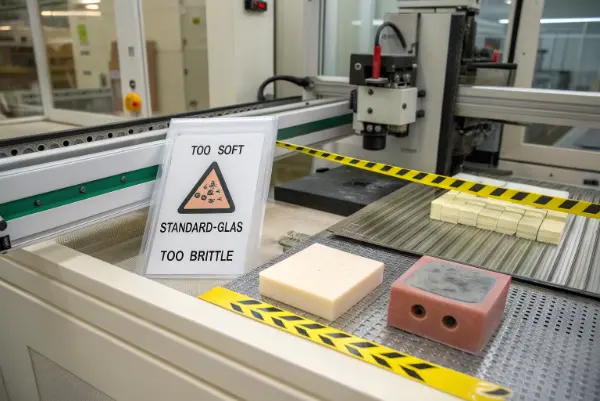
The term "machinable" is a spectrum. On one end, you have free-machining materials like 6061 aluminum. On the other end, you have materials where the process is so difficult, slow, and costly that it’s simply not a viable manufacturing method. In my experience, the question isn’t "can it be machined?" but "should it be machined?" For many materials, the answer is no, because other manufacturing processes are far better suited.
Categories of Unmachinable (or Impractical) Materials
Let’s explore why certain materials are a poor fit for traditional CNC machining.
- Extremely Soft or Gummy Materials: Materials like soft silicones or natural rubbers don’t cut cleanly. Instead of forming a chip, they deform, stretch, and tear. The friction from the tool can also cause them to melt and stick to the cutter. For these materials, methods like die cutting, laser cutting, or casting in a mold are far more effective.
- Brittle Materials: Standard ceramics, glass, and precious stones will shatter under the stress of a conventional cutting tool. While specialized processes like ultrasonic machining or diamond grinding can shape these materials, it’s not what we typically think of as CNC milling or turning. These are highly specialized techniques.
- Abrasive Composites without Proper Setup: Materials like carbon fiber or fiberglass are extremely abrasive. Machining them with standard high-speed steel or even carbide tools will dull the cutting edges in minutes. While they are regularly "machined," it requires diamond-coated tools and powerful vacuum systems to manage the hazardous dust created. So, while possible, it’s not a standard operation.
Alternative Manufacturing Processes
For every "unmachinable" material, there is usually a better way to shape it. A good manufacturing partner won’t just say "no"; they will help you find the right process.
| Material Type | Why CNC is a Bad Fit | Better Manufacturing Process(es) |
|---|---|---|
| Soft Rubbers | Melts, tears, does not form a clean chip | Compression Molding, Die Cutting, Casting |
| Brittle Ceramics | Cracks and shatters under tool pressure | Grinding, Ultrasonic Machining, Casting |
| Standard Glass | Shatters easily | Grinding, Waterjet Cutting, Laser Cutting |
| Thermosets | Chars and burns rather than melting/cutting cleanly | Compression Molding, Casting |
The key takeaway is to match the material to the manufacturing process. Pushing a material into a process it’s not suited for is a path to failure. My job is to guide clients toward the most reliable and cost-effective solution, even if that means suggesting a method other than CNC machining.
Conclusion
A vast range of metals and plastics can be successfully CNC machined. The key is matching material properties to your part’s function, budget, and timeline for optimal results.