
Finding the right CNC machining partner feels overwhelming. You spend hours searching online, but every company claims to be the best, leaving you unsure who can truly deliver the precision parts you need. This uncertainty can delay your project and risk your budget.
The "best" CNC machining company depends entirely on your project’s specific needs. For rapid prototyping, platforms like Protolabs are excellent. For complex, high-volume production, a dedicated partner like Fathom is strong. For a balance of personalized service, global sourcing, and expert guidance, platforms like ours, QuickCNCs, or others like 3D Hubs (now Protolabs Network) provide a tailored solution. The key is matching the supplier’s strengths to your requirements.

Choosing a partner is a critical decision for any engineer or product developer. I’ve been in this industry for over a decade, both on the shop floor and as a global sourcing manager. I’ve worked with hundreds of clients like you, helping them find the perfect fit for their projects. The truth is, there isn’t a single "best" company for everyone. The right choice depends on your priorities, whether they are speed, cost, precision, or communication.
Let’s break down the different types of services out there. Understanding this landscape will help you see past the marketing claims. It will give you the tools to evaluate and select the partner that will truly help you succeed. This is how you move from searching for a supplier to building a real manufacturing partnership.
What Makes a CNC Machining Service "The Best" for You?
You have a critical design, but finding a supplier who sees it the way you do is tough. You worry if they understand your tolerance requirements or can work with your chosen material. The risk of getting back a batch of out-of-spec parts is a constant headache.
The "best" service for you is one that aligns with your top priorities. Are you a startup needing fast prototypes? Or an established company needing high-volume, tight-tolerance parts? The right partner excels in your specific area of need, whether it’s speed, cost-effectiveness, material expertise, or high-touch project management. A mismatch here is the number one reason projects fail. I always advise clients to define their non-negotiables first.
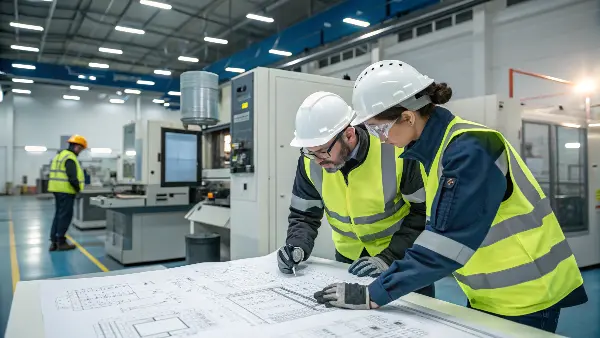
Over the years, I’ve seen clients struggle when they choose a partner based on a single factor, like the lowest price. This often leads to problems later on. A great price is useless if the parts fail quality inspection. A super-fast turnaround doesn’t help if the communication is so poor that you need to do constant rework. The best partner for your project is a balanced choice. It’s a company whose core strengths directly solve your biggest challenges. Think of it as a partnership.
To help you clarify this, I’ve broken down the key factors to consider. I encourage my clients to rank these from most to least important for their current project. This simple exercise can bring a lot of clarity.
Defining Your Project Priorities
Every project is unique. The "best" partner for a simple bracket is different from the best partner for a complex medical device component. Let’s look at the trade-offs.
| Priority Factor | What It Means for Your Project | Best Suited For | Potential Trade-Off |
|---|---|---|---|
| Speed | Getting parts in hand as fast as possible, often within days. | Rapid prototyping, design validation, urgent repairs. | Higher cost per part, limited material options, less focus on complex finishing. |
| Cost | Achieving the lowest possible price per unit. | High-volume production runs, non-critical components, budget-sensitive projects. | Longer lead times, potential communication gaps, less personalized service. |
| Precision & Quality | Holding very tight tolerances (e.g., ±0.01mm) and complex geometries. | Aerospace, medical, robotics, and high-performance applications. | Higher cost, longer setup and inspection times, requires suppliers with specialized equipment. |
| Communication & Service | Having a dedicated point of contact, getting expert feedback (DFM), and clear project updates. | Complex projects, first-time outsourcing, engineers who value a partnership. | May not be the absolute cheapest or fastest option, but reduces risk significantly. |
When I work with an engineer like Alex from Germany, I know precision is his top priority. He can’t compromise on that. For him, a company that competes only on speed or cost is likely a poor fit. He needs a partner who speaks his technical language and can prove their quality capabilities. Your first step is to be honest about what you, like Alex, truly need.
How Do Large Platforms Like Xometry and Protolabs Work?
You need a quote fast and don’t have time to vet dozens of individual shops. You upload your CAD file to a platform, but you wonder who is actually making your part. You’re giving up control and hoping a faceless network can handle your critical components.
Large platforms like Xometry, Protolabs, and Fictiv operate vast, distributed manufacturing networks. They use proprietary software to instantly quote your design and then outsource the job to a vetted partner in their network. This model provides incredible speed and a wide range of capabilities. You get the convenience of a single point of contact and payment, while they handle the back-end logistics of production management.
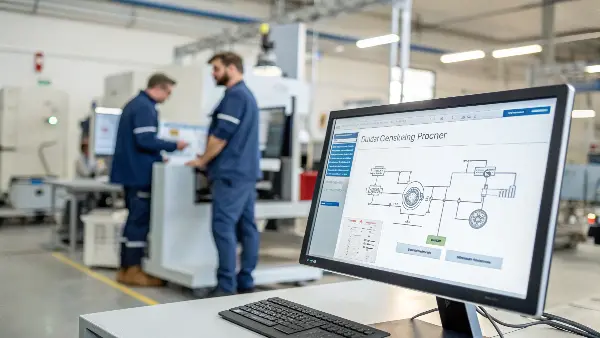
I have a lot of respect for these platforms. They have truly changed the manufacturing landscape by making it incredibly easy to get custom parts. For many engineers, especially those working on early-stage prototypes, they are an amazing resource. An engineer can get a quote in minutes, place an order, and have a part in their hands a few days later. This speed is a game-changer for rapid iteration.
However, this model isn’t a perfect fit for every situation. The convenience comes with trade-offs that are important to understand. When you work with a large platform, you are often separated from the people who are physically machining your part. This can be a challenge for complex projects where direct communication and a deep, collaborative relationship are essential for success.
The Platform Model: Pros and Cons
Let’s dive deeper into how this works in practice. I’ve had clients who started on these platforms and then came to me when their needs changed. Understanding both sides will help you choose wisely.
The Core Mechanism:
- Instant Quoting: You upload your 3D CAD model (like a .STEP or .IGES file) to their website.
- AI Analysis: Their software analyzes the geometry, identifies features, and estimates machining time. It allows you to select materials, finishes, and quantities.
- Price Generation: Based on this analysis, the system generates an instant quote and lead time.
- Job Matching: Once you order, their algorithm matches your job to a qualified manufacturing partner within their network. The choice is based on the shop’s capability, capacity, and location.
- Project Management: The platform manages the process, from ensuring the shop has the right information to final quality checks and shipping.
This automated approach is the source of both their greatest strengths and their potential weaknesses.
| Aspect | Advantages of Platforms | Disadvantages of Platforms |
|---|---|---|
| Communication | Centralized communication through the platform’s portal. Simple and streamlined for basic questions. | It’s hard to speak directly with the machinist making your part. Nuanced feedback or collaborative problem-solving can be difficult. |
| Consistency | You get a consistent user experience every time you order. | Your parts might be made by a different shop each time. This can lead to minor variations in quality, finish, or interpretation of a drawing. |
| Expertise | Access to a huge range of processes and materials. | The platform’s support staff are project managers, not necessarily deep manufacturing experts. You may not get in-depth DFM feedback. |
| Relationship | The process is transactional and efficient. | You don’t build a long-term relationship with a specific shop or team that understands your evolving product needs. |
For a simple part with standard tolerances, these platforms are fantastic. But if you have a component with a critical surface finish, a tricky tolerance stack-up, or a requirement that isn’t easily defined in a CAD model, that lack of direct connection to the machinist can become a serious problem.
What are the Advantages of a Dedicated Machining Partner?
You’re tired of inconsistent quality from large, faceless platforms. You need a partner who truly understands your project and can offer expert advice, not just a quote. You want to build a relationship with a team you can trust for your most critical components.
A dedicated machining partner, like a specialized independent shop or a service like ours, offers a deep, collaborative relationship. You work directly with a consistent team of engineers and project managers who learn your products inside and out. This leads to better design for manufacturability (DFM) feedback, more consistent quality over time, and a partner who is invested in your success.
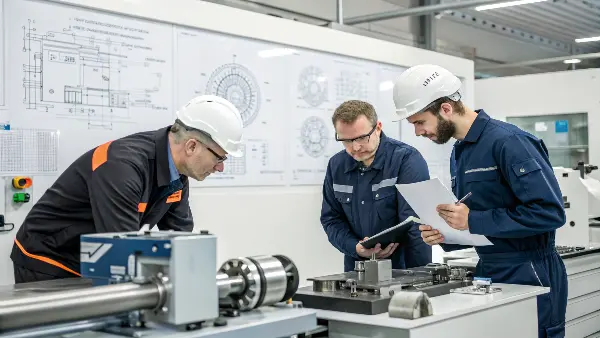
This is the model I chose to build with QuickCNCs. In my previous roles, I saw the challenges engineers faced when they couldn’t speak directly to the people making their parts. A note on a drawing might be misinterpreted, or a simpler way to achieve a design goal might be missed because there was no channel for that conversation. I wanted to bridge that gap.
Working with a dedicated partner is less about a single transaction and more about building a long-term asset for your business. When you find a shop or service that gets you, that understands your standards and expectations, they become an extension of your own engineering team. This relationship pays dividends in higher quality, reduced risk, and often, better long-term costs because of improved efficiency and fewer errors.
Partnership vs. Transaction: A Deeper Look
Let’s compare this approach to the more transactional platform model. The goal here isn’t to say one is better than the other, but to help you see which model is a better fit for you and your project.
The Dedicated Partnership Process:
- Direct Consultation: You start by talking to an engineer or project manager about your project requirements. This goes beyond just a CAD file.
- Manual Quoting & DFM: An expert reviews your design and provides a detailed quote. Crucially, they also provide Design for Manufacturability (DFM) feedback. They might say, "If we change this radius slightly, we can use a standard tool and save you 20%," or "This tolerance is possible, but will require a grinding operation. Is it critical?"
- Consistent Team: Your project is handled by the same team every time. The project manager knows your history, and the parts are often made by the same machinists who become familiar with your specific requirements.
- Relationship Building: Over time, the partner learns your preferences for finishes, burr control, and even packaging. They can anticipate your needs.
Here’s how this model stacks up for complex projects:
| Aspect | Advantage of a Dedicated Partner | When It Matters Most |
|---|---|---|
| Deep Expertise | You get proactive, expert DFM advice that can save money and improve part function. | For complex geometries, tight tolerances, and projects where you are open to manufacturing feedback to optimize design. |
| Consistent Quality | The same team and often the same machines are used for your repeat orders, leading to high repeatability. | For products going into production, medical devices, or any application where consistency from batch to batch is critical. |
| Problem Solving | When an issue arises, you have a direct line to an expert who can collaboratively solve the problem with you. | For challenging designs, new product introductions, or when you are pushing the limits of the manufacturing process. |
| Flexibility | A dedicated partner can often accommodate special requests, such as custom inspections, unique packaging, or holding material in stock for you. | When you have requirements that go beyond just making the part to print. |
Of course, this model may not be the fastest for a one-off prototype. The manual quoting and DFM process takes more time than an instant algorithm. But for engineers whose success depends on getting the details right, that upfront investment of time prevents much larger problems down the line. It’s about reducing total project risk, not just optimizing for speed on one small part.
How Can You Verify a Supplier’s Quality and Precision?
You’ve received a quote that looks good, but you’re worried. How can you be sure this company can actually hold the tight tolerances your design requires? The fear of spending thousands of dollars on a batch of unusable parts keeps you up at night.
Verify quality by demanding proof. Ask for the supplier’s Quality Management System (QMS) certifications, like ISO 9001. Request sample parts or case studies from similar projects. Most importantly, ask what specific inspection equipment they use (CMMs, VMMs, micrometers) and insist on receiving a full dimensional inspection report with your first articles. Talk is cheap; documented proof is everything.
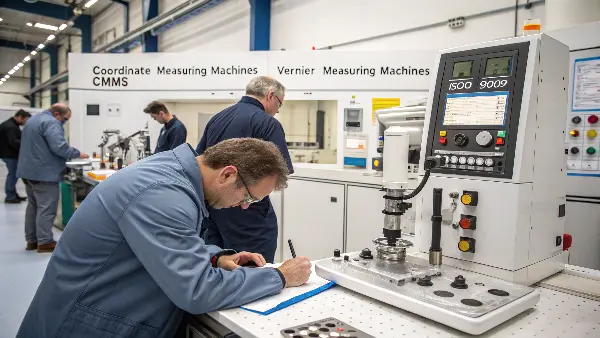
This is a topic I am very passionate about. In my career, I’ve seen firsthand what happens when quality is just assumed. A beautiful-looking part is useless if its critical dimensions are out of spec. That’s why at QuickCNCs, we built our process around verifiable quality. Any good supplier should be proud to show you how they ensure quality, not hide it.
When you’re evaluating a new partner, you need to act like a detective. Don’t just take their word for it. Their website will always say they have "high quality." You need to dig deeper and ask for evidence. A supplier who is confident in their processes will be happy to provide this information. A supplier who hesitates or gives vague answers should be a major red flag.
A Checklist for Vetting Supplier Quality
To make this practical, here is a checklist of questions and requests you should use when evaluating any potential CNC machining partner. This is the same process I use when vetting new suppliers for my own network.
1. Certifications and Systems:
- "Are you ISO 9001 certified? Can you please send me a copy of your certificate?"
- Why it matters: ISO 9001 is the baseline for a formal Quality Management System (QMS). It shows they have documented processes for everything from quoting to final inspection.
- "Do you have other relevant certifications, such as AS9100 (aerospace) or IATF 16949 (automotive)?"
- Why it matters: Industry-specific certifications show a deeper commitment and expertise in high-stakes sectors.
2. Equipment and Capabilities:
- "What kind of Coordinate Measuring Machines (CMMs) do you have? Who is the manufacturer (e.g., Zeiss, Mitutoyo)?"
- Why it matters: A CMM is essential for accurately measuring complex geometries and tight tolerances. The brand can indicate the level of investment in quality.
- "Can you provide a list of your primary inspection equipment?"
- Why it matters: Look for calibrated digital calipers, micrometers, height gauges, and visual measurement systems (VMMs). This tells you they have the right tools for the job.
3. Processes and Reporting:
- "What is your standard First Article Inspection (FAI) process?"
- Why it matters: They should have a formal process for inspecting the first part produced to ensure the setup is correct before running the full batch.
- "Can you provide a sample inspection report?"
- Why it matters: This shows you what kind of documentation you will receive. It should be clear, detailed, and reference the dimensions on your drawing.
- "How do you handle material traceability? Can you provide material certificates with the shipment?"
- Why it matters: This is critical to ensure you’re getting the exact alloy or plastic you specified. For many industries, this is non-negotiable.
Asking these questions doesn’t make you a difficult customer. It makes you a smart one. It shows the supplier that you are serious about quality, and it sets a clear expectation from the very beginning of the relationship. A great partner will welcome this level of detail.
Should You Choose a Local or Overseas CNC Partner?
You’re considering outsourcing to an overseas supplier to save costs. But you’re worried about communication barriers, shipping delays, and what happens if something goes wrong. The convenience of a local shop is appealing, but is it worth the higher price?
The choice between local and overseas depends on your project’s balance of cost, complexity, and speed. Local suppliers offer fast shipping and easy communication but at a higher cost. Overseas suppliers, particularly in China, provide significant cost savings, especially for volume production, but require robust communication and project management to mitigate risks related to shipping and time zones.

This is a classic dilemma, and one I’ve helped hundreds of Western engineers navigate. I started my career in a Chinese CNC shop and now I help bridge the gap for global clients. There’s no single right answer, but there is a right answer for a specific project. The key is to go into the decision with your eyes open to both the benefits and the potential challenges.
For a quick-turn prototype you need in 48 hours, a local shop is almost always the best answer. The shipping time alone makes overseas options impractical. But for a production run of 1,000 housings where cost per unit is a major driver, the savings from an overseas partner can be the difference between a profitable product and an unfeasible one. My goal is to help you get the benefits of global manufacturing while actively managing the risks.
Comparing Local and Overseas Sourcing
Let’s break this down into a structured comparison. This table covers the key points I discuss with clients when they are making this exact decision. I’ve seen successes and failures with both models, and it almost always comes down to how well the sourcing strategy matched the project’s needs.
| Factor | Local CNC Partner (e.g., in Germany or US) | Overseas CNC Partner (e.g., in China) |
|---|---|---|
| Cost | Higher. Labor rates, overhead, and material costs are significantly higher. | Lower. Substantial cost savings, especially as quantity increases. This is the primary driver for most. |
| Lead Time | Faster (for shipping). Ground shipping takes 1-2 days. No customs delays. | Slower (for shipping). International air freight takes 3-10 days, plus potential customs clearance time. |
| Communication | Easier. Same language, same time zone, same cultural context. You can visit the shop if needed. | Challenging. Requires a partner with excellent English skills and a dedicated project manager to bridge time zone gaps. Can be a major point of failure if not managed well. |
| Capabilities | Varies by shop. May have deep specialization in one area but limited breadth. | Vast. The manufacturing ecosystem, especially in places like Shenzhen, offers an incredible range of capabilities and massive capacity. |
| Risk Management | Simpler. Legal recourse is straightforward. It’s easy to get on the phone or visit to resolve an issue. | More Complex. Resolving disputes can be difficult. Returns are impractical. This is why vetting and clear quality control processes upfront are absolutely critical. |
How I Bridge the Gap:
My own company, QuickCNCs, was created to solve this exact problem. We act as the local, trusted point of contact for our clients in Europe and the US, but we leverage the cost advantages and vast capabilities of the Chinese manufacturing ecosystem that I know so well. We handle the communication, the quality vetting, and the logistics. This hybrid model aims to give clients the best of both worlds: the cost benefits of overseas production without the typical communication headaches and risks. Whether you work with a service like ours, or go direct, understanding this table is key to your success.
Conclusion
Choosing the "best" CNC service means matching your project’s unique needs with a partner whose strengths align. Define your priorities, verify their quality, and build a real partnership.