
Are you tired of seeing your project budget get eaten away by unexpected fees for consultation and design tweaks? It’s a common frustration when a simple machining job turns into a complex bill of services. You need a partner who adds value, not just line items, to make your project successful from start to finish.
A complimentary custom CNC machining service is a suite of value-added expert services provided at no extra cost alongside your paid machining order. This typically includes Design for Manufacturability (DFM) analysis, material selection advice, finishing recommendations, and transparent project tracking. The goal is to optimize your part for quality, cost, and speed, treating you as a partner rather than just a customer and ensuring a successful manufacturing outcome.
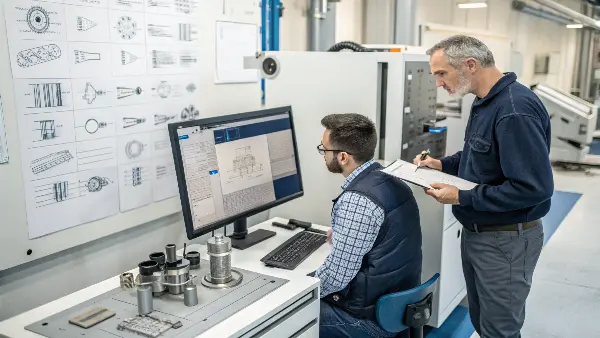
When I first started in this industry, working on the shop floor, I saw a major gap between what engineers designed and what was practical to machine. This gap often led to delays, increased costs, and a lot of frustration on both sides. When I founded QuickCNCs, I made it my mission to bridge that gap. The idea of "complimentary services" isn’t a marketing trick; it’s the foundation of a true manufacturing partnership. It’s about investing our expertise into your project to ensure we both succeed. Let’s break down what these essential, no-cost services really mean for you and your project.
How Can a Free Quote and DFM Analysis Prevent Costly Mistakes?
You’ve perfected your design and are ready for production, but sending it out for quotes feels like a gamble. Will it be too expensive? Will suppliers even be able to make it? You worry that any design flaw, no matter how small, could lead to a complete project stall or a costly round of revisions. This uncertainty creates roadblocks before you’ve even made a single part.
A comprehensive, free quote combined with a Design for Manufacturability (DFM) analysis is your first line of defense against production issues. It’s not just a price; it’s a professional assessment that reviews your CAD model for potential manufacturing challenges. This proactive feedback gives you clear, actionable insights to refine your design for cost-efficiency and quality, ensuring a smoother path from design to a physical part.
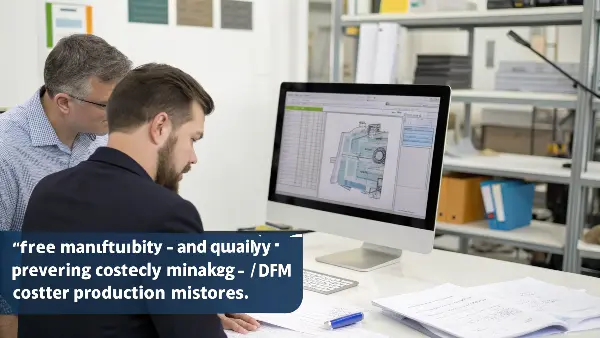
I remember working with Alex, a skilled engineer from Germany, on a complex robotics component. His initial design was brilliant but included an internal pocket with extremely sharp corners and a very deep, narrow channel. To an inexperienced shop, this might have resulted in a simple "no-quote" or, worse, a failed attempt at machining it. Instead, our first step was to provide a detailed DFM report, all free of charge. This is the cornerstone of what I consider a complimentary service. It’s our initial investment in your project’s success.
Breaking Down the DFM Report
A good DFM report is more than just a thumbs-up or thumbs-down. It’s a collaborative tool. Here’s what we look at:
- Feature Feasibility: We identified that the sharp internal corners in Alex’s design were impossible to machine with standard tools. Our report suggested adding a small radius, explaining how this small change would not impact the part’s function but would make it manufacturable and drastically reduce machining time.
- Tool Access and Geometry: The deep, narrow channel posed a risk of tool chatter and breakage. We proposed making the channel slightly wider and shallower, providing a visual simulation of how the cutting tool would access the area.
- Tolerance Review: Alex had specified an extremely tight tolerance on a non-critical surface. We pointed this out and asked if a standard tolerance would be acceptable, explaining the significant cost savings this would create.
By presenting these points clearly in a table, we made the decision-making process easy for him.
| DFM Checkpoint | Original Design Issue | Proposed Solution | Impact on Project |
|---|---|---|---|
| Internal Corners | 0mm radius (sharp corner) | Introduce a 1mm radius | Enables standard tooling, reduces machining time. |
| Deep Channel | 20:1 depth-to-width ratio | Adjust to a 10:1 ratio, widen by 2mm | Prevents tool breakage, improves surface finish. |
| Surface Tolerance | ±0.005mm on a non-mating face | Loosen to standard ±0.1mm tolerance | Significant cost reduction, faster delivery. |
This collaborative review didn’t just give Alex a price; it gave him a better, more manufacturable part. This process avoids the frustration of receiving a failed prototype or an inflated invoice later. It’s about solving problems before they cost money and time.
How Does Expert Material Consultation Save You Time and Money?
Have you ever been unsure if you’ve chosen the absolute best material for your part? Selecting the wrong one can lead to failures during testing, unexpected wear and tear, or simply overspending on properties you don’t need. This uncertainty can be stressful, especially when balancing performance requirements with a tight budget. You need confidence that your material choice is the right one from the start.
Expert material consultation is a critical complimentary service where experienced engineers help you navigate the vast world of metals and plastics. It goes beyond just taking your order. We analyze your application’s requirements—such as strength, weight, temperature resistance, and cost—to recommend the optimal material. This guidance prevents costly redesigns, improves part performance, and ensures you aren’t overpaying for unnecessary material specifications.

Choosing the right material is one of the most impactful decisions in a project. A few years ago, a startup client came to me with a design for a drone housing. They had specified PEEK, an incredibly high-performance (and expensive) polymer. They needed high strength and low weight, and PEEK seemed like the obvious choice from datasheets. However, after talking with them, I realized their main concern was impact resistance during test flights, not extreme temperatures or chemical exposure. This is where our role as consultants became crucial.
Beyond the Datasheet: Practical Recommendations
A material datasheet gives you numbers, but a manufacturing partner gives you context. We don’t just look at the material in isolation; we consider its interaction with the manufacturing process and its real-world application.
- Understanding the "Why": My first question to the drone startup was: "Why PEEK?" By understanding their core need was impact strength for prototypes, not long-term environmental resistance, I knew we had better options.
- Proposing Cost-Effective Alternatives: I suggested we try machining the prototypes from Polycarbonate (PC) instead. Polycarbonate offers excellent impact resistance, is much lighter on the budget, and is faster to machine. If those prototypes failed due to strength issues, we could then explore a glass-filled Nylon or, as a final option, go back to PEEK.
- Balancing Properties with Machinability: Another key aspect we discuss is machinability. While a material like Titanium (Ti-6Al-4V) is incredibly strong, it’s also tough to machine, leading to higher costs and longer lead times. Sometimes, a high-strength aluminum alloy like 7075 can provide 80% of the performance at 30% of the cost.
We presented the options with a simple comparison to help them decide.
| Material Option | Relative Cost | Key Advantage | Key Disadvantage |
|---|---|---|---|
| PEEK | High (10x) | Extreme temperature & chemical resistance | Over-specified and expensive for this application |
| Polycarbonate | Low (1x) | Excellent impact resistance, low cost | Lower tensile strength than PEEK |
| Nylon (GF30) | Medium (3x) | Good balance of strength and toughness | Can absorb moisture, changing dimensions |
The client agreed to try Polycarbonate. The prototypes performed perfectly for their testing needs, and they saved over 80% on their material costs for that batch. That’s the power of complimentary material consultation.
Why is Surface Finishing Advice an Essential Free Service?
You’ve designed a perfect part, but how it looks and resists wear is just as important as its dimensions. Choosing the wrong surface finish can lead to premature corrosion, a cheap appearance, or functional problems like friction and galling. Navigating options like anodizing, plating, and powder coating can be confusing, and a poor choice can ruin an otherwise perfect batch of parts.
Complimentary surface finishing advice is guidance from manufacturing experts on the best post-processing treatment for your parts. Based on your functional, aesthetic, and environmental requirements, we help you select the right finish. This ensures your parts not only meet tolerances but also perform reliably and look professional, preventing costly errors like selecting a finish that alters critical dimensions or fails in the field.
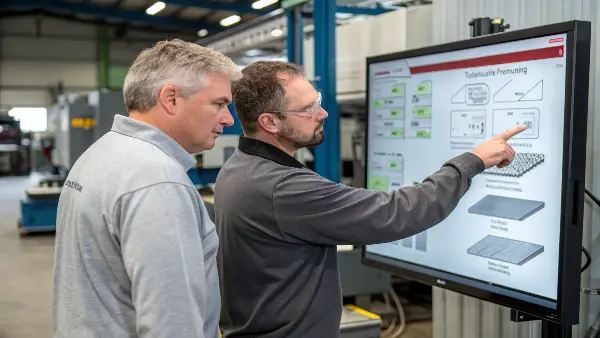
I often see designs where the finish is an afterthought, but it should be considered right from the beginning. I once worked on a set of aluminum enclosures for an outdoor electronics device. The engineer had specified "black anodizing" on the drawing. It’s a common and good choice. However, I knew from experience that standard anodizing (Type II) might not be enough for a device constantly exposed to rain and sun. The color could fade, and corrosion could set in faster than expected. This was a perfect opportunity to provide value beyond just machining.
Matching the Finish to the Function
A simple callout on a drawing doesn’t tell the whole story. We treat the finish as a critical design feature and guide our clients through the options to find the perfect fit.
- Aesthetics vs. Functionality: The first step is to understand the primary goal. Is the finish for looks, protection, or both? For the outdoor enclosure, protection was paramount. I explained the difference between Type II (decorative/moderate corrosion resistance) and Type III (hardcoat) anodizing.
- Hardcoat Anodizing (Type III): I recommended Type III hardcoat anodizing. While slightly more expensive, it creates a much thicker, harder, ceramic-like layer. This provides superior resistance to abrasion and corrosion, critical for an outdoor product. It ensures the black finish remains rich and the enclosure stays protected for years, not months.
- Considering Other Options: We also briefly discussed alternatives. For example, powder coating offers excellent protection and a wide range of colors but is a thicker coating that could interfere with tight assembly tolerances. Plating, like electroless nickel, provides great wear resistance but changes the aesthetics completely.
Here is a simplified table we might use to help a client like Alex make a decision:
| Finishing Option | Primary Benefit | Thickness Added (Typical) | Best For |
|---|---|---|---|
| Anodizing (Type II) | Aesthetics, Moderate Corrosion | ~5-18 µm | Indoor consumer products, cosmetic panels. |
| Anodizing (Type III) | Superior Abrasion & Corrosion | ~25-50 µm | Rugged outdoor parts, high-wear components. |
| Powder Coating | Excellent Protection, Many Colors | ~60-120 µm | Chassis, frames, non-precision surfaces. |
| Bead Blasting | Uniform Matte Finish, Non-Reflective | None (removes material) | Visual parts where glare is an issue. |
By making this recommendation, we helped the client avoid a potential field failure and enhance their product’s long-term value. This is what a complimentary service looks like: using our expertise to safeguard your project’s integrity, from the metal core to its outer protective skin.
Is Proactive Project Management a Complimentary Service?
You’ve approved the quote and the DFM, and production is underway. But now you’re in the dark. You’re left wondering: Is my project on schedule? Has there been a problem? The stress of chasing suppliers for updates and the fear of a surprise delay can be one of the most frustrating parts of outsourcing manufacturing. You need visibility and communication, not silence.
Yes, proactive and transparent project management is a priceless complimentary service. A true manufacturing partner provides consistent, clear updates on your project’s status from start to finish. This includes order confirmation, progress reports at key milestones (like material arrival and machining start), and final quality inspection data before shipping. This open communication eliminates uncertainty, builds trust, and allows you to plan your own schedule with confidence.
When I was on the other side, sourcing parts for global projects, the suppliers who earned my repeat business were not always the cheapest. They were the ones I could trust. They were the ones who communicated. A simple email saying, "Hi Jerry, the aluminum 6061 has arrived today, and your parts are scheduled to be on the Haas VF-4 tomorrow," was worth its weight in gold. It allowed me to manage expectations with my own team and clients. At QuickCNCs, we’ve built our entire process around this principle of transparency. It’s not an add-on; it’s just how we do business.
The Key Milestones of Transparent Communication
Effective project management isn’t about spamming you with emails. It’s about providing the right information at the right time. Our process ensures you are always informed without being overwhelmed.
- Order Kick-Off: Once you approve the order, you receive an immediate confirmation with a clear, confirmed delivery date. This is our commitment to you.
- Pre-Production Checkpoint: We confirm once all materials have been sourced and the DFM is finalized. We’ll let you know the exact date machining is set to begin. This is the last point for any minor adjustments.
- In-Process Updates: While we don’t send daily reports, we will notify you as your parts move from one major stage to the next, such as from CNC milling to the surface finishing department. If an unexpected issue arises, like a machine needing unscheduled maintenance, you’ll be the first to know, along with our proposed solution to keep the project on track.
- Quality Control Reporting: Before your parts are packed, our quality team performs a final inspection. We will send you the inspection report, often with pictures of the finished parts. This gives you full confidence in what you are about to receive.
This level of service turns a simple transaction into a predictable, stress-free process.
| Project Stage | Communication Touchpoint | What You Get |
|---|---|---|
| 1. Order Approval | Immediate Email Confirmation | Confirmed delivery date and project summary. |
| 2. Pre-Production | "Ready for Production" Update | Confirmation of material arrival and machining start date. |
| 3. Post-Machining | "Moving to Finishing" Notification | Update that parts are complete and moving to next stage. |
| 4. Pre-Shipment | Final QC Report & Shipping Notification | Inspection results, photos, and tracking number. |
This proactive management costs you nothing extra, but it delivers invaluable peace of mind and builds the trust necessary for a strong, long-term partnership.
Conclusion
Ultimately, complimentary services transform a supplier into a partner. They ensure your design is optimized for success, from quote to delivery, without hidden costs, building confidence and delivering superior results.