
Are you struggling to explain the true scope of CNC machining beyond just "making parts"? You know it’s a powerful technology, but its widespread use across so many industries can feel abstract. Let’s pinpoint exactly which sectors depend on CNC for their most critical innovations.
CNC machining is a cornerstone technology for any industry requiring high-precision, repeatable, and complex parts. The most prominent users are aerospace, for flight-critical components; medical, for custom implants and surgical tools; automotive, for engine parts and prototypes; and consumer electronics, for durable, high-finish enclosures. These industries rely on CNC to transform digital designs into physical objects that meet incredibly strict performance and safety standards.
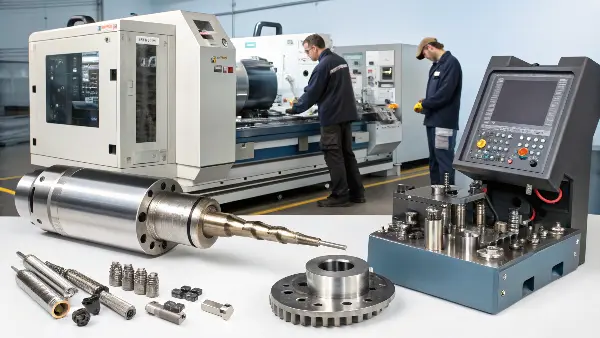
The applications are truly everywhere, often in places we don’t see. CNC machining is the foundational process that enables much of the technology and equipment we use daily. But a simple list doesn’t do it justice. To really understand its impact, we need to look closer at the specific problems it solves for each of these major fields. Let’s dive into the core industries and see why they can’t live without it.
Which specific industries rely most on CNC machines?
You hear general terms like "aerospace" and "automotive," but it can be hard to picture what is actually being made. This vague understanding makes it difficult to appreciate the real-world impact of precision machining. Let’s examine the concrete components that CNC technology creates for these leading industries.
The key industries that depend on CNC machining are aerospace, medical, automotive, and consumer electronics. Aerospace uses it for mission-critical parts like turbine blades and landing gear. The medical field relies on it for biocompatible surgical instruments and custom implants. Automotive applies it for everything from engine prototypes to production parts. Electronics needs it for intricate metal housings and components that demand both function and aesthetics.
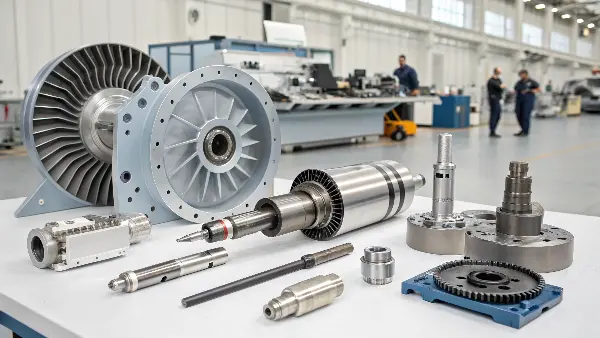
The reason these industries are so reliant on CNC machining comes down to a few core principles: tight tolerances, material properties, and repeatability. A part for a jet engine is not the same as a part for a smartphone, but both require a level of precision that only computer-controlled machining can reliably deliver. Let’s break it down further.
Aerospace and Defense
In the aerospace industry, there is no room for error. Lives and billion-dollar projects are on the line, so every single component must perform perfectly. CNC machining is the only way to achieve this. We work with advanced materials like titanium alloys, Inconel, and high-strength aluminum that are difficult to machine. The parts require incredibly tight tolerances, often measured in microns. For example, I once worked with a client in Germany on a structural bracket for a satellite. It was machined from a single block of titanium, and the part’s geometry was complex to minimize weight while maximizing strength. We had to hold a tolerance of ±0.005mm across multiple features. The success of that mission depended on parts like that being absolutely perfect. Common examples include:
- Turbine blades for jet engines
- Landing gear components
- Fuel system valves and fittings
- Structural frames and brackets
Medical Devices and Healthcare
The medical field demands a unique combination of precision and material purity. Parts used inside the human body must be biocompatible and perfectly matched to the patient’s anatomy. Surgical tools need to be durable, easy to sterilize, and ergonomically flawless. We frequently machine materials like 316L stainless steel, titanium, and PEEK for our medical clients. Traceability and certifications like ISO 13485 are not optional; they are a requirement. We often create:
- Custom orthopedic implants (knee, hip, spinal)
- Surgical instruments like forceps and scalpels
- Housings for diagnostic and monitoring equipment
- Components for dental implants and prosthetics
Automotive and Motorsports
From daily drivers to high-performance race cars, the automotive industry uses CNC machining for both prototyping and production. Before a new engine goes into mass production, engineers need to test dozens of prototype designs. CNC allows them to create functional engine blocks, cylinder heads, and transmission components quickly and test them in real-world conditions. On the production side, CNC is used to create durable parts and the jigs and fixtures needed to assemble vehicles efficiently. The need for lightweighting also means more parts are being machined from aluminum to improve fuel efficiency without sacrificing strength.
Who really needs CNC machining?
Do you ever think that CNC machining is a tool reserved only for giant corporations with massive budgets? That misconception can prevent innovators and smaller businesses from leveraging one of the most powerful manufacturing methods available. Let’s clarify who uses this technology, from individual inventors to global original equipment manufacturers (OEMs).
Essentially, anyone who needs to convert a digital 3D model into a functional, high-precision physical part needs CNC machining. This includes mechanical engineers developing new products, procurement managers sourcing production parts, product designers creating consumer goods, and even hobbyists building custom projects. Whether for a single prototype or a 10,000-unit production run, CNC is the solution when material accuracy and tight tolerances are non-negotiable.
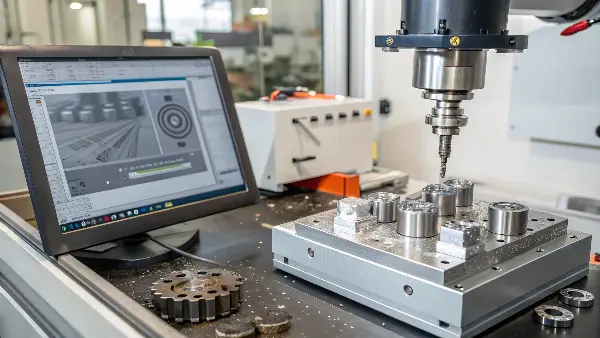
The beauty of CNC machining is its scalability. A startup can use the exact same technology as a multinational automotive company. The core need is the same: turning a design into a reality with precision. However, the specific goals and concerns can vary greatly depending on who you are and what you’re building. For an engineer like Alex in Germany, tolerance and communication are key. For a startup founder, speed and cost are paramount.
From the Garage Inventor to the Global OEM
The need for CNC machining cuts across all levels of product development and manufacturing. A company’s size or stage often dictates its primary goals, but the underlying requirement for precision remains constant. What changes are the priorities, such as speed, cost, scalability, or supply chain stability. I’ve worked with solo inventors on their very first prototype and with large OEM procurement teams managing a global supply chain. Each has a unique set of challenges that CNC machining helps solve. To make it clearer, let’s look at how different groups use this technology.
| Who Needs It? | Primary Goal | Typical Parts | Key Concerns |
|---|---|---|---|
| Startups & Inventors | Rapid Prototyping | Enclosures, custom mechanisms, concept models | Speed, cost-effectiveness, design help |
| Small-to-Medium Enterprises (SMEs) | Low-to-Mid Volume Production | Jigs, fixtures, custom machine parts, batches | Scalability, consistent quality, lead times |
| Large Original Equipment Manufacturers (OEMs) | High-Volume Production | Engine components, electronic frames | Supply chain stability, cost per part, QC |
| Engineers & Designers (like Alex) | Design Validation & Testing | High-fidelity prototypes, pre-production runs | Tight tolerances, material accuracy, communication |
For startups, the ability to get a functional prototype in real material within days is a game-changer. It allows them to test their ideas, secure funding, and iterate quickly without investing in expensive tooling. For SMEs, CNC provides a bridge from prototyping to production, enabling them to manufacture hundreds or thousands of parts without the massive upfront cost of injection molding. For large OEMs, our services at QuickCNCs help de-risk their supply chain and manage demand fluctuations. And for engineers like Alex, we serve as a reliable partner who understands the technical details and delivers parts that meet their exact specifications every time.
What careers use CNC technology?
Are you wondering if CNC skills are only for people who stand in front of a machine all day? This narrow view overlooks the wide range of professionals whose work is directly tied to CNC technology. Let’s look at the diverse careers that depend on, interact with, or are built around CNC machining.
A broad spectrum of careers uses CNC technology, not just machinists. Mechanical engineers use it to bring their designs to life. CAD/CAM programmers create the toolpaths that guide the machines. Quality control inspectors verify that parts meet specifications. Even roles like procurement managers and project managers rely heavily on CNC suppliers to build successful products and manage supply chains effectively.
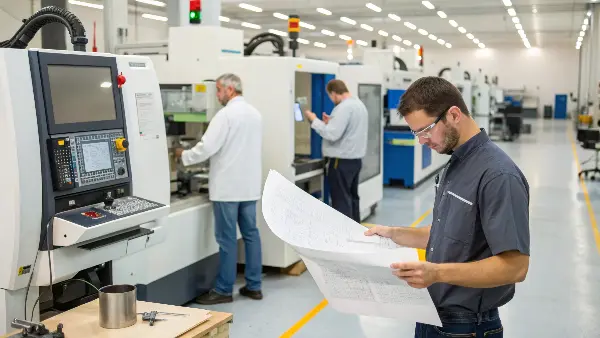
The CNC ecosystem is vast and interconnected. A product’s journey from an idea to a physical object involves many different experts, each playing a crucial role. An engineer’s design is useless without a programmer to translate it and a machinist to produce it. And a perfectly machined part is worthless if it doesn’t pass a rigorous quality inspection. This collaboration is at the heart of modern manufacturing.
A Team Effort: The People Behind the Part
When a client like Alex sends us a drawing, it sets off a chain of actions involving multiple skilled professionals. It’s not just about pressing a "start" button. Each step requires expertise, problem-solving, and a deep understanding of the manufacturing process. The idea that one person does everything is a myth; modern CNC production is a highly collaborative effort. Let’s explore the key roles involved in this process.
Mechanical Engineer
The process starts here. Engineers like Alex are the architects. They identify a problem and design a mechanical solution using CAD (Computer-Aided Design) software. They are responsible for choosing the right material, defining the critical dimensions and tolerances, and ensuring the part will function as intended. Their output is the digital blueprint that we work from.
CAD/CAM Programmer
This role is the bridge between design and manufacturing. A CAM (Computer-Aided Manufacturing) programmer takes the engineer’s 3D model and develops the G-code—the step-by-step instructions that tell the CNC machine exactly how to move, what tools to use, and at what speed and feed rate to cut the material. In my experience, a good programmer can significantly reduce machining time and improve surface finish, saving the client time and money.
CNC Machinist / Operator
This is the hands-on expert who brings the digital file into the physical world. The machinist sets up the machine, secures the raw material, loads the correct cutting tools, and runs the program created by the CAM programmer. They are the first line of defense, monitoring the process for any issues, making adjustments on the fly, and ensuring the machine runs safely and efficiently. Their deep knowledge of materials and cutting dynamics is invaluable.
Quality Control (QC) Inspector
Once a part is machined, it is not finished. The QC inspector’s job is to verify that the part meets every single specification on the drawing. Using precision measurement tools like calipers, micrometers, and Coordinate Measuring Machines (CMMs), they meticulously check every dimension, tolerance, and surface finish. They are the final gatekeeper ensuring that what we ship to the client is exactly what they asked for.
Will CNC machinists be replaced by AI?
With automation and AI advancing so quickly, do you worry that the skilled human element of machining might soon become obsolete? It’s a valid concern, seeing how technology is changing industries. Let’s tackle this question head-on and discuss the real future of CNC machinists in an AI-driven world.
No, AI will not replace CNC machinists; it will transform their role. While AI and automation will handle repetitive tasks like programming simple toolpaths and optimizing cutting parameters, they cannot replace the critical thinking, problem-solving, and hands-on skills of an experienced machinist. Instead, AI will become a powerful tool, empowering machinists to focus on more complex challenges, process innovation, and quality control.
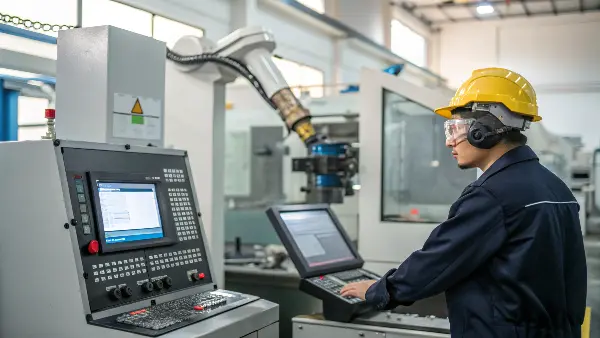
I’ve been in this industry for over a decade, and I’ve seen technology evolve dramatically. The core of machining has always been about solving problems. A CAD model is a perfect digital world, but the real world has material variations, tool wear, and unexpected vibrations. An experienced machinist understands these physical realities in a way that AI, in its current form, simply cannot. The future isn’t about human versus machine; it’s about human and machine working together.
The New Role of the Machinist: Human Expertise Amplified by AI
The fear of replacement often comes from a misunderstanding of where the true value of a skilled machinist lies. Their job isn’t just to press buttons; it’s to think critically and adapt. AI is excellent at optimizing known variables within a closed system. But manufacturing is an open system full of unknowns. Here’s how the roles will likely shift.
From Operator to Process Manager
Today, a machinist spends a lot of time monitoring a machine. In the future, AI-powered monitoring systems with sensors will handle much of this. This frees up the machinist to oversee multiple machines or entire production cells. Their role will shift from operating a single machine to managing a complex manufacturing process. They will be the ones to step in when the AI detects an anomaly it can’t solve, using their experience to diagnose the root cause—Is it a bad batch of material? Is a cutting tool nearing the end of its life? This level of diagnostic skill requires years of hands-on experience.
Focus on Complex Setups and Prototyping
AI can be trained on high-volume production runs where the process is stable and repeatable. However, it struggles with the high-mix, low-volume work that defines custom machining and prototyping. The first time a part is made, it requires immense human input. A machinist needs to figure out the best way to hold the part (workholding), plan the sequence of operations, and anticipate potential issues. This creative problem-solving is where human machinists will always have an edge. I believe their skills will become even more valuable for R&D and complex, one-off projects.
The Indispensable Human Touch
Ultimately, machining is a physical process. Machines break down, tools wear out, and materials can be unpredictable. A machinist can hear a subtle change in the sound of a cut that indicates a problem. They can feel a surface finish to know if something is right. This sensory feedback and intuition, built over a long career, is something that cannot be easily coded into an algorithm. AI can analyze data, but it doesn’t have the "feel" for the process. The machinist of the future will be a highly-skilled technician, problem-solver, and process owner, using AI as just another advanced tool in their toolbox.
Conclusion
From aerospace to medical, CNC machining is the essential technology that drives innovation. It empowers engineers and creators across countless industries to build the precise, reliable parts that shape our world.